Scooby-Doo (2002)
Directed by Raja Gosnell Screenplay James Gunn Steroy by Craig Titley.
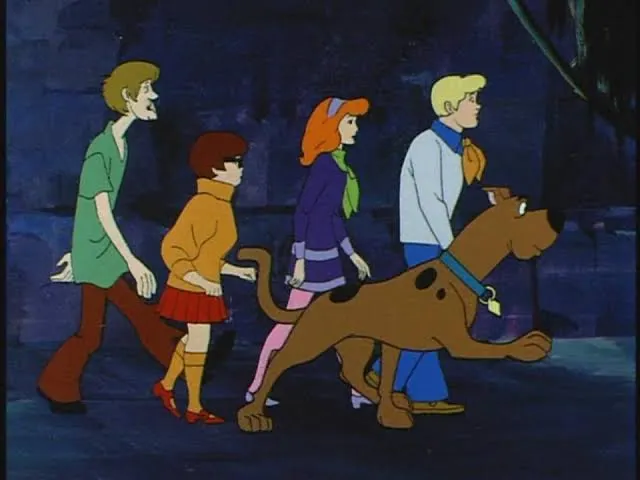
They should update that corny phrase “There are only two certainties in life: death and taxes” to include Scooby-Doo, a franchise that has remained omnipresent since it launched on September 13th 1969. The character was developed by Joe Ruby and Ken Spears, and designed by Iwao Takamoto.
The first live-action Scooby-Doo feature film was a big deal when it hit theatres in 2002. Coming off the heels of the two live-action Flintstones movies that faithfully translated the much-loved stone-age family, Scooby-Doo set out to do the same, and for the most part it succeeded.
Scooby-Doo may have spanned decades, but the film modernises the Scooby gang to suit the then-modern sensibilities of the early 2000s.
As a result, the film can feel a bit dated, like a product of its time; but then again, what isn’t? It still stays true to the original’s themes and characteristics.
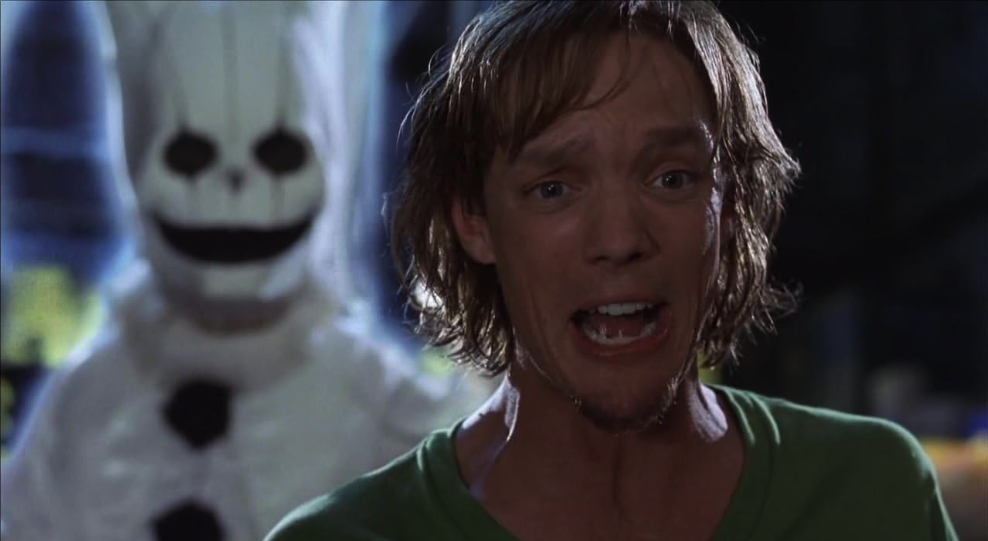
There might be some slight nostalgia bias, but the cast do an excellent job fitting their roles, particularly Matthew Lillard, who gives a great performance as Shaggy. Lillard even went on to voice the character in several Scooby-Doo animated projects.

Furthermore, strange as it sounds, Lillard has fantastic on-screen chemistry with Scooby-Doo, a real testament to his acting ability and deserves to be up there with greats like Bob Hoskins (Who framed Roger Rabbit) in terms of acting with an animated co-star.
Scooby-Doo appears as a 3D CGI character (as was the style at the time). The years haven’t been too kind on Scooby and the other CGI creatures, which have aged quite badly. Although their integration with the real environment still holds up, as does how the actors playing against them.
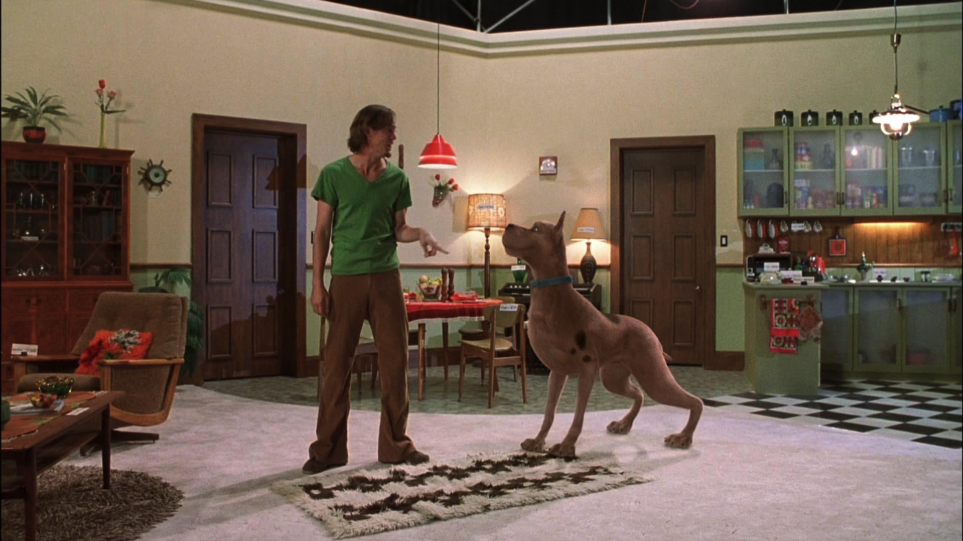
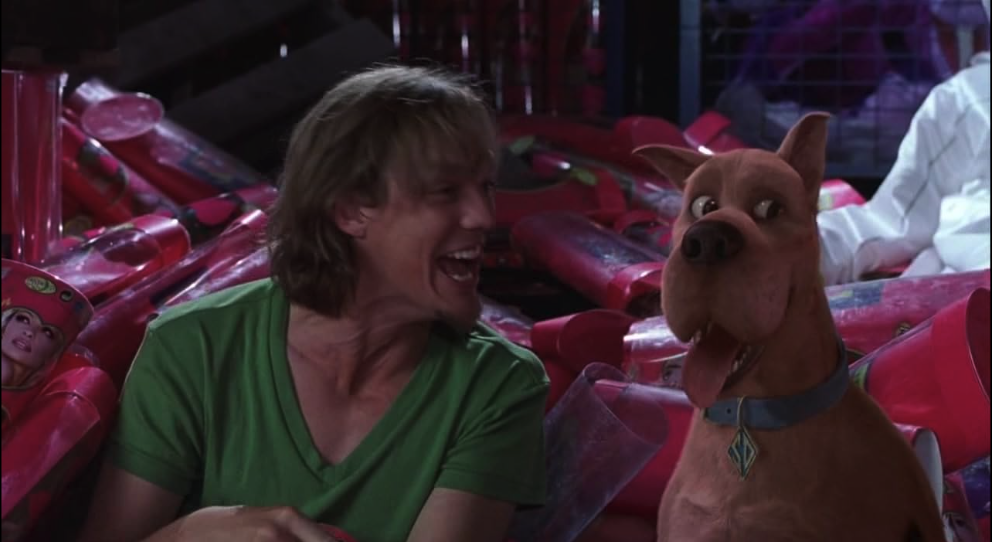
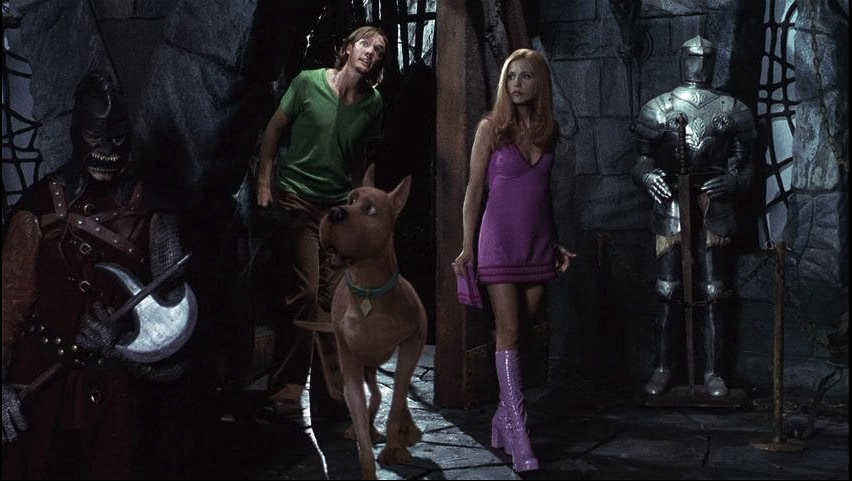
While I think a more traditional 2D cartoon Scooby could have worked, and audiences would have suspended disbelief seeing a cartoon in the real world, it would have gone against the notion of a live-action Scooby-Doo movie.
A real dog would have limited performance options, and the tech to do a hyper-realistic CGI dog wasn’t where it needed to be in 2002. (Besides, it would be too creepy.)
I think the final result splits the difference nicely. It’s realistic, but still cartoony enough as not to fall headfirst into the uncanny valley. The design is also well suited to the comedy and all the action set pieces of the film, something a real dog could never do without PETA kicking down the door.

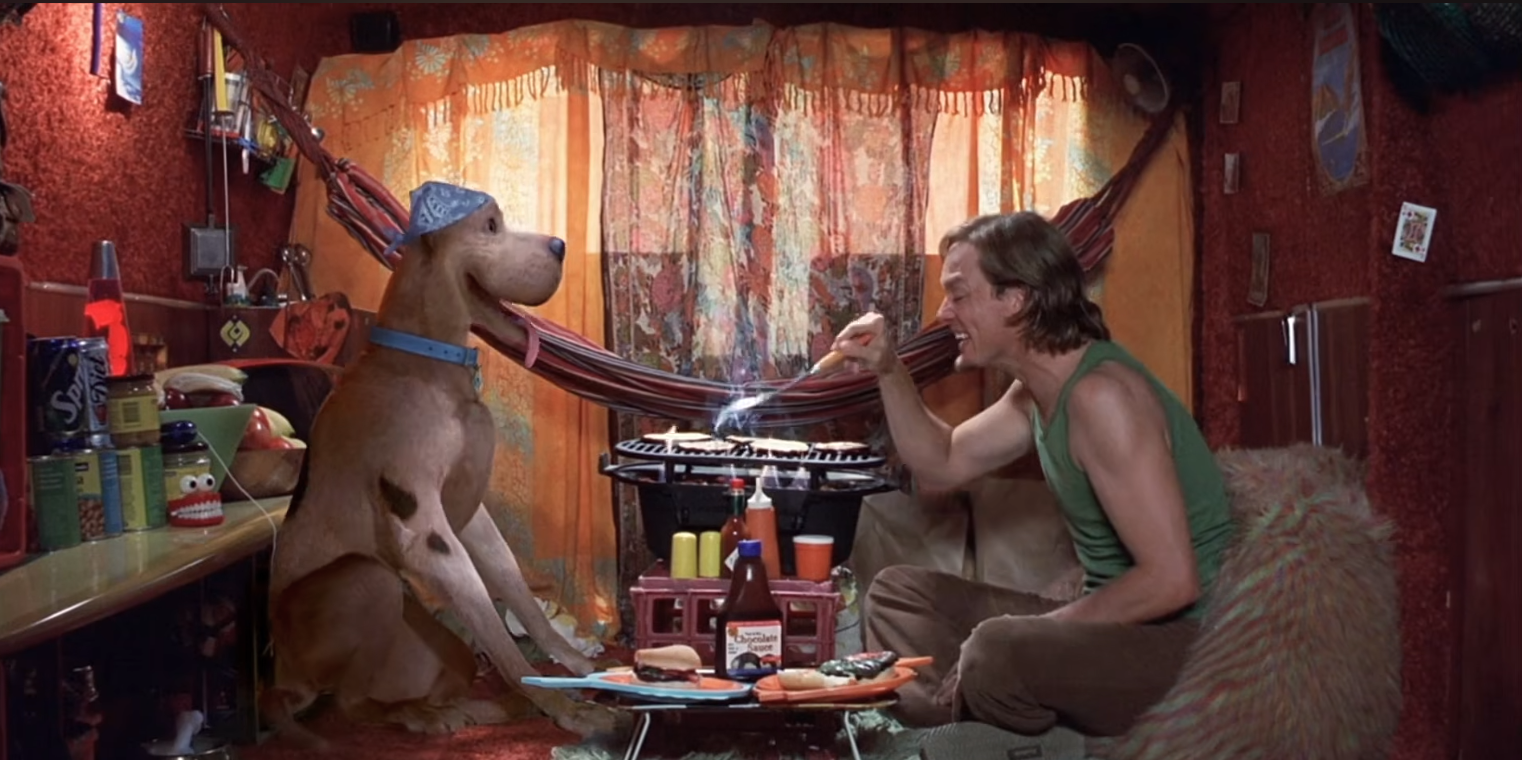
Scooby-Doo was voiced by Neil Fanning, and along with a team of animators and creatives, they did a great job bringing the character to life.
The Scooby gang were honestly fairly broad stereotypes, so there was room to build on; some characters, like Shaggy and Velma, played by Linda Cardellini, remain largely the same as their cartoon counterparts.
Fred, played by Freddie Prince Jr., takes on the role of leader. This film version leans more into the Jock, slight meathead characteristics that were arguably very tentatively suggested in the original cartoon.
Sarah Michelle Gellar as Daphne feels the most estranged from the original, mostly breaking out of the show’s tired stereotypes. She brings a new 21st-century take on the character that works quite well in the film’s favour.
This Daphne is more independent, knows martial arts, but still has some of the same fashionista tropes; these contrasting opposites actually work quite well together, and can be quite funny.
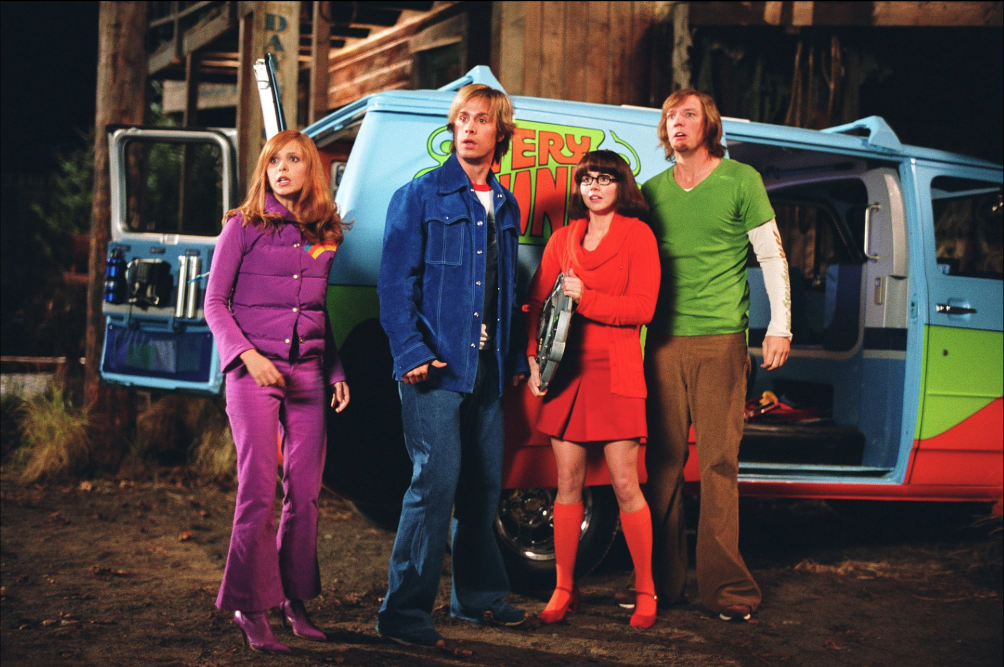
Looks-wise, it goes without saying the cast all look the part. The film is faithful to the original, but still expands and brings them into the 21st century, or at least the early 2000s.
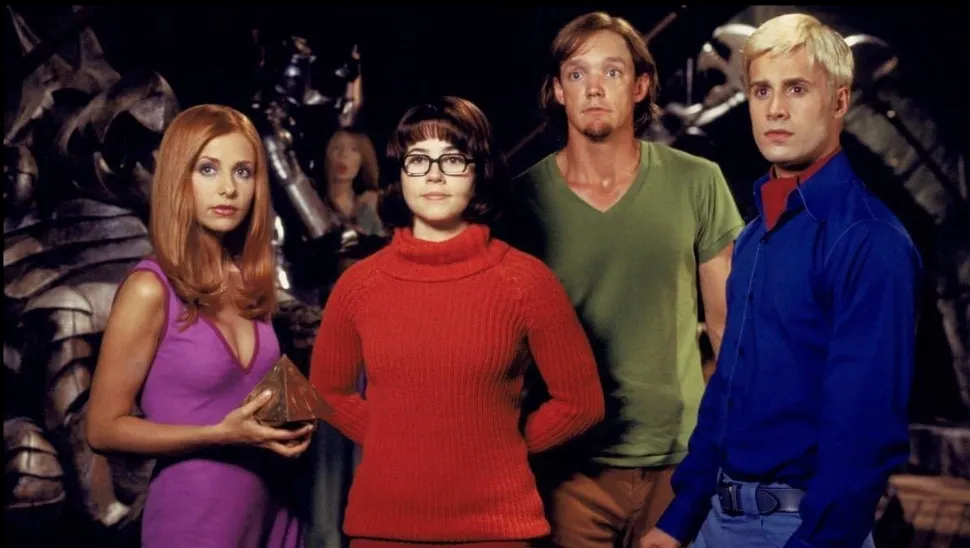
The film takes place when the Gang, now as adults, investigate creepy crooks professionally. On their latest investigation, long-brewing tension boils over, and the Scooby Gang disbands only to be thrown together again 2 years later, when a new mystery arrives on the aptly named Spooky Island, where the majority of the film takes place. This has positives and negatives: the central location keeps the adventure focused while still covering all the expected tropes. A drawback is missing opportunities like seeing more of the Mystery Machine or other familiar characters and locations from the show.
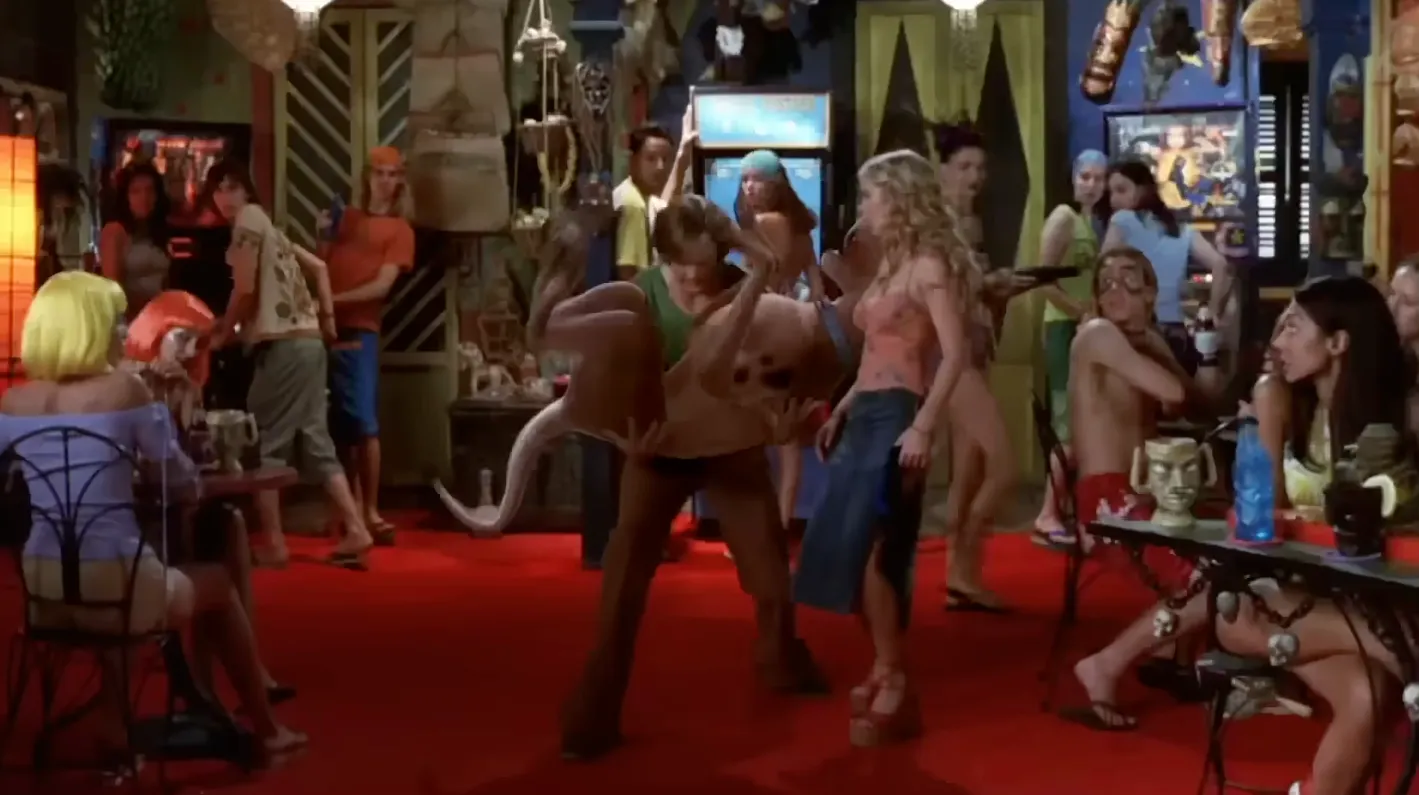
The scene
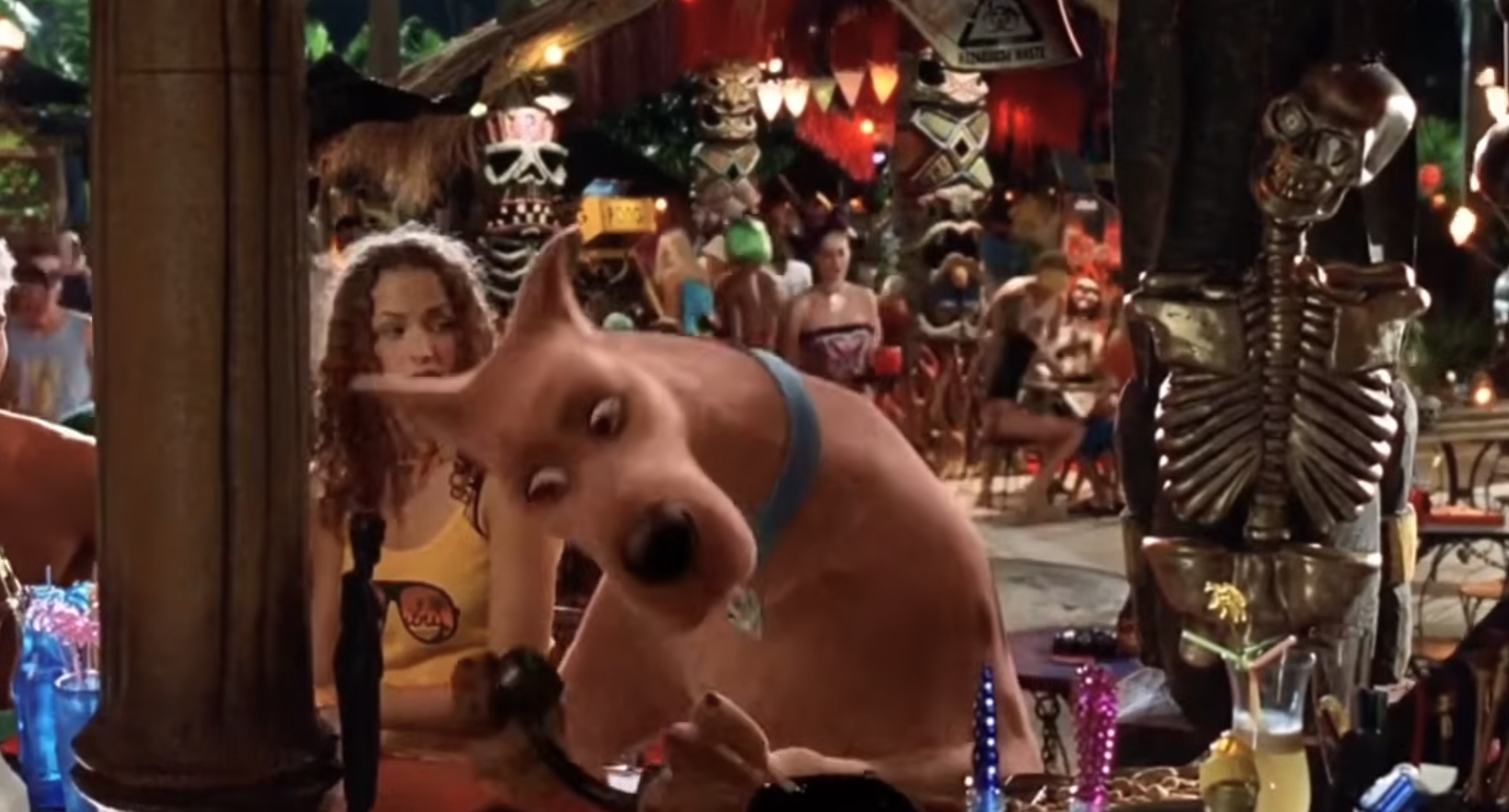
At Skull Mike’s bar, among all the frosted tips, and tiki stuff are some arcade and pinball machines.
Some of the games tie in thematically; even though they are in the background and might go unnoticed, it’s good that the filmmakers went the extra mile to include them.
PONG, Atari, 1972
PONG, quite an unassuming name for one of the first-ever video arcade games. The “Doo” started in September 1969, and PONG came out in 1972.
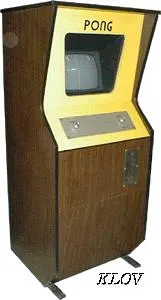
PONG is fairly prominent in the background; however, it looks like no ordinary PONG machine. Missing the woodgrain of the original and has more of a modern design, with a marquee and yellow sides that look plasticky. As a result, it’s difficult to identify where this game came from. (Even after researching it and contacting the people that worked on the film, seriously.) It seems to be some custom cabinet made for the film. Still looking closely, you can see PONG playing on the screen.
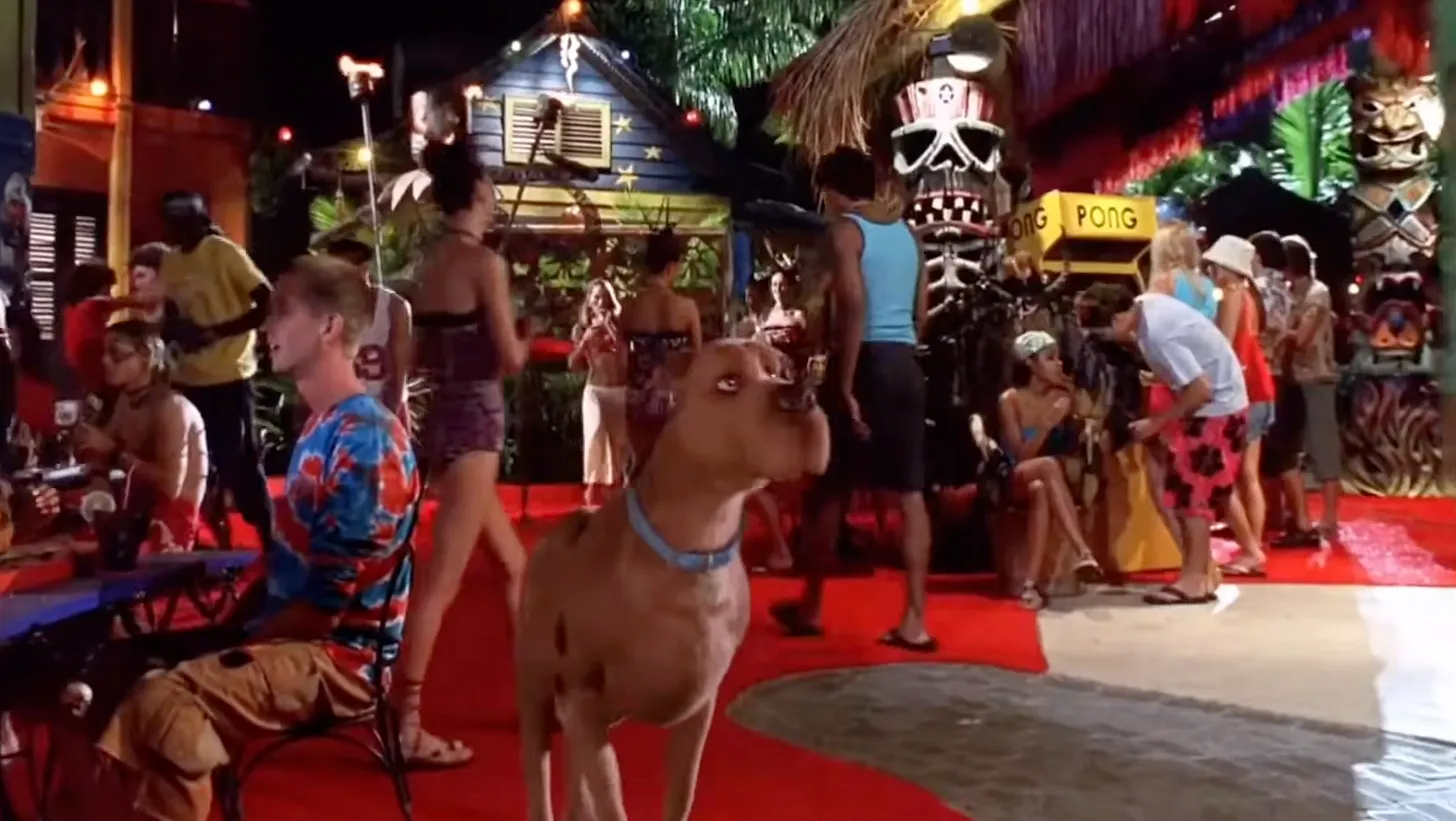
I’d hazard a guess that PONG wasn’t exactly in high demand in the early 2000s. Granted, PONG: The Next Level for PlayStation released in 1999, so what do I know. Maybe they thought a woodgrain cabinet would look out of place; or perhaps it was a mandate from Atari, or some other copyright thing.
So, about those thematic choices. . .
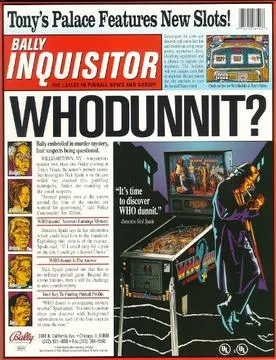
Who Dunit, Midway, 1995
One of the most obvious connections is the “who-dunit” pinball machine, a clear reference to the mystery-solving aspect of the series and film.
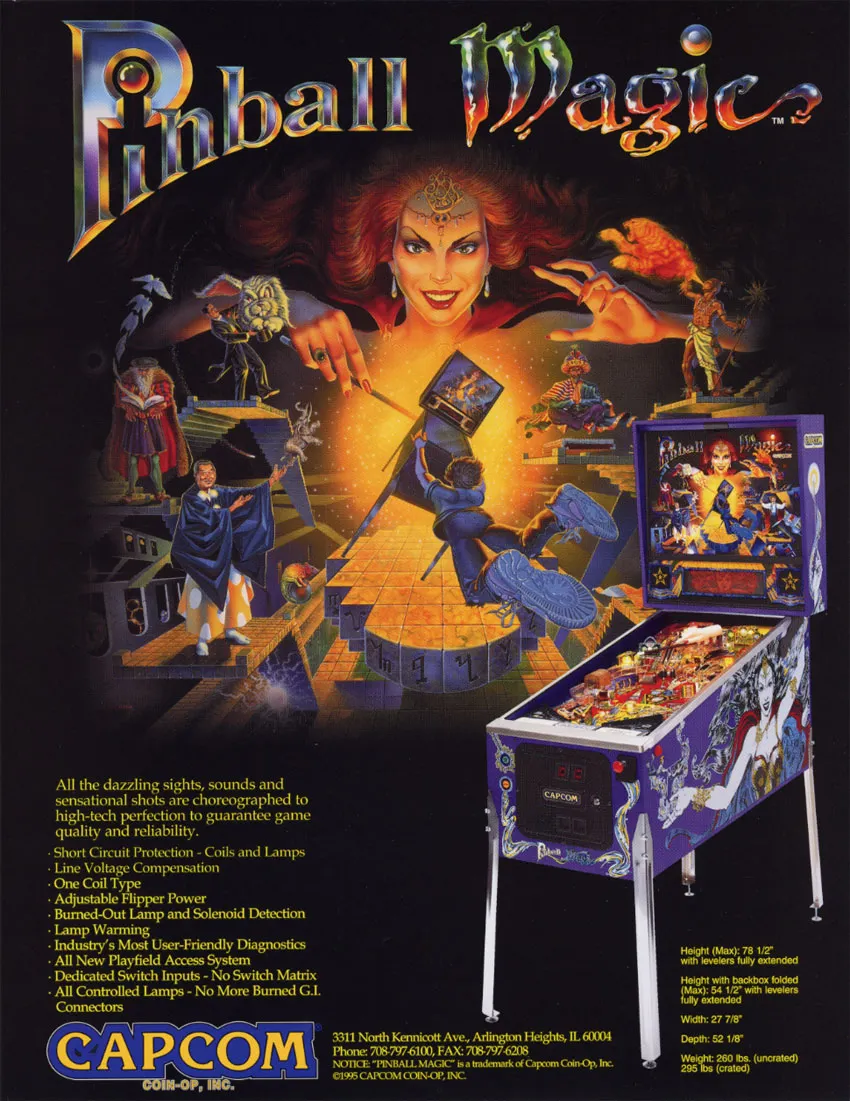
Pinball Magic, CAPCOM, 1995
This machine has a magic, mystical-type design that ties into the film’s wider themes. This machine comes from CAPCOM’s short-lived foray into the world of pinball. For a first attempt, it was fairly ambitious, with many moving parts, playmachanics, and a decent amount of speech.
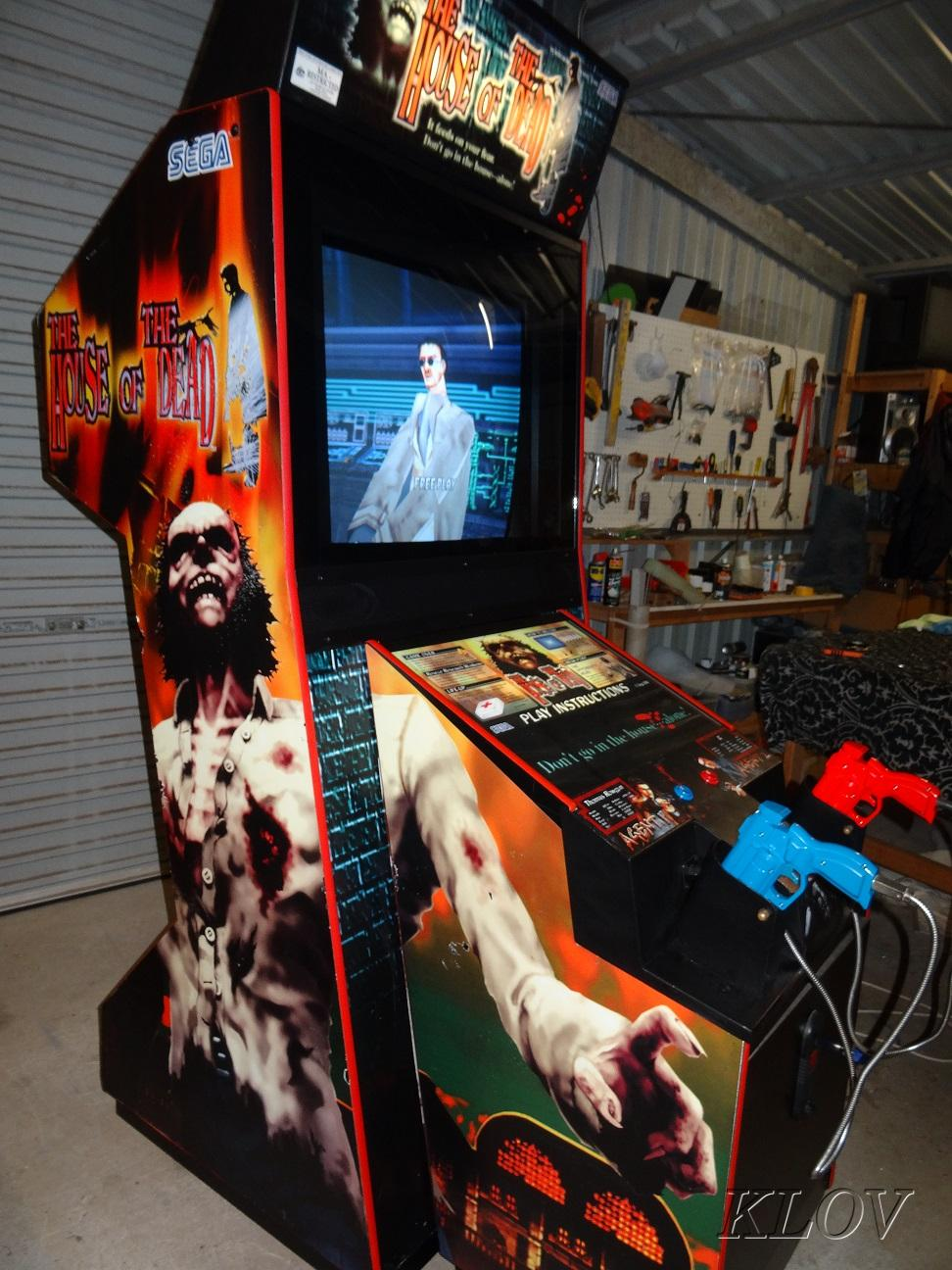
HOUSE OF THE DEAD, SEGA, 1997
A light gun game about blasting away at zombies. Also remembered for its B-movie presentation, and so bad it’s good voice acting.
House of the Dead, a spooky house is a given. (There’s one in the original cartoon’s intro!) Zombies are at the very least Scooby-adjacent. For instance, Scooby-Doo on Zombie Island, the 1998 animated feature.
House of the Dead (arcade) saw a fairly mediocre port to the Sega Saturn, followed by a sequel in the arcades, House of the Dead 2 and a much more successful, faithful port to the Dreamcast. The franchise continued with mainline games and spin-offs like Typing of the Dead (DC, PC) and Pinball of the Dead (2002, GBA). The most recent game in the series was a 2025 House of the Dead 2 remake. (This was written in 2026; are there more House of the Dead games in the future?)
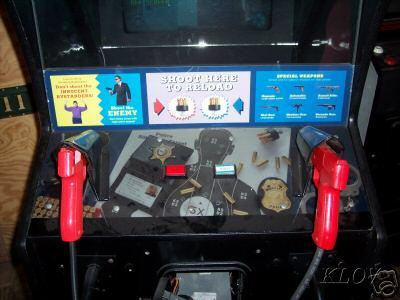
LETHAL ENFORCERS,Konami, 1992
Another light gun game.
Lethal Enforcers, a game about cops taking out drug dealers and other such criminals and just generally enforcing justice, lethally, that is.
The Scooby gang aren’t law enforcement by any means and don’t use lethal force, but they do enforce justice in their own way. (a very tenuous connection at most.)
Lethal Enforcers was first in the arcade; it had a number of home ports, but is perhaps best remembered for its port to the SEGA CD/Mega CD and its use of the KONAMI Justifier light gun.
s adaptations go, this is a fairly good one; it takes the core premise of the source material and builds on it.
It modernises itself where it needs to, but stays faithful to its roots, like I was saying about Wonder Woman last time. At this point, these characters have had so many interpretations that there’s bound to be one to suit any individual.
Aspects of the film are a little dated, mostly in its music and fashion choices. Complaining about outdated CGI is fairly pointless, so it’s not really a factor in my view. You either buy into the premise of a talking dog, or you don’t. A real dog wouldn’t have worked at all for obvious reasons, but it still might have been interesting if they went for an updated cel-shaded 2D look.
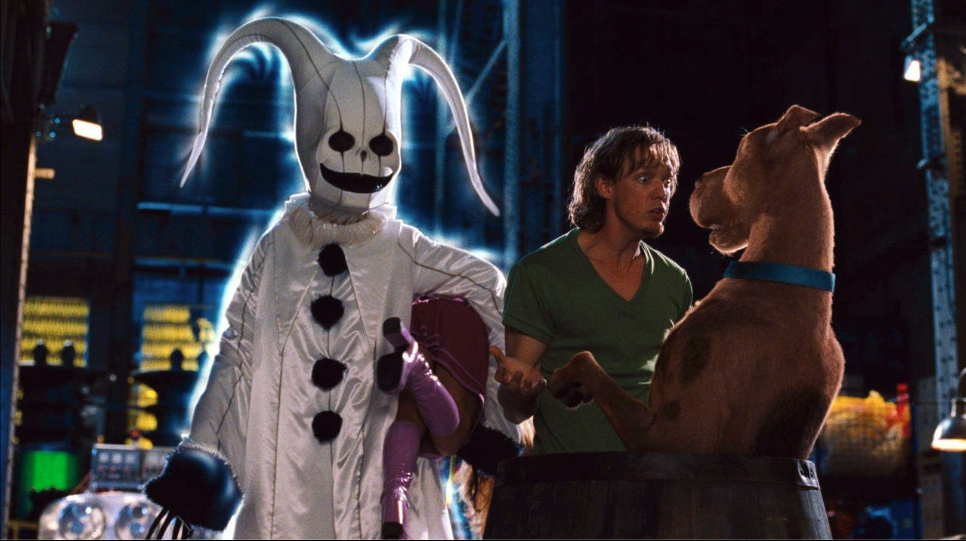
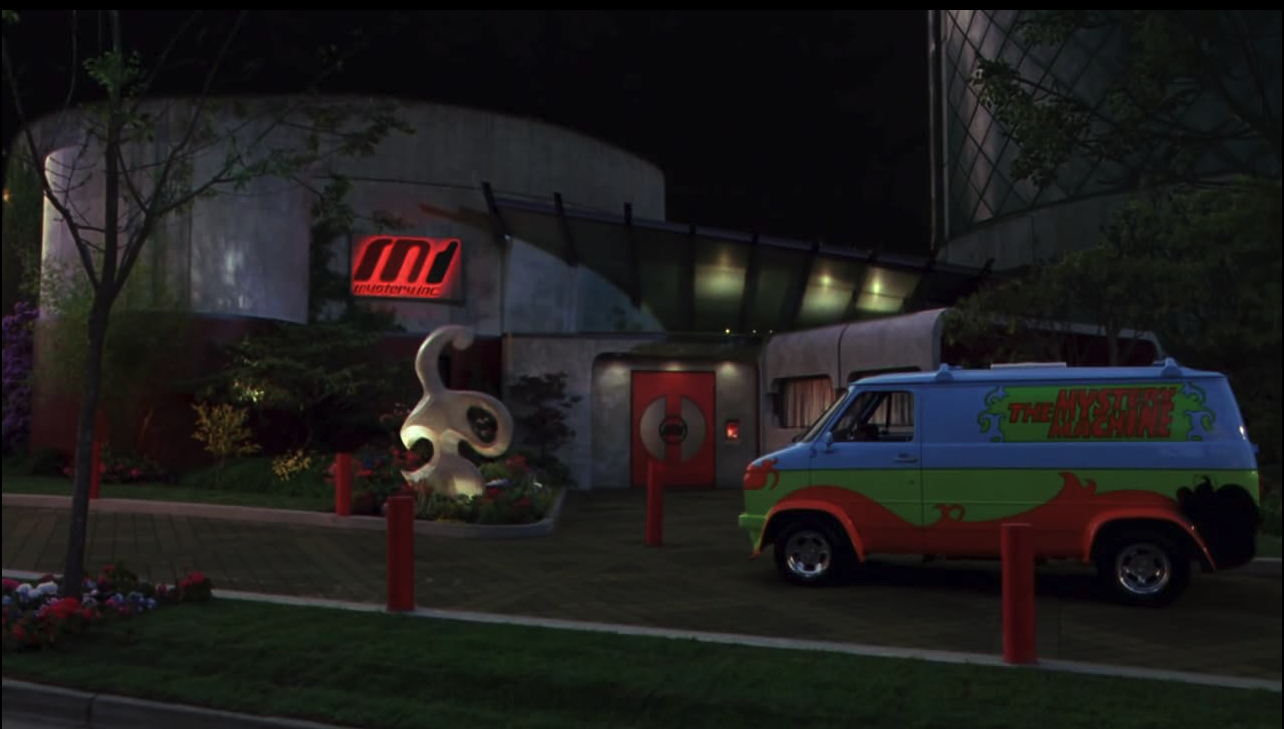
The actual plot of the film is a fairly standard “Doo” affair, but it is heightened to make it big-screen worthy. The added supernatural elements are interesting. Some decent action set pieces with each member of the gang. Of course, the best action is given to Shaggy and Scooby. The Mystery Machine was a little underused; then again, it’s not like it was a huge part of the original show. Both films are family-friendly for sure, but both, particularly the first film, do lean into some subtle, more contemporary adult humour.
(Spoilers)
The ending could be seen as a bit of a cop out “joke” ending, revealing that Scrappy-Doo is the master mind behind it all. Retrospectively, Scrappy-Doo was considered by some to be an annoying character; true or not, the film hangs its ending on this joke, perhaps pushing this “ in-joke” to its limit.
This ending is also kinda fourth-wall-breaking, as it requires at least a little amount of knowledge of how Scrappy-Doo was considered annoying. The Scrappy-Doo “hate” does have some revisionist history to it. When the character was first introduced, he proved popular; it’s only after time that he fell out of favour. He now seems to be generally considered an annoying character, to the point that the filmmakers felt that the osmosis was such that they could use this as a basis for its ending.
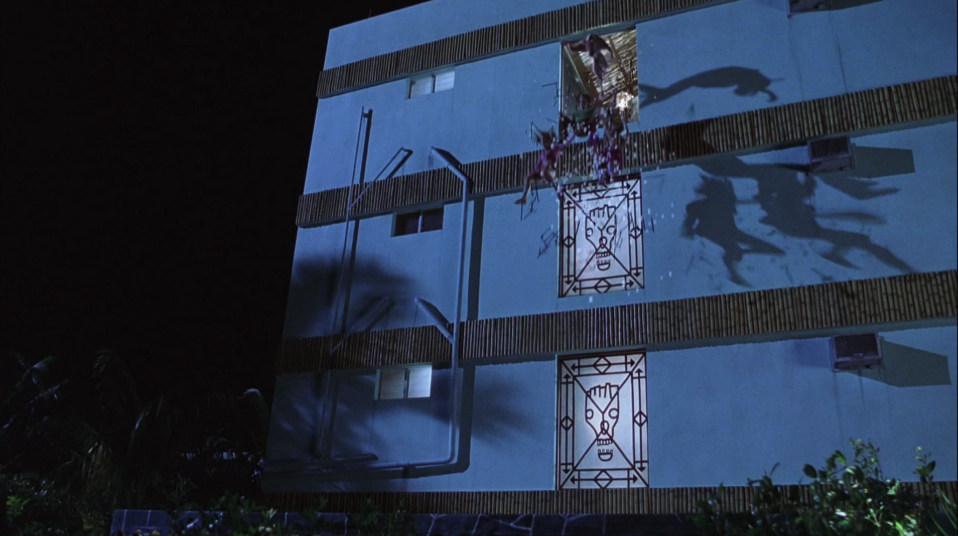
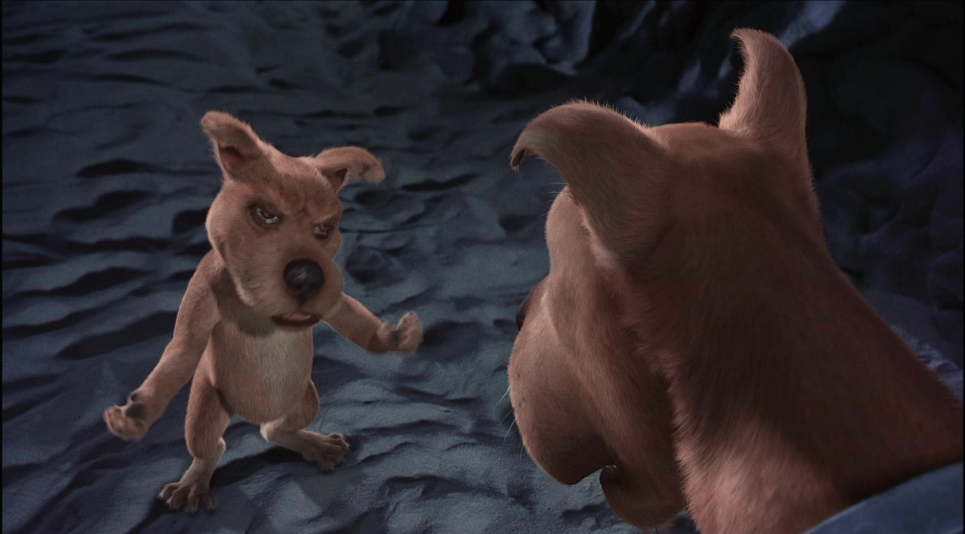
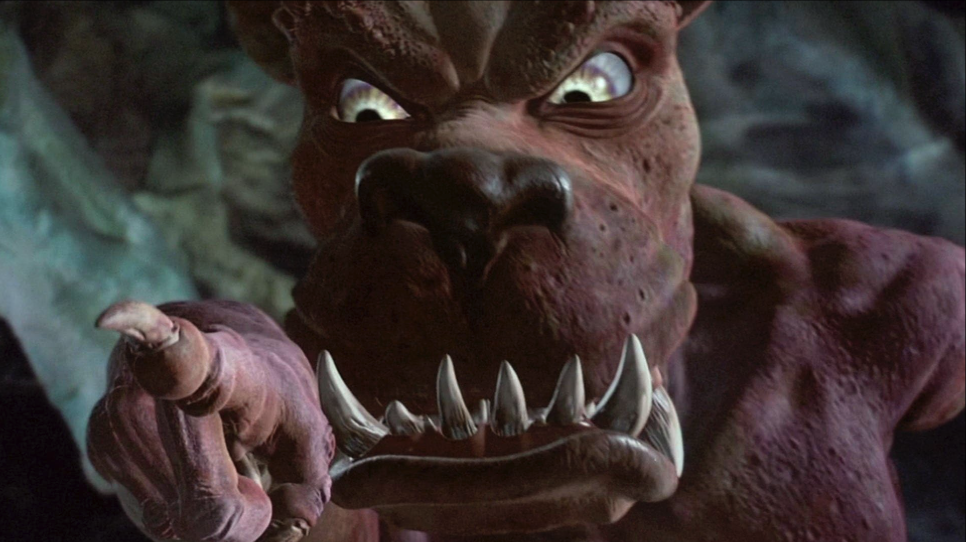
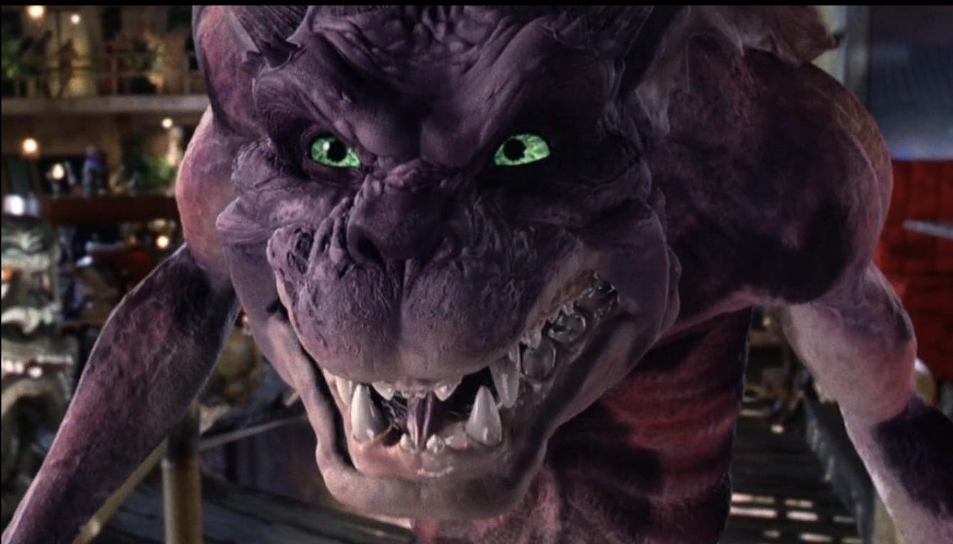
At the time, the reveal did come as a shock, and admittedly is kind of funny, but I still think something closer to the standard Scooby-Doo mask reveal would have been better, with perhaps just a slight twist. Besides, Scrappy-Doo never really bothered me that much; now Deputy Dusty and Yabba-Doo, that’s a different story!
The film’s a great nostalgia trip if you grew up on it or any of the Scooby-Doo shows; for “now time” audiences and the “kids today”, the mileage may vary; introduce ‘em to the classic Doo cartoons first, and go from there.
Scooby-Doo 2: Monsters Unleashed (2004)
Directed by Raja Gosnell Written by James Gunn
After the success of the first film, a sequel was inevitable. In 2004, Scooby-Doo 2: Monsters Unleashed was released, or, (unleashed?)
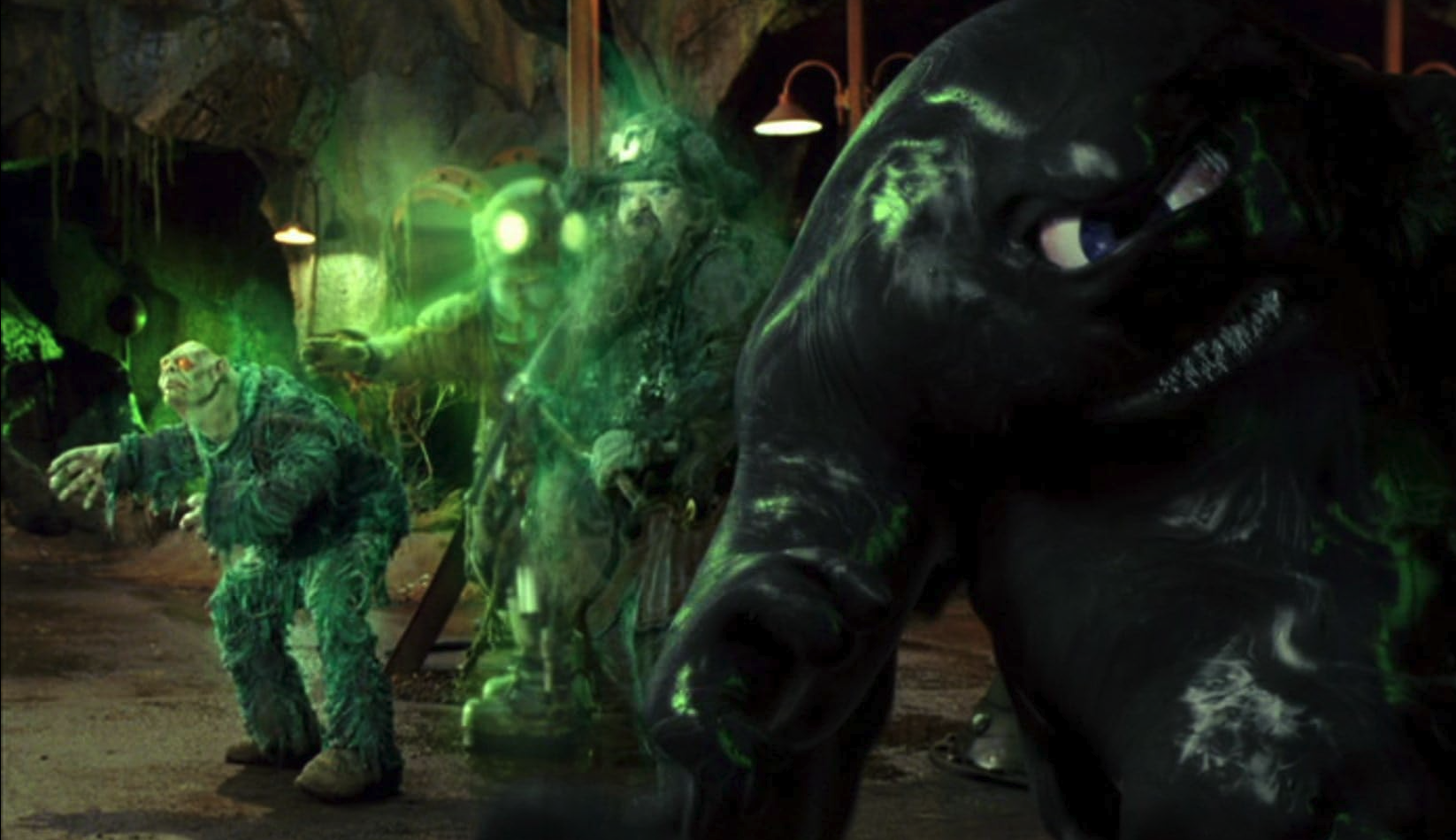
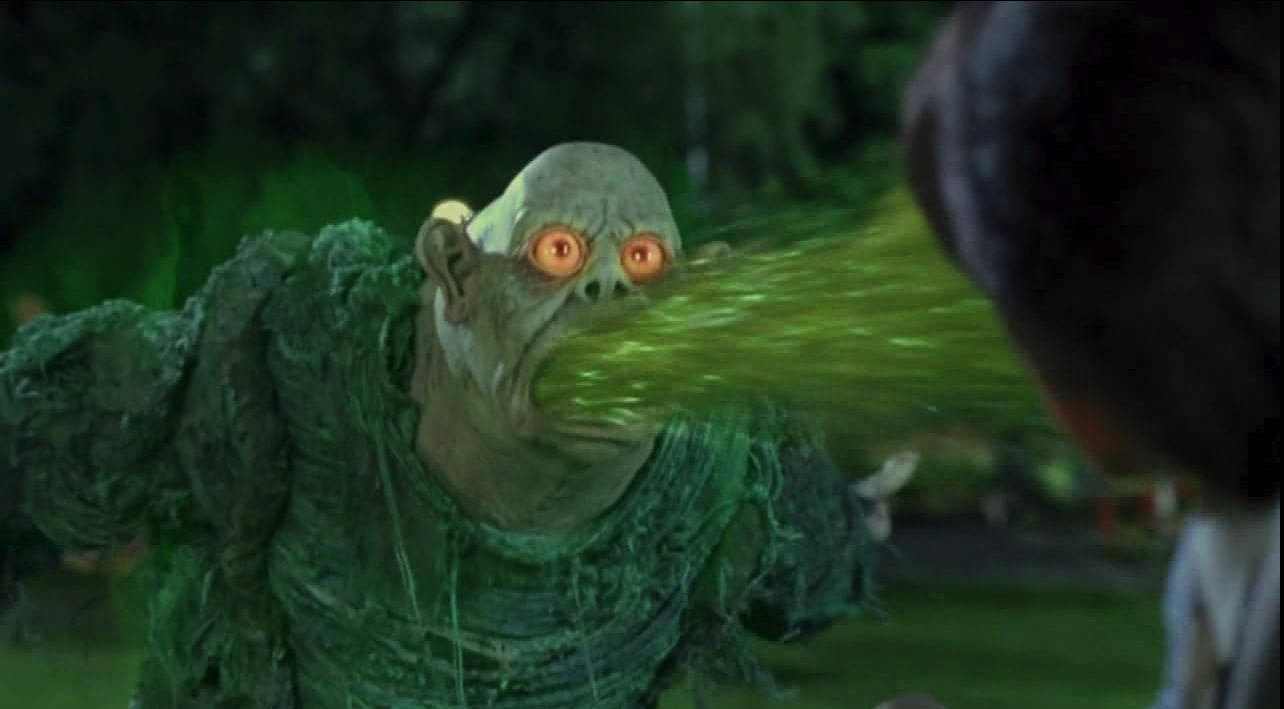
It re-introduced many of the iconic “villains” from the cartoon, reimagined in live action and as real entities. The main cast returns and continues their stellar jobs; Matthew Lillard shines once again.
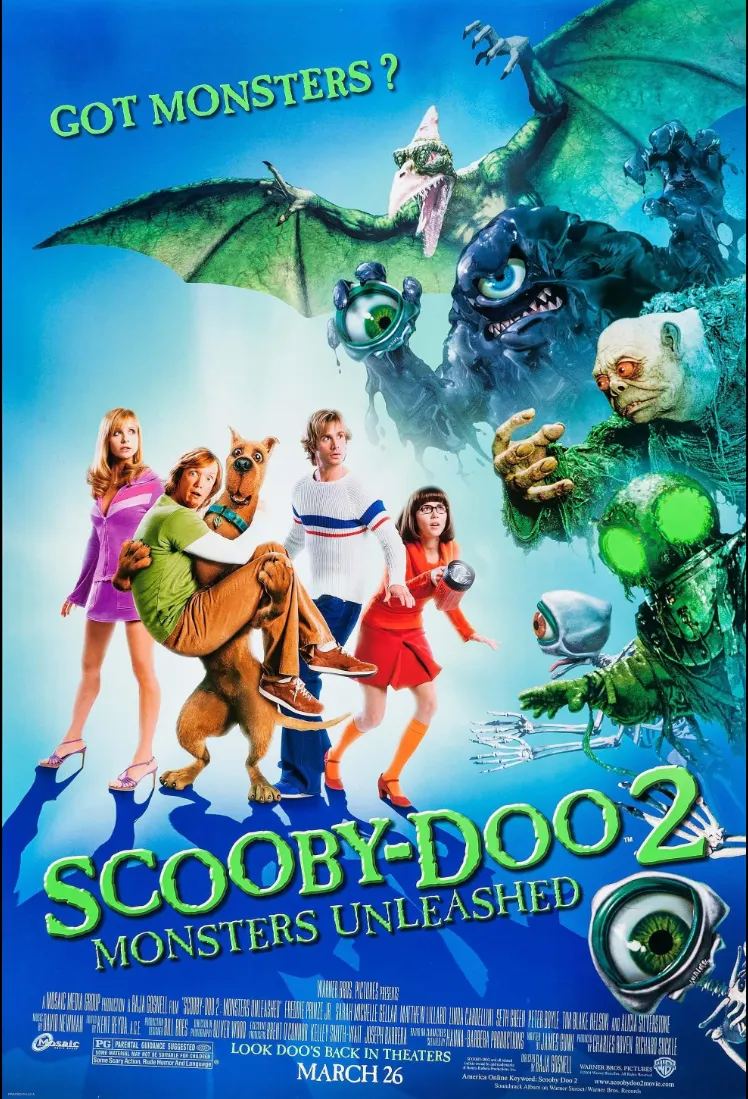
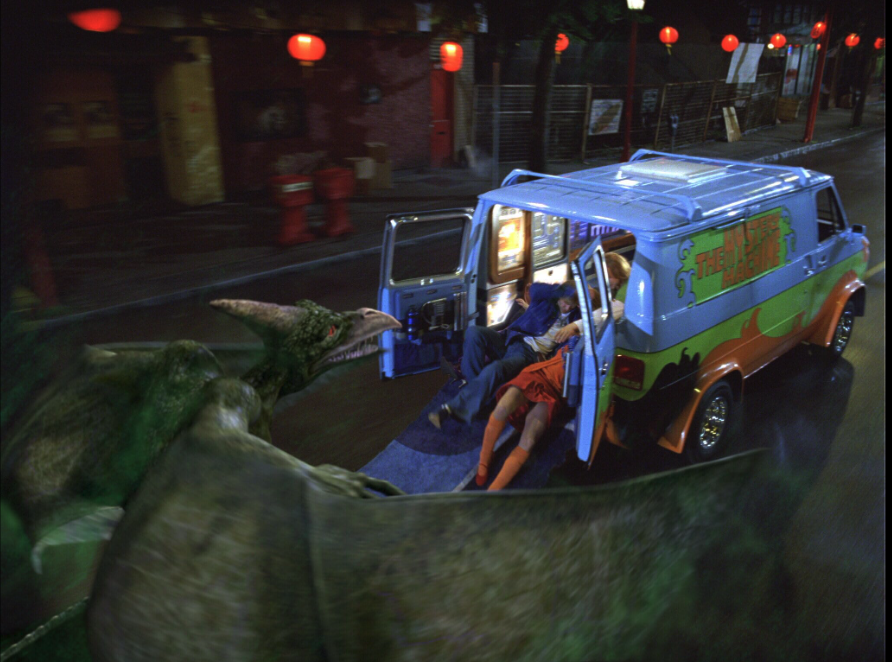
The film may not have had as big an impact as the first, but the use of familiar monsters, more locations and more active use of the Mystery Machine are marked improvements.
The film received mixed reviews upon its release and, despite strong expectations, was unable to match the success of the first film, but still made $181 million worldwide.
But even a slight box office disappointment in the eyes of studio heads means no more sequels. A third movie probably could have worked and capped off a decent trilogy.
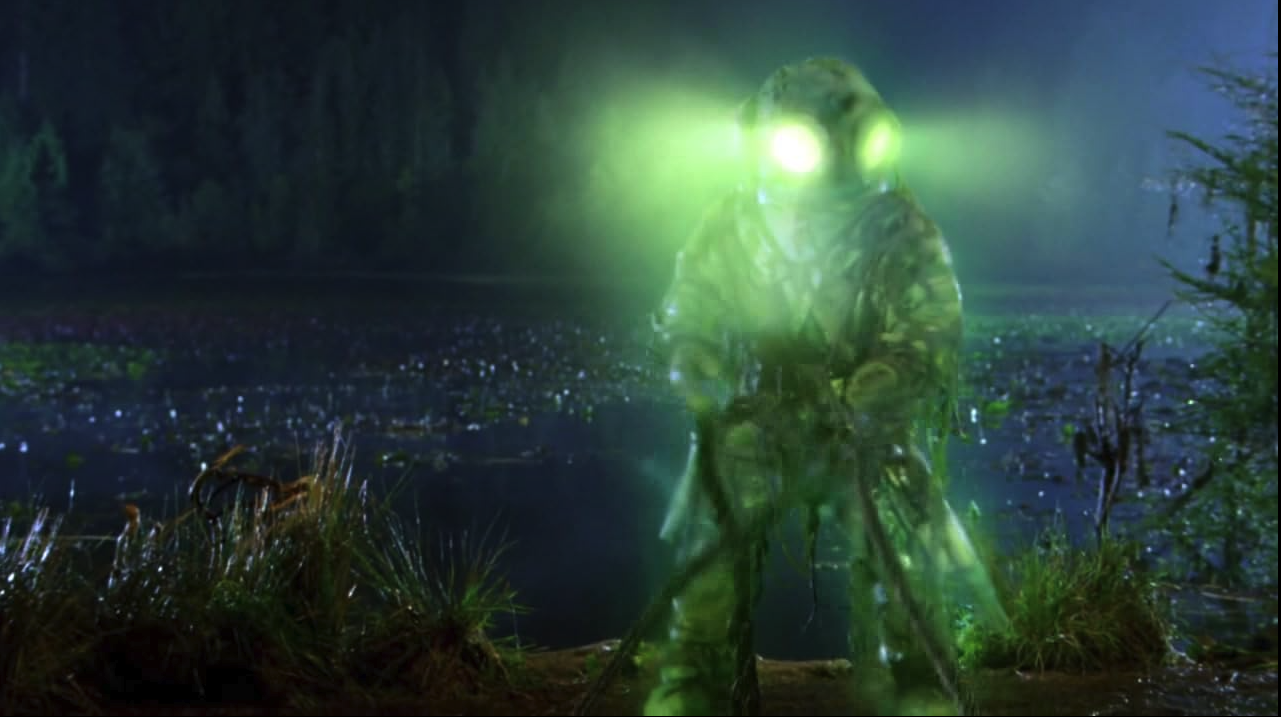
The Games on Film this time are . . .
Part Two has far fewer games, but makes up for it with a memorable, somewhat crazy post-credits sequence, but first. . .
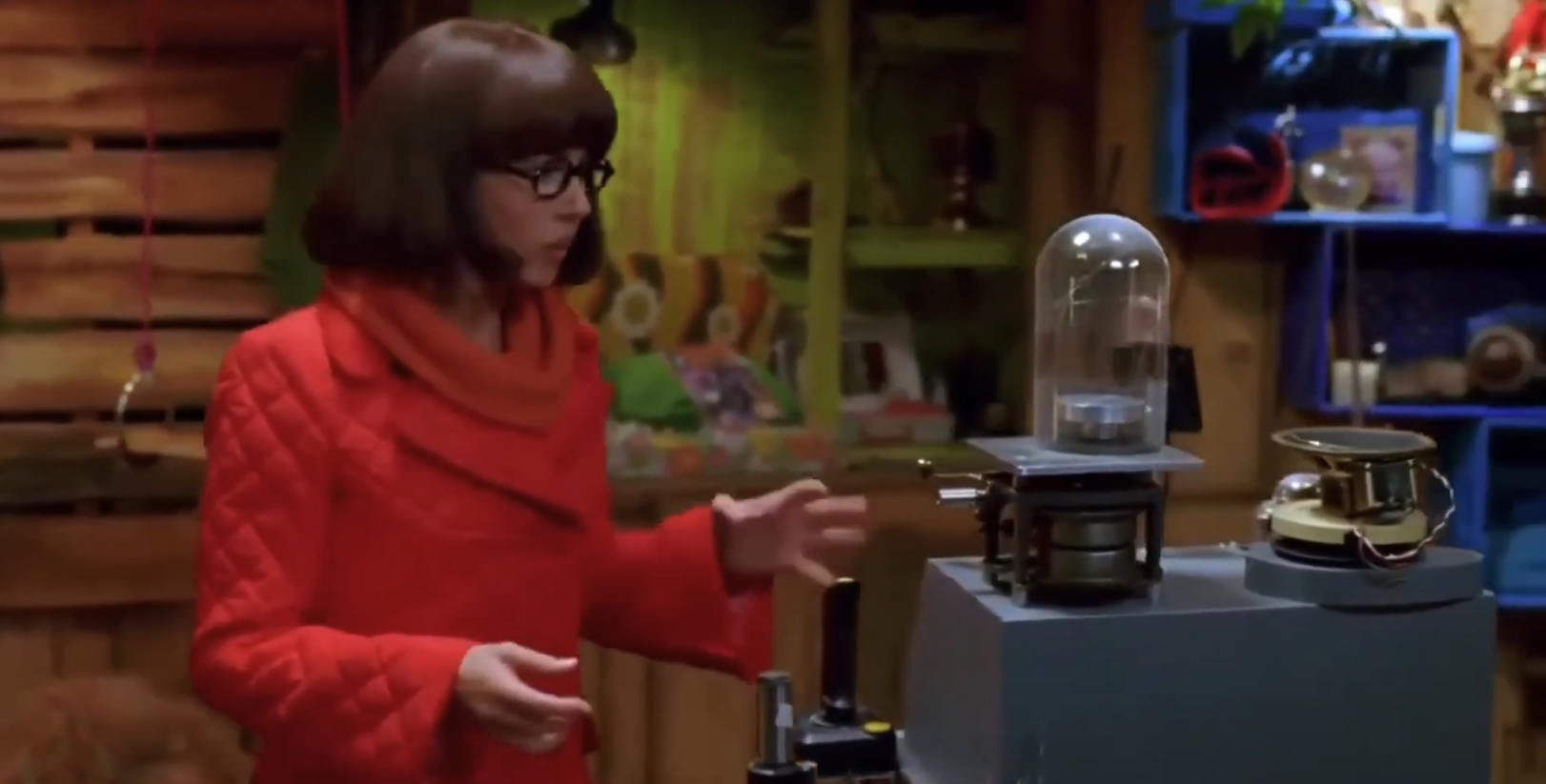
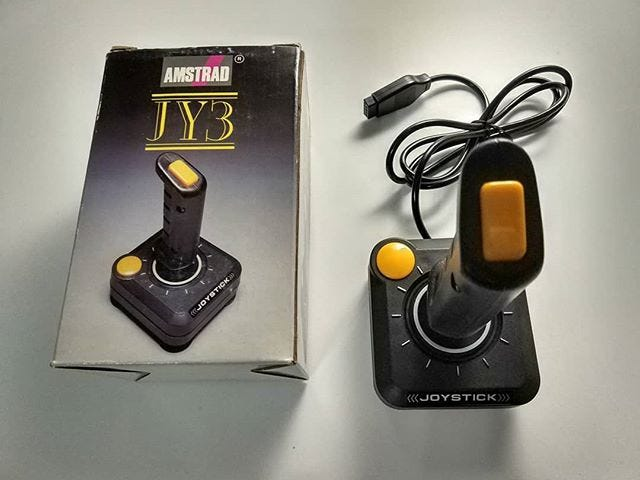
On returning to their old clubhouse, Velma finds one of her old inventions. She comments that she made it out of a personal radio and an old video game. An Atari-like joystick with yellow buttons is clearly visible; this is a JY3 Joystick by Amstrad.
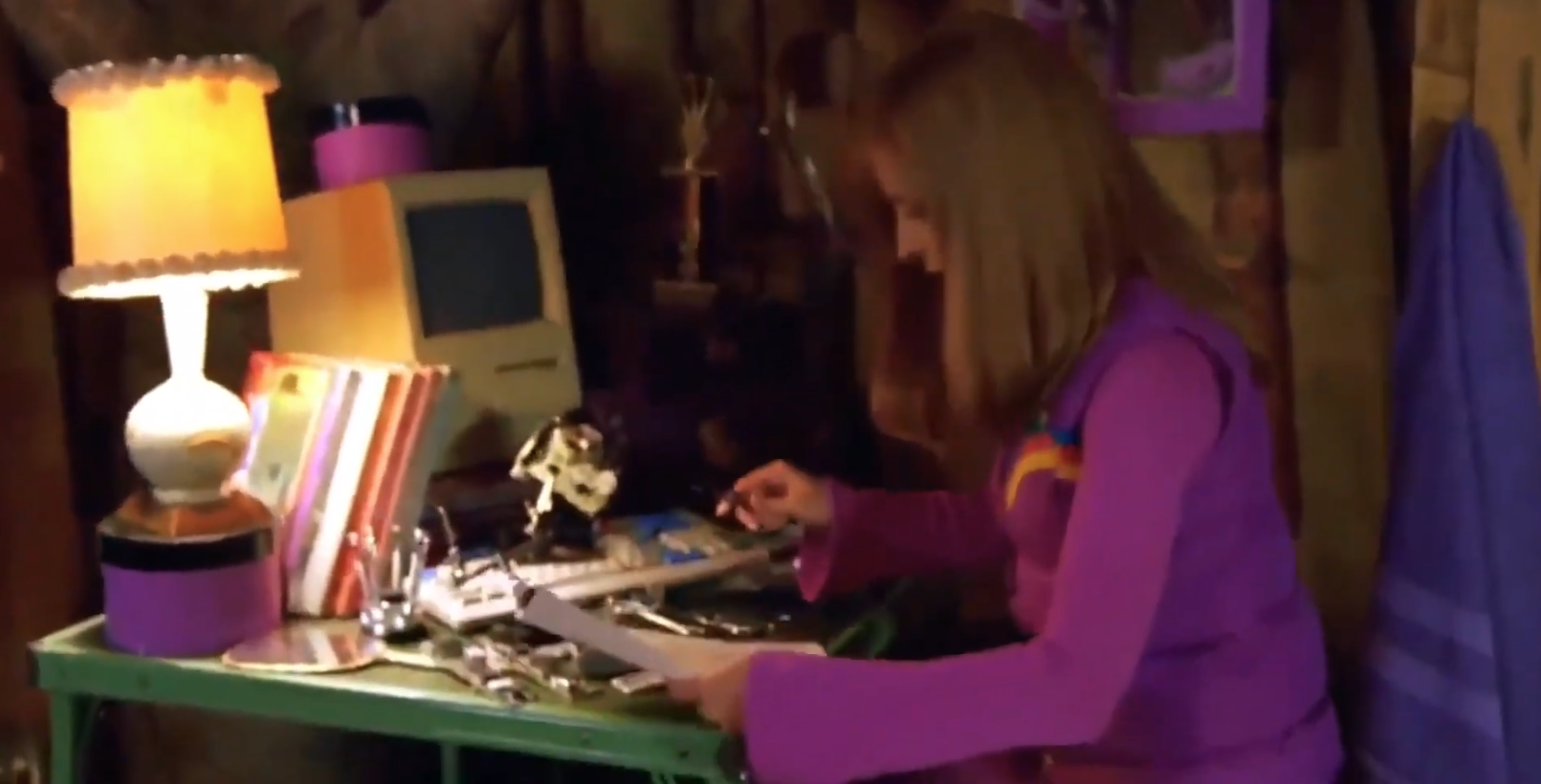
The clubhouse also has an Apple Macintosh, with the Apple logo removed. It also has a different non-Macintosh keyboard. (Where’s that original keyboard at?)
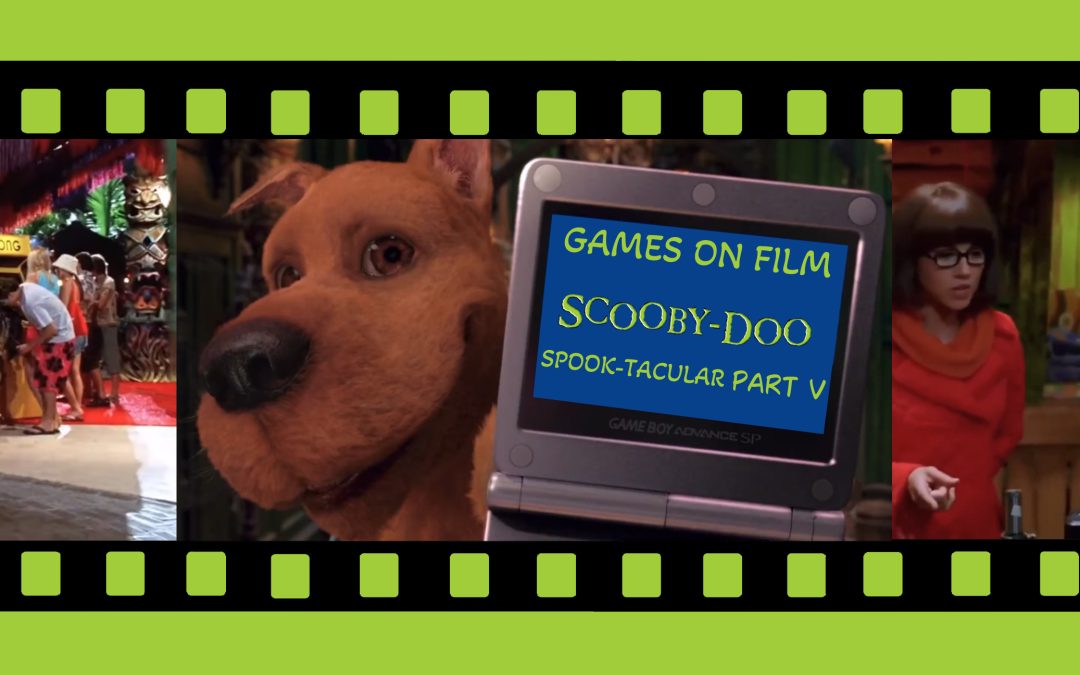
In a post-credits scene, Scooby-Doo is seen playing a Game Boy Advance SP in a bizarre, fourth-wall-breaking cross-promotion with The Scooby-Doo 2 tie-in video game.
Scooby goes on to show the audience a “secret code” for the game. (What!? Of course I’m not going to put it here; you’ll have to see the movie.)
The whole thing is quite bizarre. Obviously part of some larger marketing promotion.
Well, that’s one way to sell the game, at least. Some pretty direct product placement. The code is really short (2 letters and 1 number), so chances are kids could have just guessed the code anyway (after some trial and error).
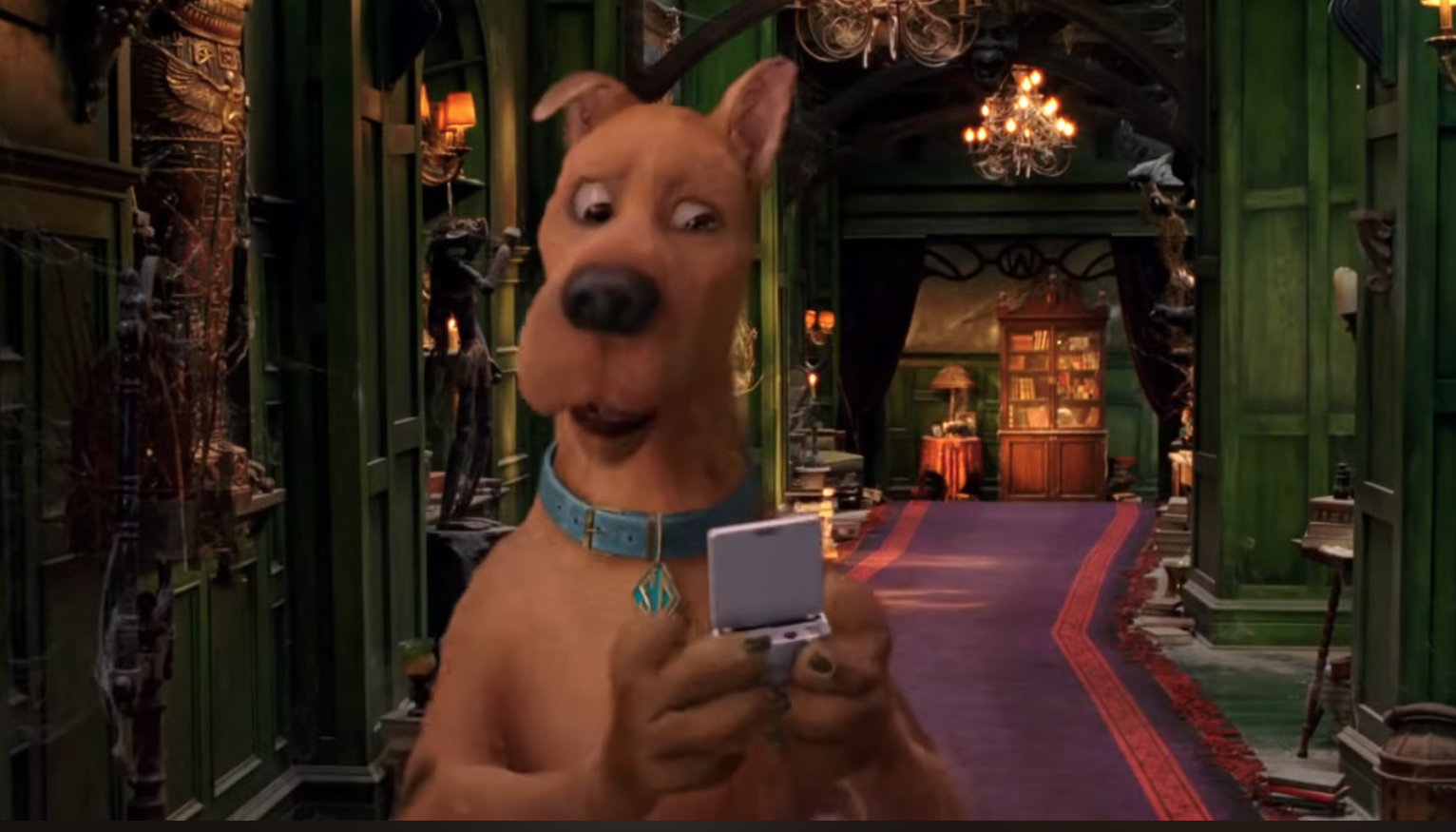
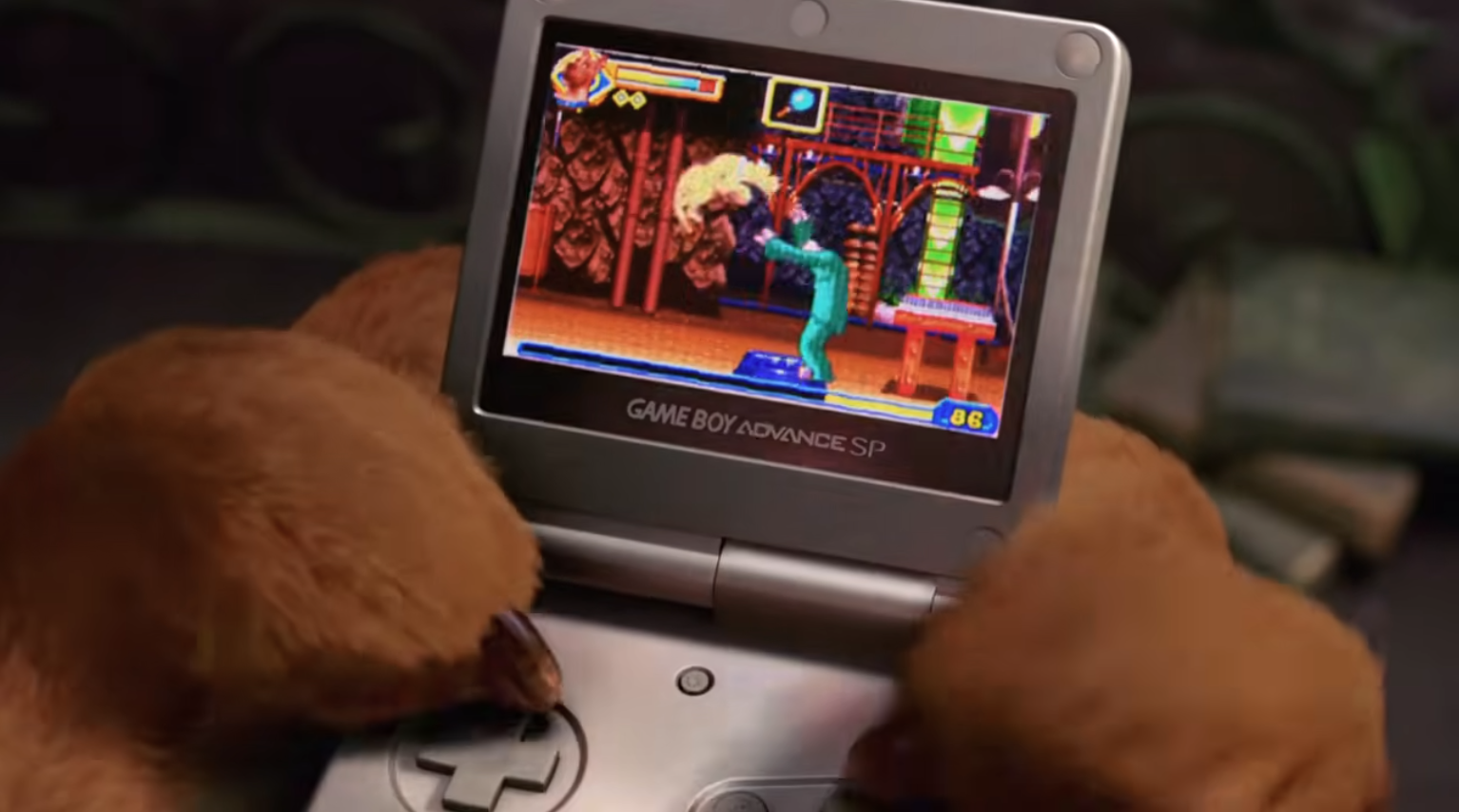
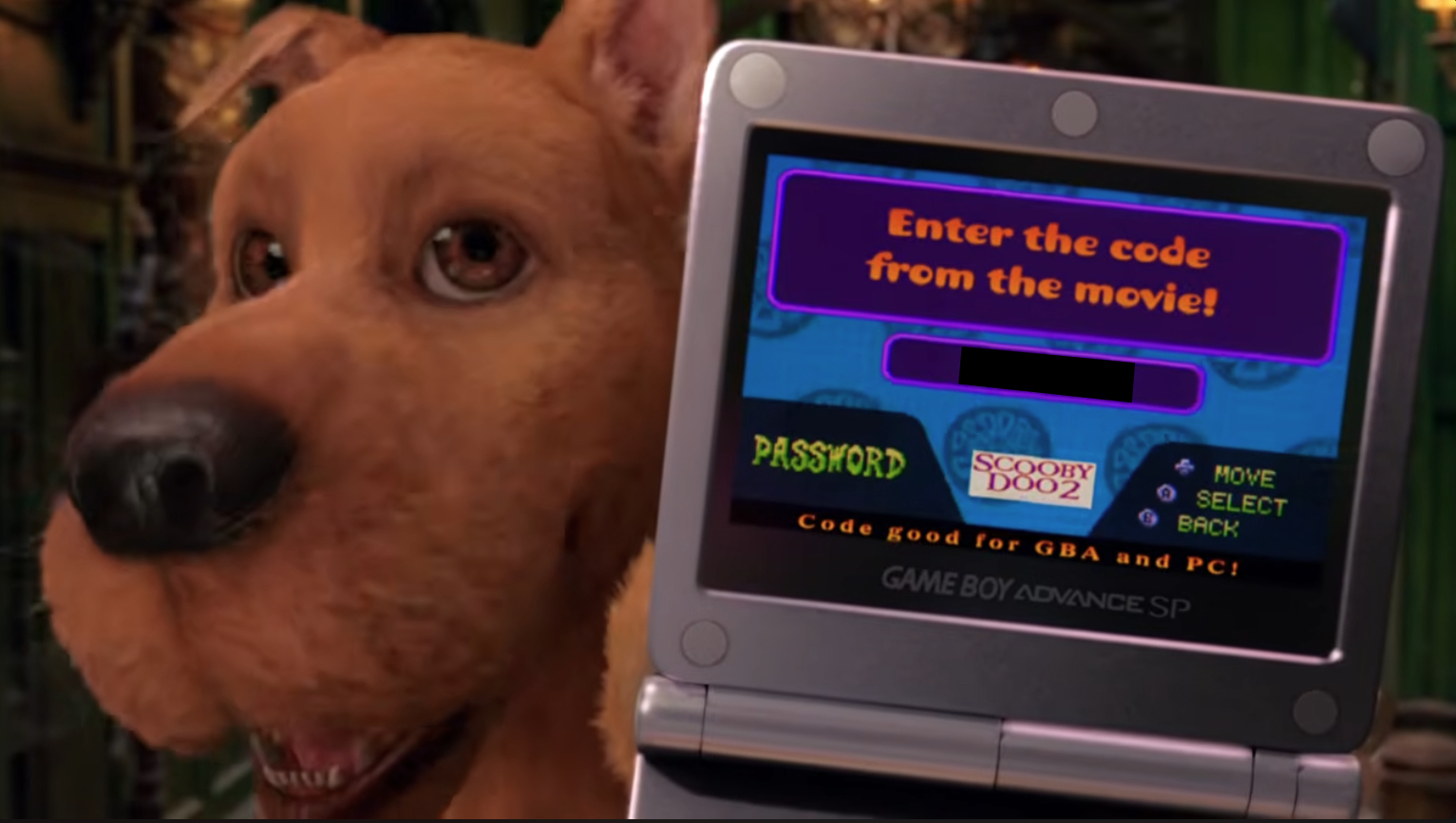
An interesting marketing stunt to be sure, but I question its true effectiveness. This was in the days when detailed camera phones and taking notes on cell phones wasn’t so easy, and I doubt kids were carrying around pens and notebooks, but for real, phones have no place in a theatre; keep ’em in your pocket till you’re outside!
Did anyone actually see this code in theatres, then go out get the game to input the code?
This scene is reportedly cut from TV broadcasts and streaming versions, but remains on the DVD and VHS. However, the version currently on Disney+ has a strange artefact. One subtitle at the very end, at the production logos, reads “Video game sound effects.”
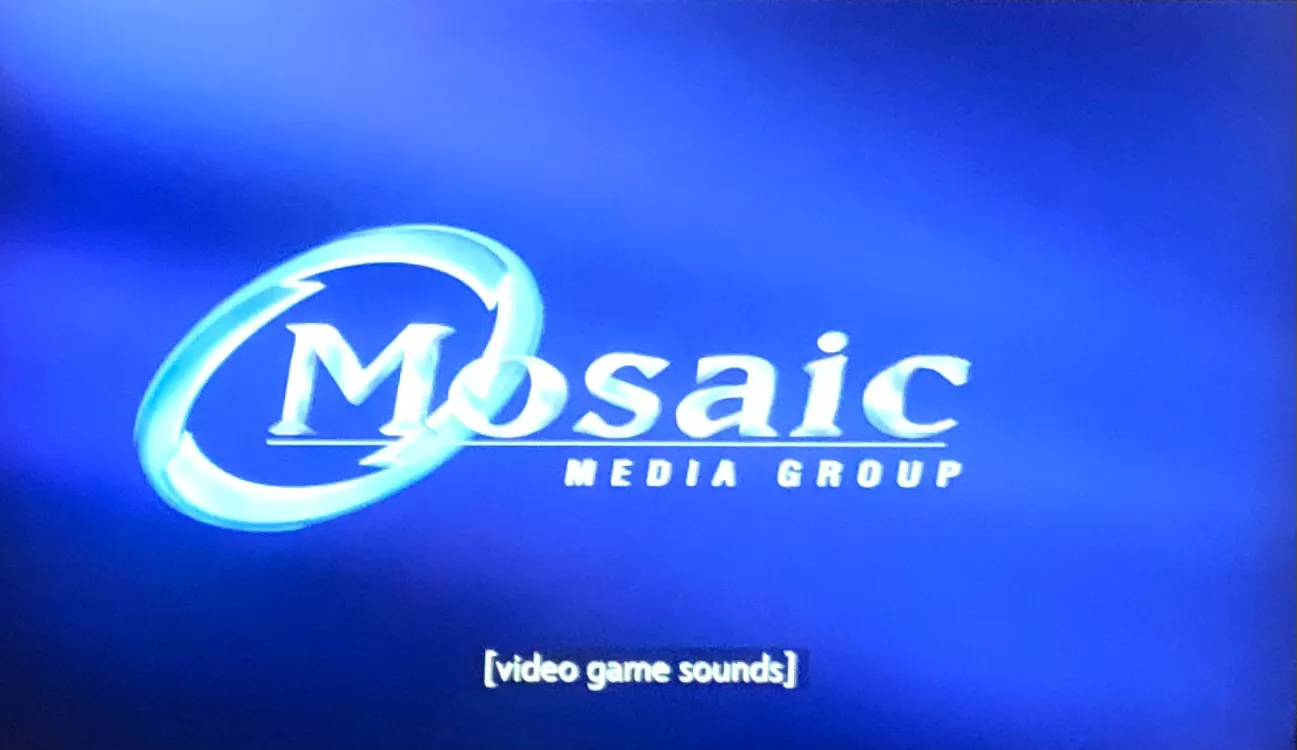
The subtitles were probably carried over from the DVD version, and whoever cut the video game promo for streaming versions overlooked this one part of the subtitles.
Mini review
The second film loses some of its original hype and some of its charm, but does introduce many of the iconic monsters from the cartoon, reimagined as real monsters this time, not just some jerk in a costume, so to this point it does a good job of raising the stakes and interestingly using the source material. The Mystery Machine makes more appearances and is more actively used.
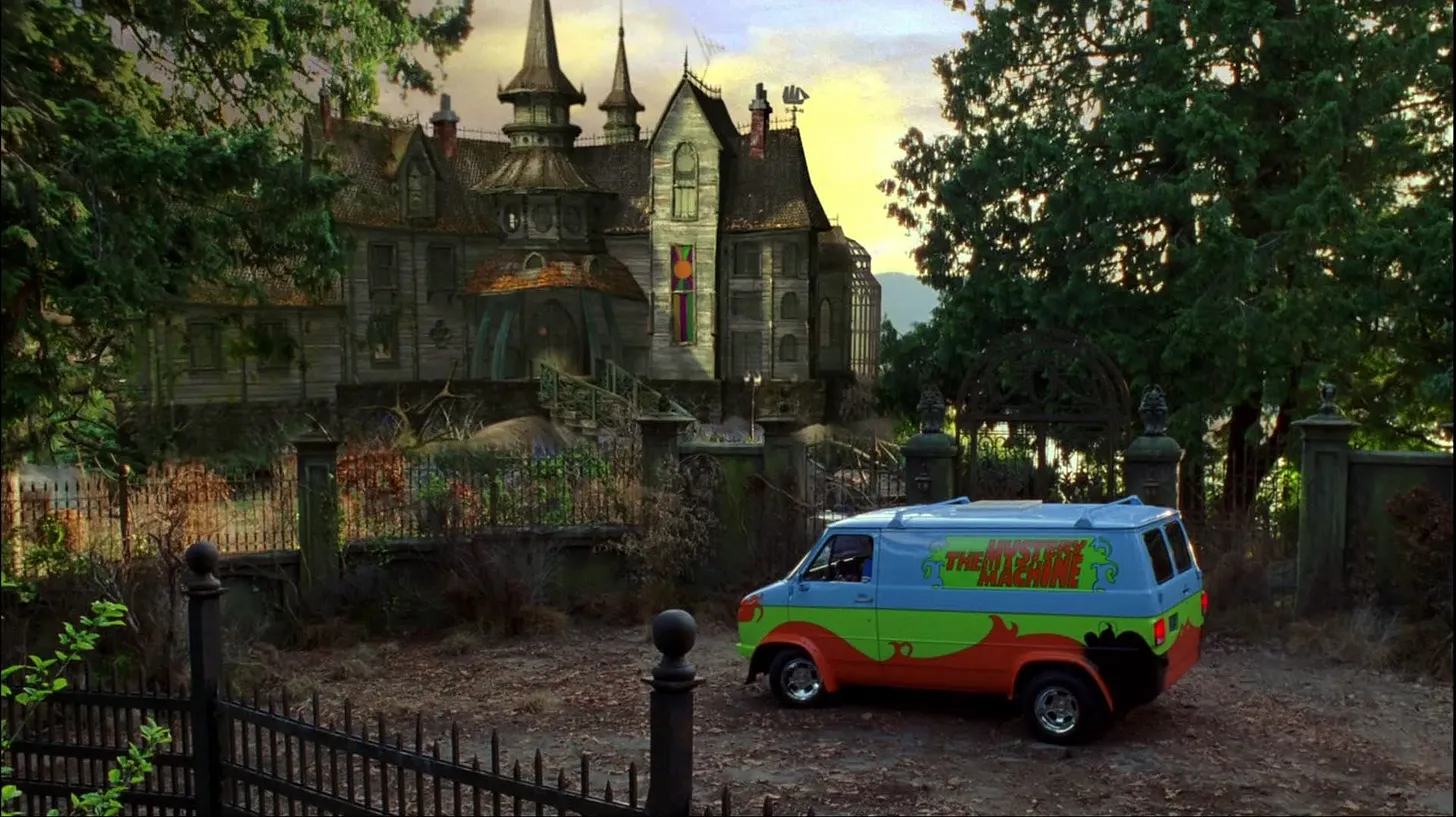
I personally have far less sentimentality for the film as I didn’t see it until several years after its theatrical release. I think it’s still a decent film for what it is. The actors are all on point again; Matthew Lillard again delivers the goods and is the standout as Shaggy.
It treads some of the same ground as sequels often do; characters outside the main gang feel underdeveloped. There are some decent jokes for kids and adults, but it is lacking compared to the original. Generally, this film feels decidedly more kid-friendly, and loses some of its edge.
So the second film suffers from diminishing returns and repeated gags. It’s less contemporary; it’s a film of peaks and valleys; it’s decent, but not as memorable as the first.
Conclusion
Both films’ soundtracks feature popular songs of the day; these songs do date the films somewhat, especially the sequel with the group Big Brovaz and the end-credits dance number with Ruben Studdard.
The original music for both films was composed by David Newman, who gives an energetic riff on the Scooby-Doo theme.
The first film is by no means a perfect film, but it delivers where it counts. If you’re in the right headspace, it’s a first-rate flick.
In the years since, there have been several direct-to-video Scooby-Doo movies; I haven’t seen any of these, but they seem to be aimed at a much younger audience (whereas these films were more contemporary family films) with less budget and star power. Are there games in these movies too? (Something to be answered another time, perhaps.)
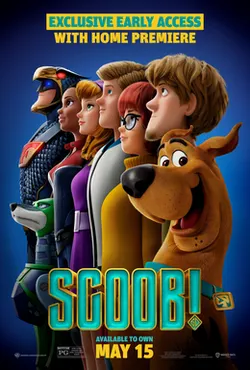
In 2020, there was an animated reboot (?) called SCOOBE. I haven’t seen this one either, but it looks like a step up from the direct-to-video efforts. It seems to have a moderate to average response from most critics and fans.
The idea of legacy sequels and reboots is often greeted by a chorus of groans. *GROAN*, though I think if it’s done right, a third film could work.
This imagined reboot would bring back the original cast and creative team for one last go around. It would be something for the older fans; make it a little more adult. Further explore the Doo universe. The tropes are already there; you’d have to ignore how a dog has lived for 20-plus years.
A nice idea that will probably never happen…
Scooby-Doo was mentioned 39 times in this blog…
Scooby-Doo, 40.
Images from arcade-museum.com
House Of The Dead,1997,SEGA.
Pong,1972,Atari
LETHAL ENFORCERS,1992,Konami
Pin Ball magic flyer
ipdb.org
Who dunit flyer
Scooby-Doo 1 and 2 Atlas Entertainment,Mosaic Media Group,Warner Bros. Pictures