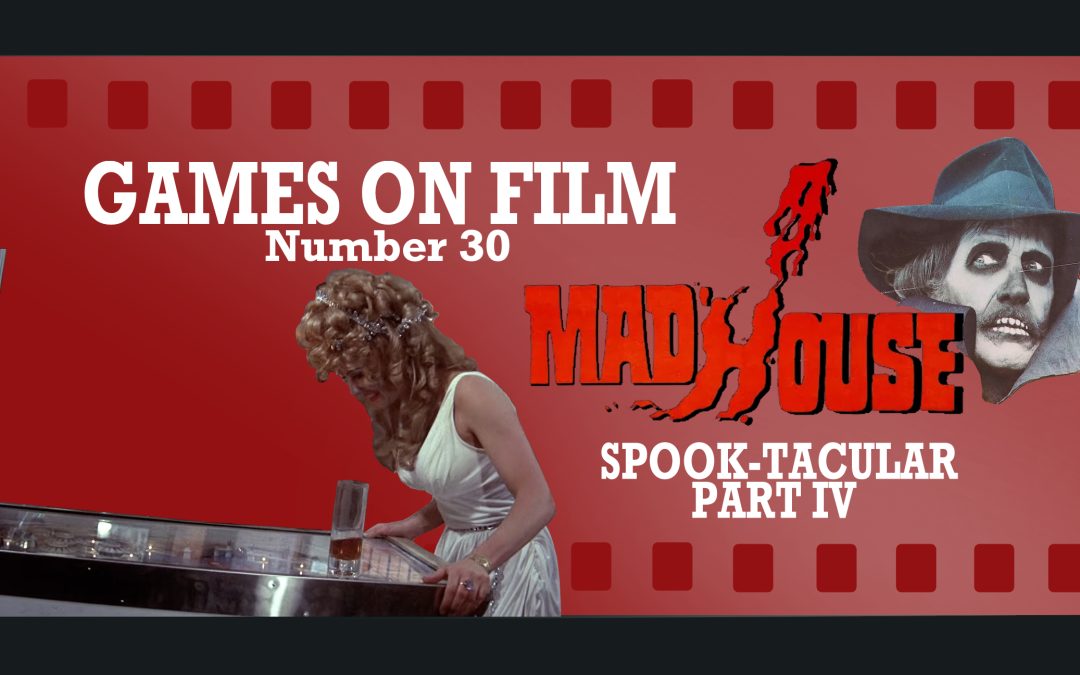
MADHOUSE, Directed by Jim Clark.
Written by Ken Levison & Greg Morrison.

Based on the novel “Devilday” by Angus Hall.

From the opening credits, you can tell this film was made by people with real respect for the genre and those who made it famous, giving Boris Karloff and Basil Rathbone their own “special participation” credits, despite their appearing only in archive footage. (Both had long since passed when the film was released.) The archive footage is used creatively and purposefully, so it doesn’t feel out of place or without reason. The opening credits constantly name-drop, helping set expectations high, but does it pay off?

At first, what may seem like another mid-70s low-budget Hammer affair actually has a lot more going for it. The film blurs the line a little between reality and fiction. Vincent Price plays a very Vincent Price-type actor, best known for his character “Dr Death”. A role he’s about to reprise after a long hiatus following the mysterious death of his young wife years ago. He was suspected of the crime, but never convicted.
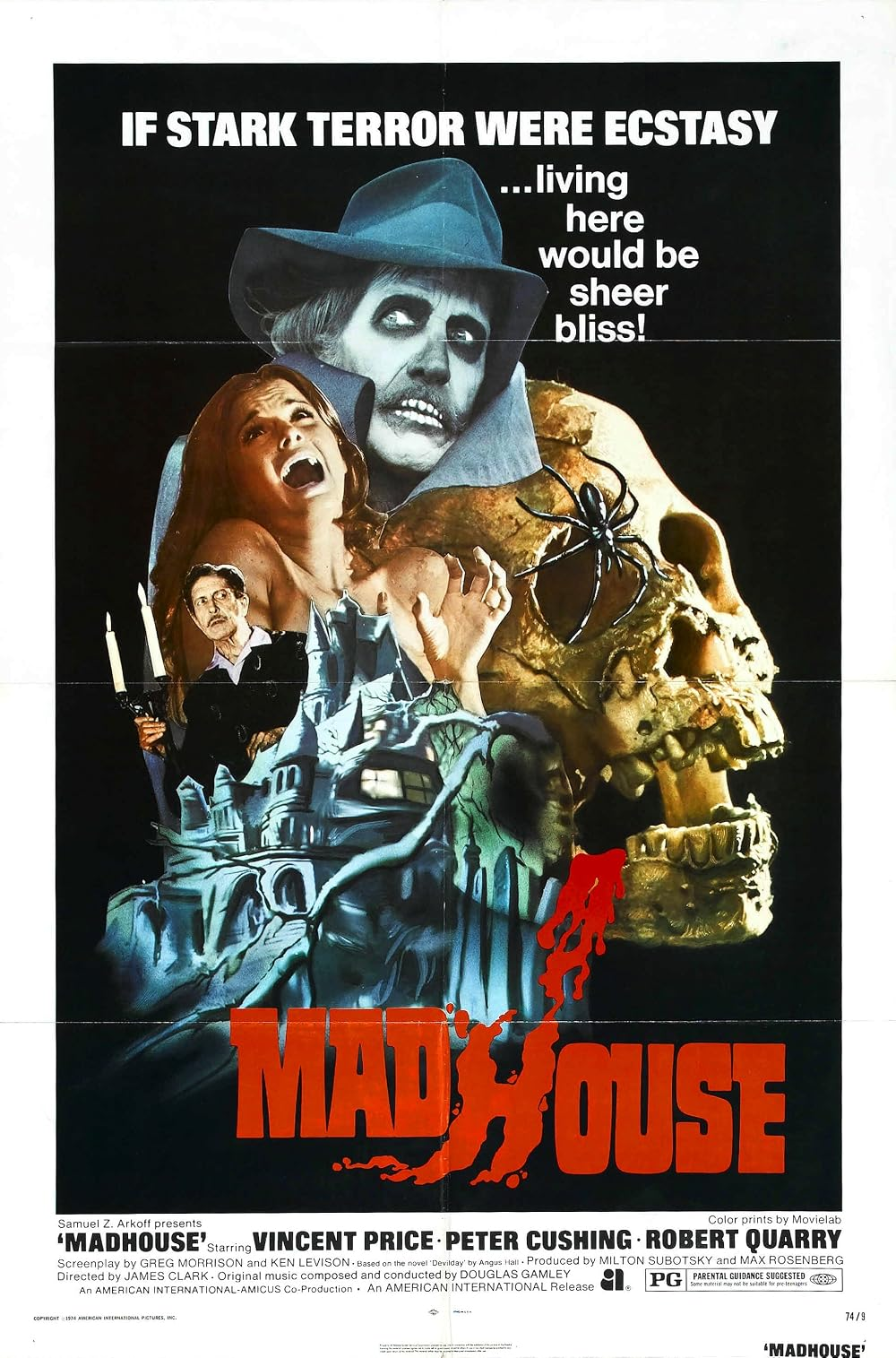
Peter Cushing plays Herbert Flay, an old acting friend of Paul Toombes (Price). As expected these two titans have great on-screen chemistry, with Peter Cushing truly coming into his own near the climax of the film. Vincent Price is great as ever, along with a strong supporting cast, including Adrienne Corri, who plays the now crazed, former co-star of Dr Death, Carstairs Flay.
There are some good creepy moments and some nice gore effects for the 70s; and also a good amount of macabre humour and a sense of levity throughout, but the film knows when to be serious and bring on the horror. A series of on-set deaths that seem to repeat history and torment Toombes, and stall production. The story keeps interest, building a nice mystery with a great reveal at the end.

The Game on Film this time is…

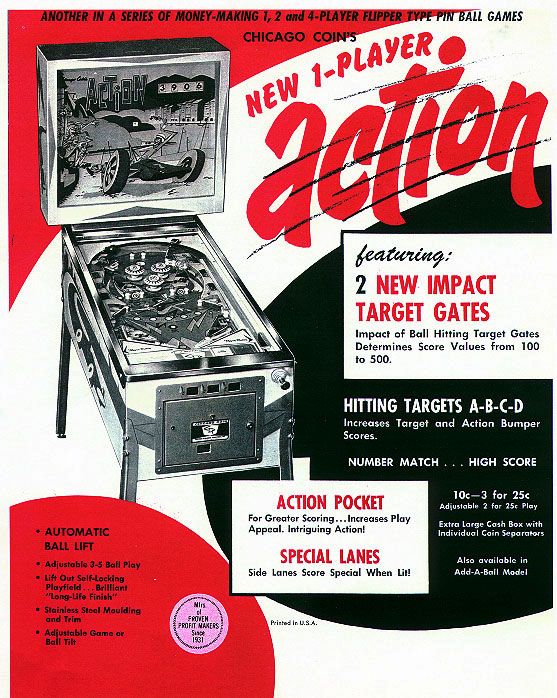
Action (1969) from Chicago Coin Machine Co. 

The machine’s artwork was by Christian Marche.

“Action” is a fairly generic name, with some kinda racing motif. It’s a shame horror-themed tables weren’t really a thing yet, because it would have fit better thematically.  
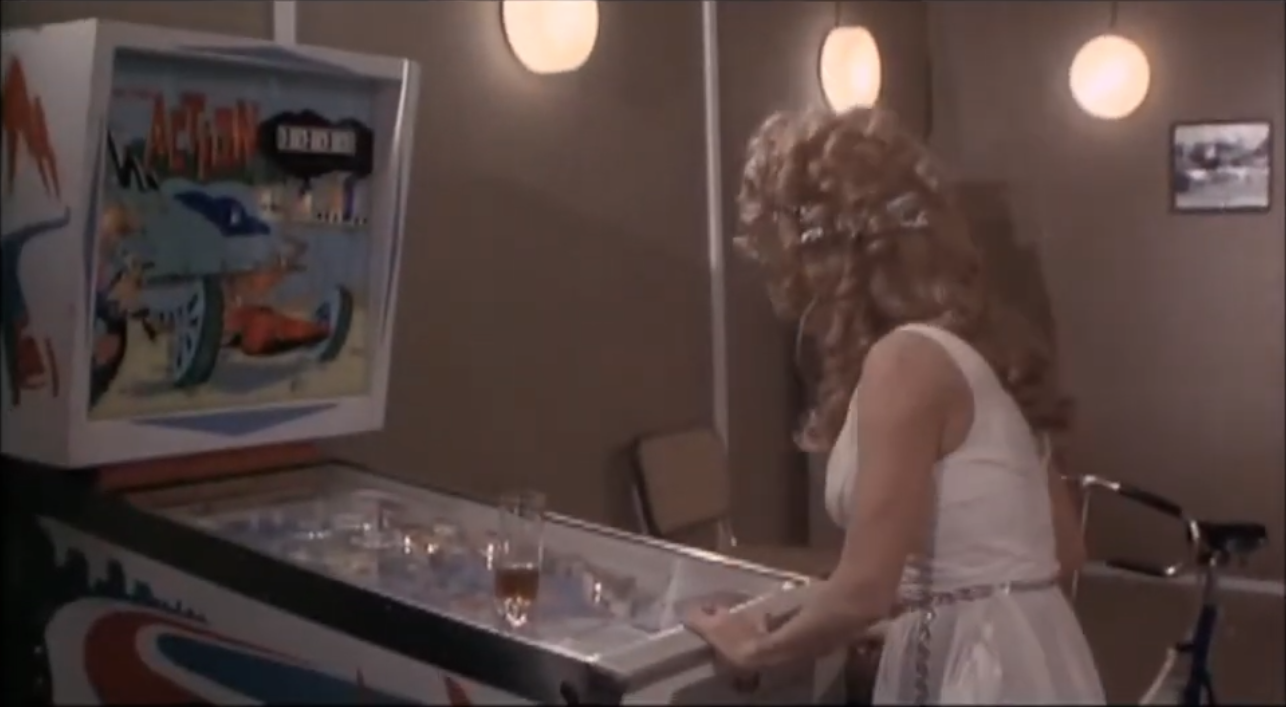
The scene

Carol Clayton (Jenny Lee Wright) dips out of a screening of one of Toombe’s old films and goes into what seems like some kind of exercise/rec room. She starts playing pinball, then suddenly the lights shut off and all the machines start going haywire.
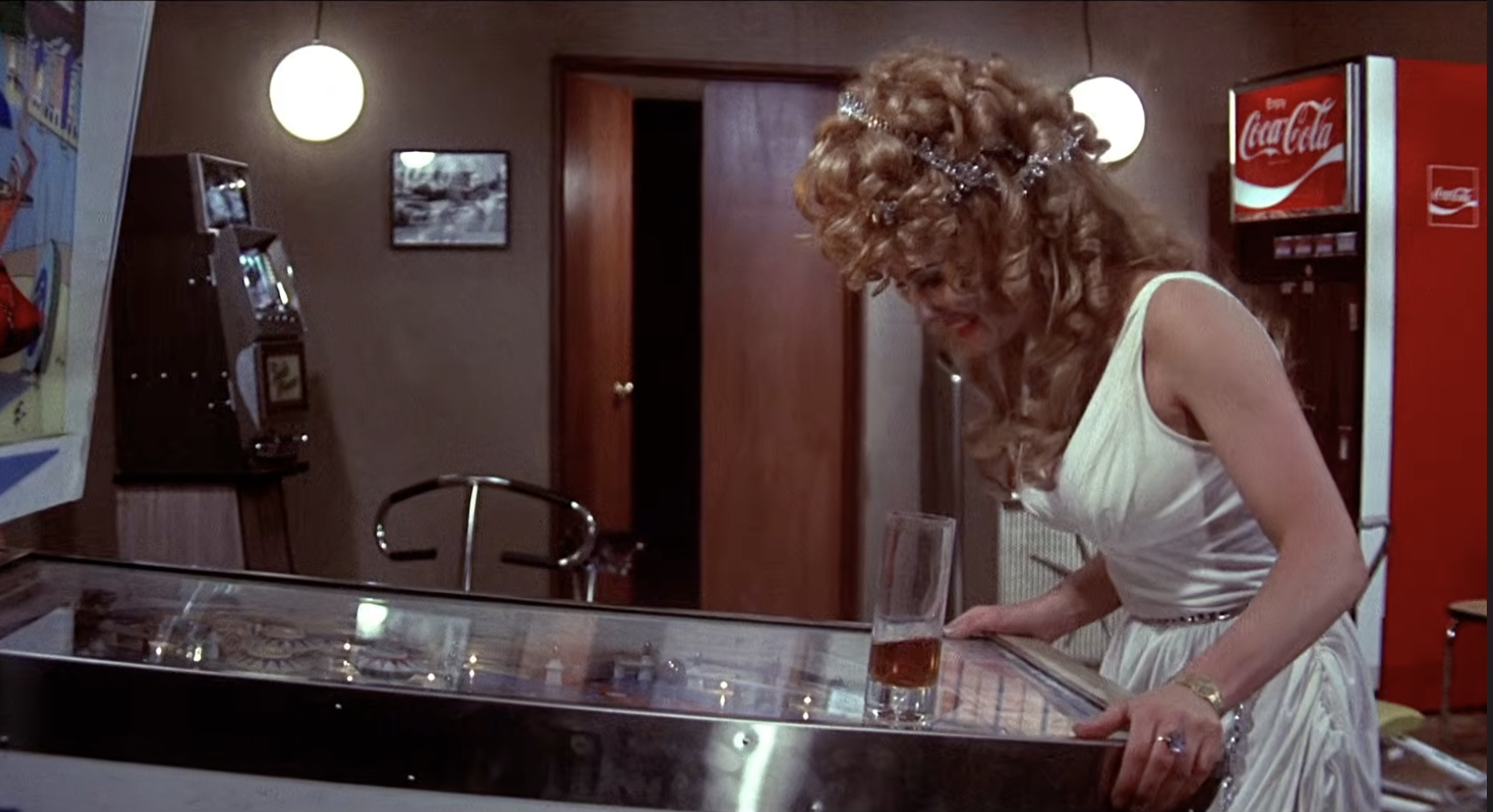
 

The exercise bike pedals itself; the jukebox starts playing. One of these old-timey belt machine things gets set to rumba. Even the exercise ropes and punching bag move by themselves.  
Of course the pinball machine plays itself too.
The scene is a visual and audio cacophony; it’s exquisitely timed and edited with intercuts of the film screening (or should that be film screaming?) while the real horror takes place in the next room.


Carol starts freaking out. (A self-playing pinball machine!? RUN!) She tries to escape, but the doors are locked, and it’s too late; Dr Death appears and claims another victim.  

One last thing, what kind of crazy exercise room is this anyway? Coca-Cola machines and pinball in the same space as an exercise bike and a punching bag. This isn’t a complaint; all exercise rooms should be like this. (minus Dr Death, of course.)
Are they playing?

This is an interesting one. At first, it does look like it, yes, at least Carol puts the ball into play. However, when the lights go out and she moves away from the table, the game continues to play itself and can be heard “playing” throughout the scene.  
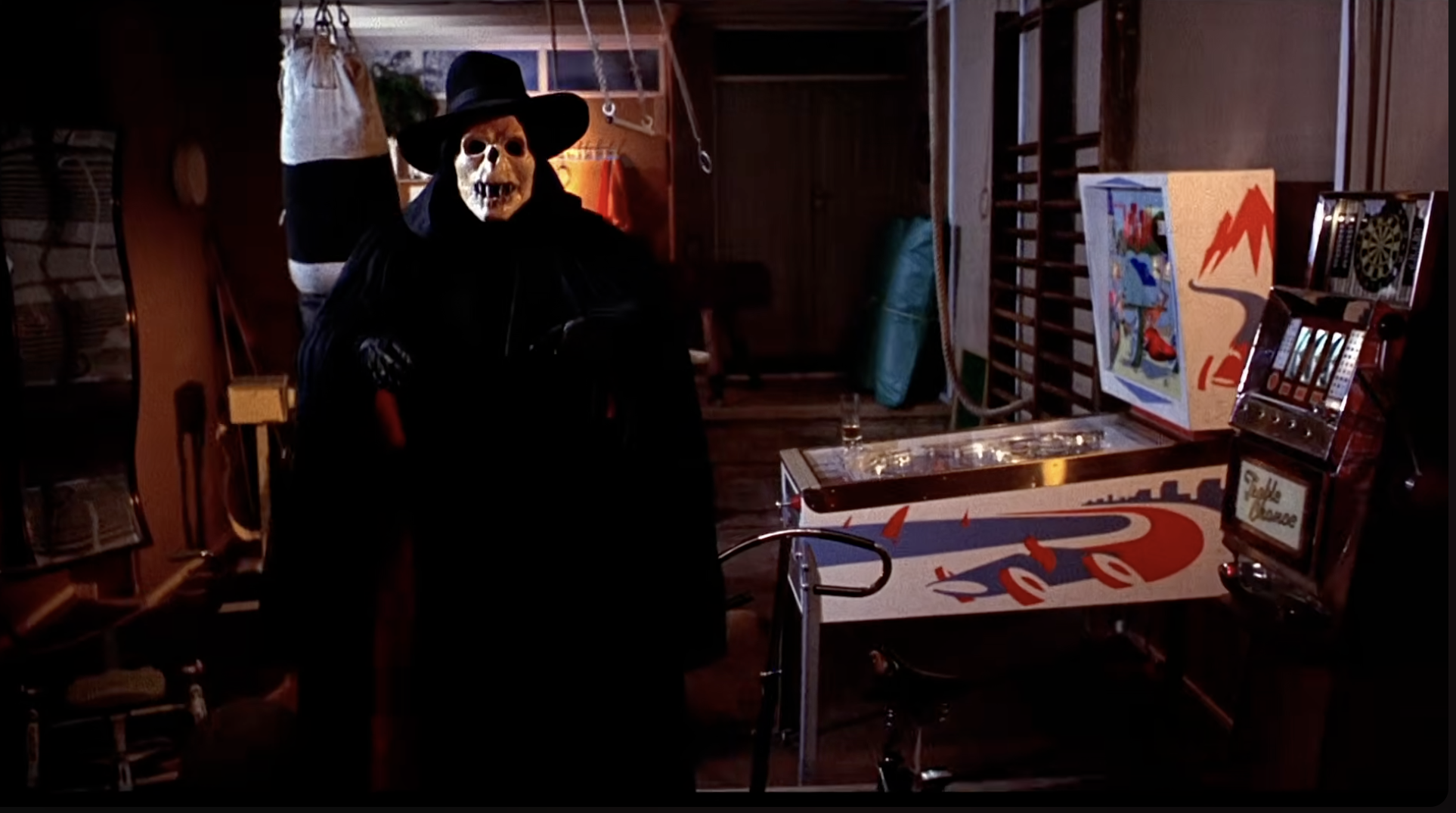
Obviously, there is some creative license going on here.  The scene is really well crafted and edited, creating a great, frantic, visually interesting, and unique, memorable horror scene.
The film doesn’t really have any supernatural elements, so it’s a little stange when the game plays itself, and all the equipment moves on its own.  I don’t recall it ever being explained how the killer accomplished this task.  (Maybe Dr Death was the real Pinball Wizard.)
CONCLUSION


It’s always great when the game is actively included in a scene, playing into the plot progression. It breaks the pace from the usual scenes of characters passively playing or blurry games appearing in the background. Other examples of pinball tables being actively used in a scene include Rumble in the Bronx (G.O.F. #19) and Rocky III (G.O.F. #1)


As mentioned, the film at times is quite self-aware and offers up some tongue-in-cheek humour.  British talk show legend Michael Parkinson makes a brief cameo interviewing Paul Toombes about his career and Dr Death. How did his appearance play outside of the UK?

Furthermore, the Parkinson scene makes explicit reference to the Invisible Man, a character Vincent Price did play, but not necessarily his character from Madhouse, Paul Toombes. This is another example of how the film blurs the line between reality and fiction. These slight fourth-wall breaks, and the commentary on the film industry and horror, help set it apart from the typical gothic horrors it was born from.


This is an easy win for classic horror fans. Somehow I was unaware of this film until now. If you can find it, it’s well worth watching, and it sits nicely alongside the American International Poe series and similar Vincent Price films like Theatre of Blood (1973).

Games on Film: Spooktacula continues in Part V

Pinball Flyer: ipdb.org