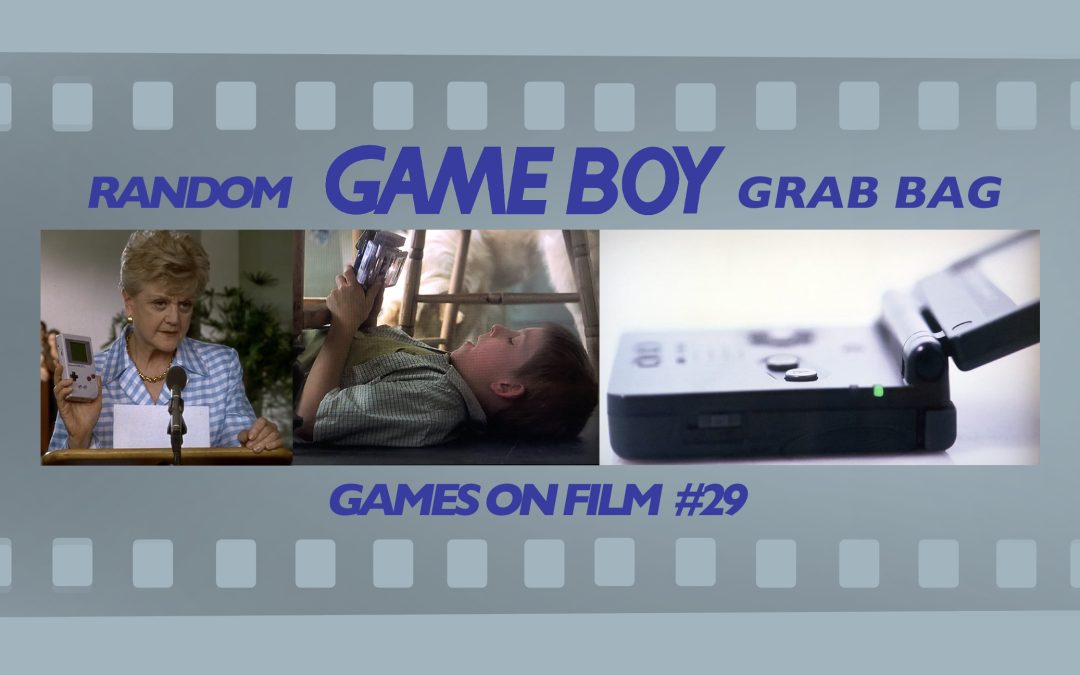
Every so often, I come across games in the most random and unexpected films. Then again, finding and documenting such appearances is the core idea of this series.
This time we will look at three different eras of Game Boy, covering the 1989 original, 1998 Game Boy Color and 2003 Game Boy Advance SP.
How do these appearances stack up? Read on to find out. . .
Murder, She Wrote: South by Southwest. (1997)
Murder, She Wrote. (1984-1996) Angela Lansbury plays Jessica Fletcher, a mystery writer who not only stumbles across murders on a surprisingly regular basis, but solves them better than the actual detectives.
Made after the original series had ended, this was the first of four TV movies. These TV movies are more of the same, but on a slightly bigger scale. If you’ve seen any episode of the series, you’ll know what you’re in for.
Behind the Games on Film
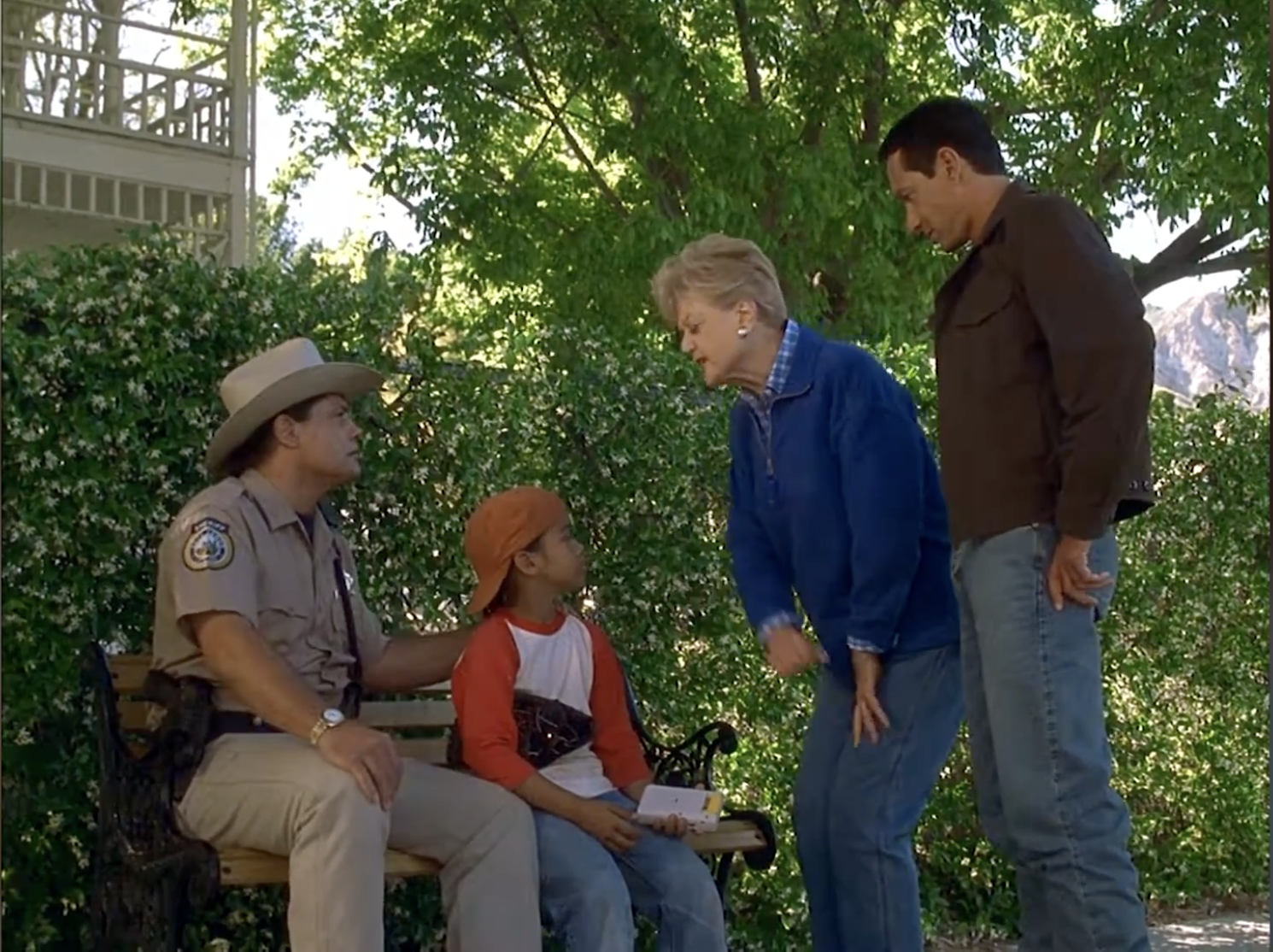
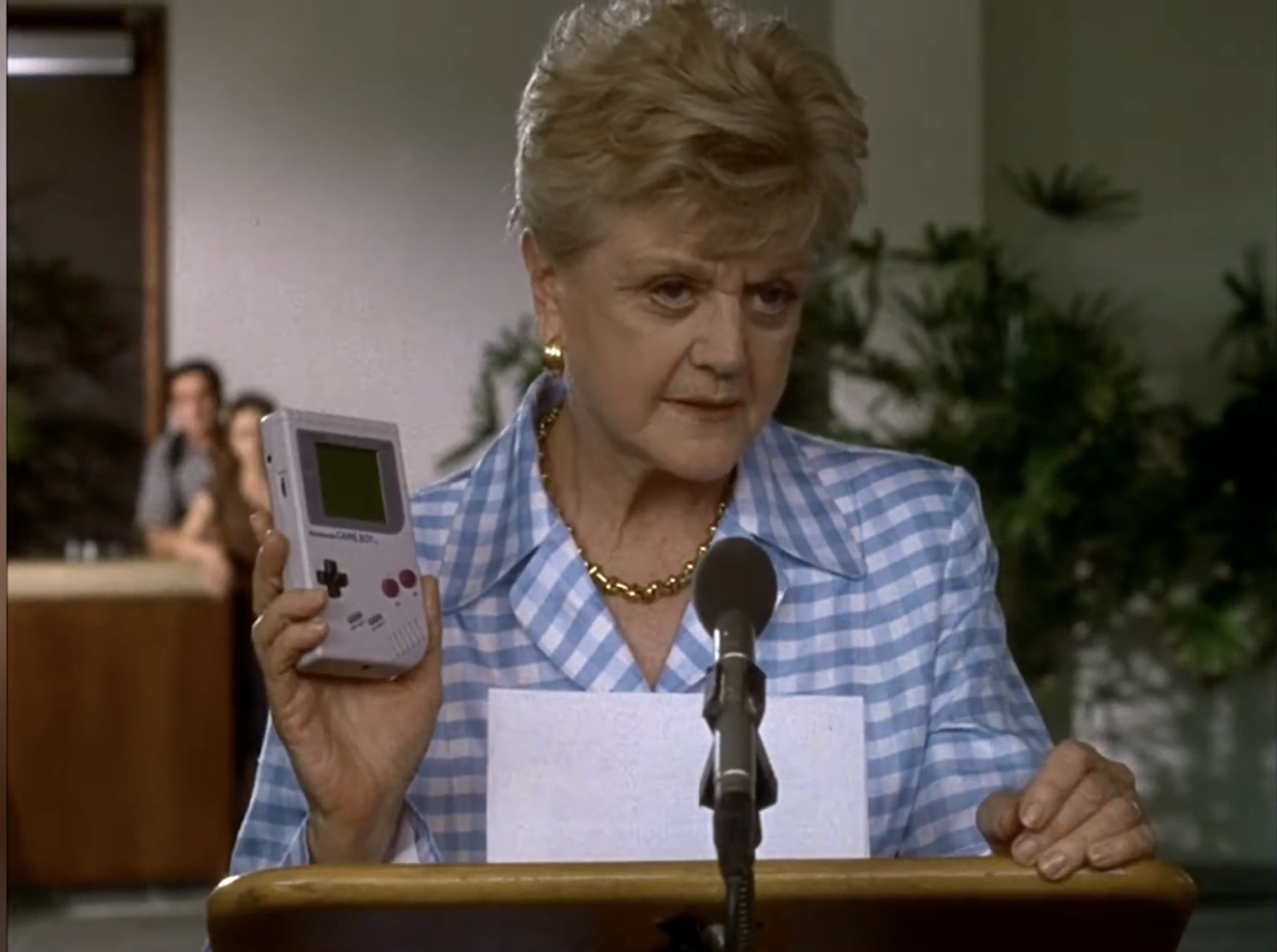
A good example to start: the Game Boy plays a significant role in the main plot as key evidence, getting a decent amount of screen time. There are some funny inconsistencies: when Jessica first hands the Gameboy to the kid (just Joe), and they start playing, the power seems to be in the off position. That said, the “play acting” is actually quite good. In a later scene, the power is on. Audio was likely added in post, and the GB sound could have been muted, so it’s particular that it wasn’t switched on the first time around.
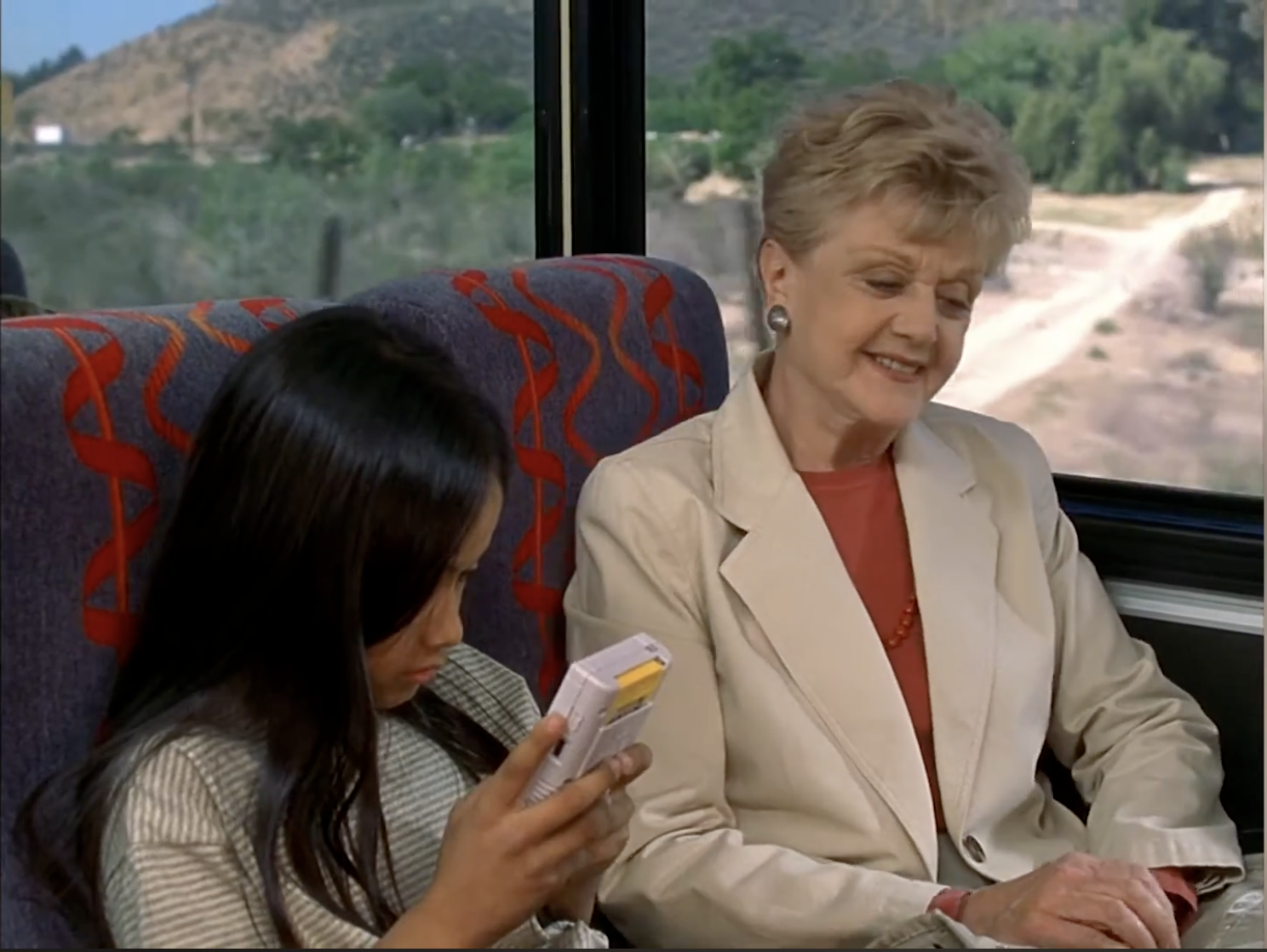
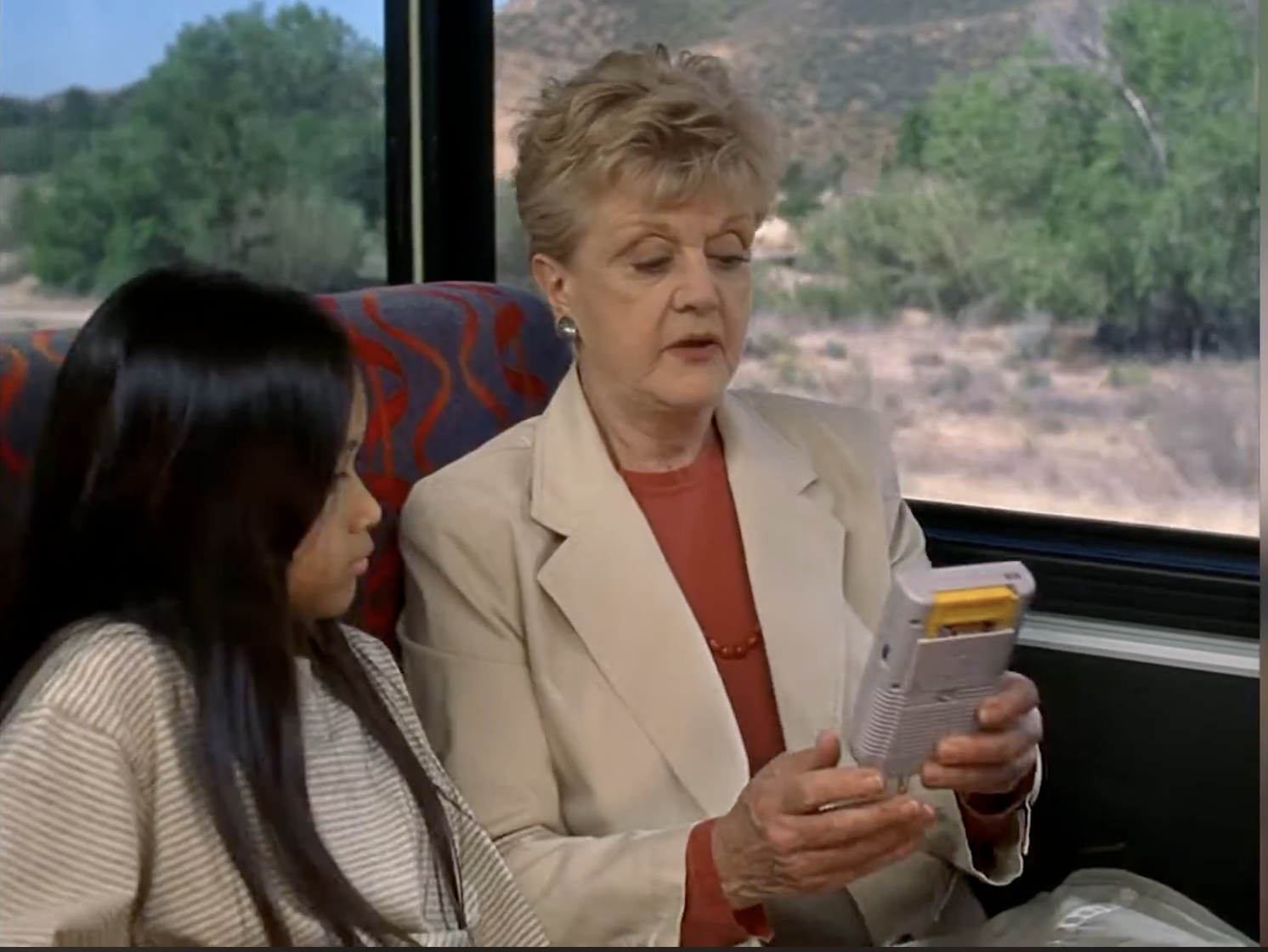
The actual game audio can be heard in some scenes. Strangely, at a certain point the title screen music can be heard, but the kid is hammering away at the buttons like it’s a regulaur level. (That is unless the title theme appears later in a level? Hmm, perhaps more research is needed.)
We do get some slight video game tech-no babble with Jessica using generic terms to describe the gameboy such as “electronic game” (to be fair, that is what it is…). As with any branded appearance, licensing is often involved, but interestingly the Nintendo or Game Boy logos are not covered up like in other examples like the Atari Lynx seen in Child’s Play 3 (G.O.F 18), but now we’re getting away from things.
The distinctive yellow cartridge seen is Donkey Kong Land 2.
The original Game Boy launched July 31 1989, in North America. (JP Apr 21 89, EU Sep 28 90). The Game Boy Pocket came out on Sep 2nd, 96, (NA, JP July 20 96, EU Jan 97), so with the South by Southwest first airing on November 2nd 1997, it’s interesting they chose to use the original model. The Game Boy, while still popular at the time, wasn’t the juggernaut it once was; this was set to change with another set of colourful cartridges. Pokémon came to the West in 1998 and was, of course, an instant success and helped extend the life of the Game Boy, with the line officially discontinuing in 2003.
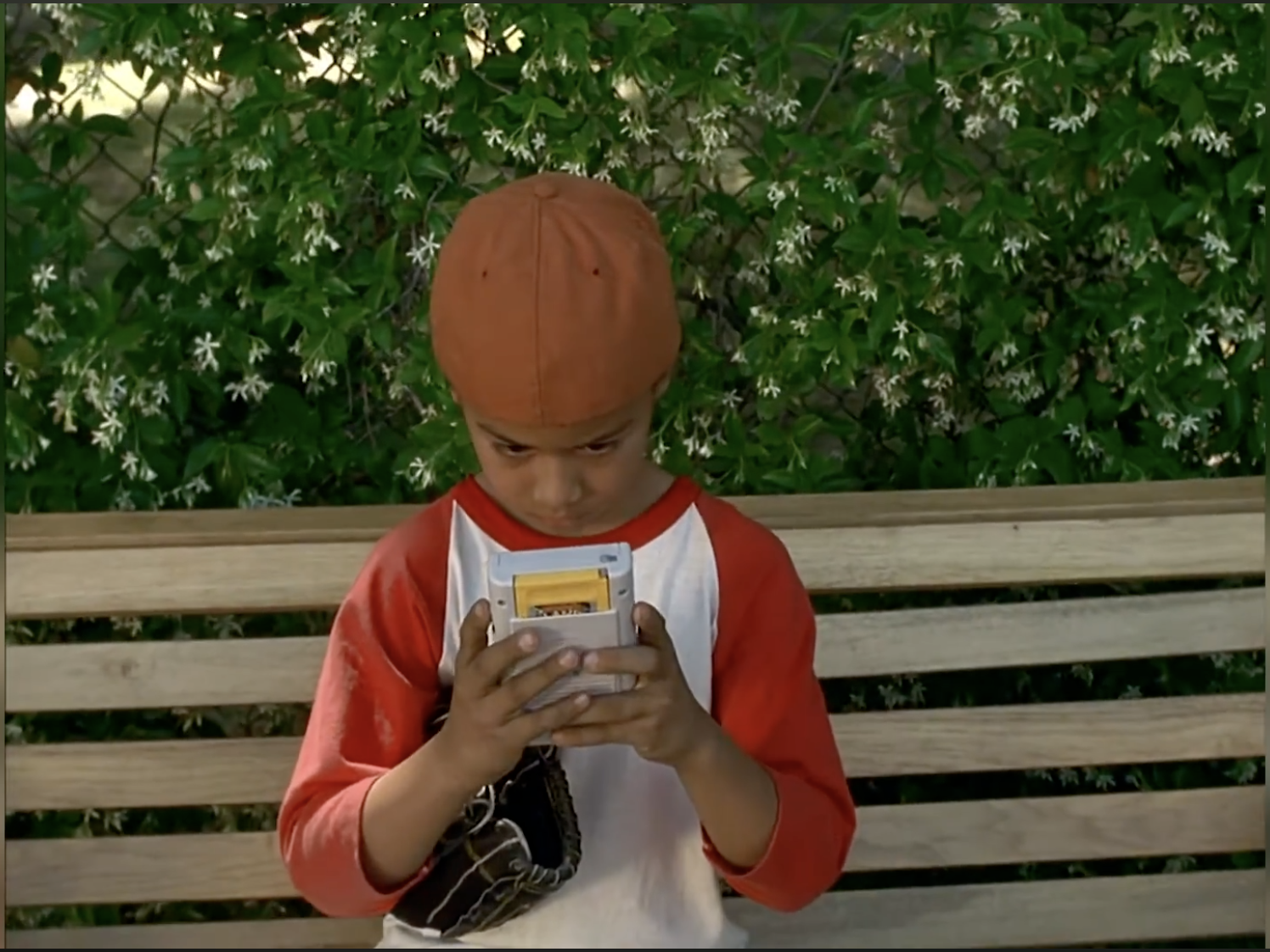
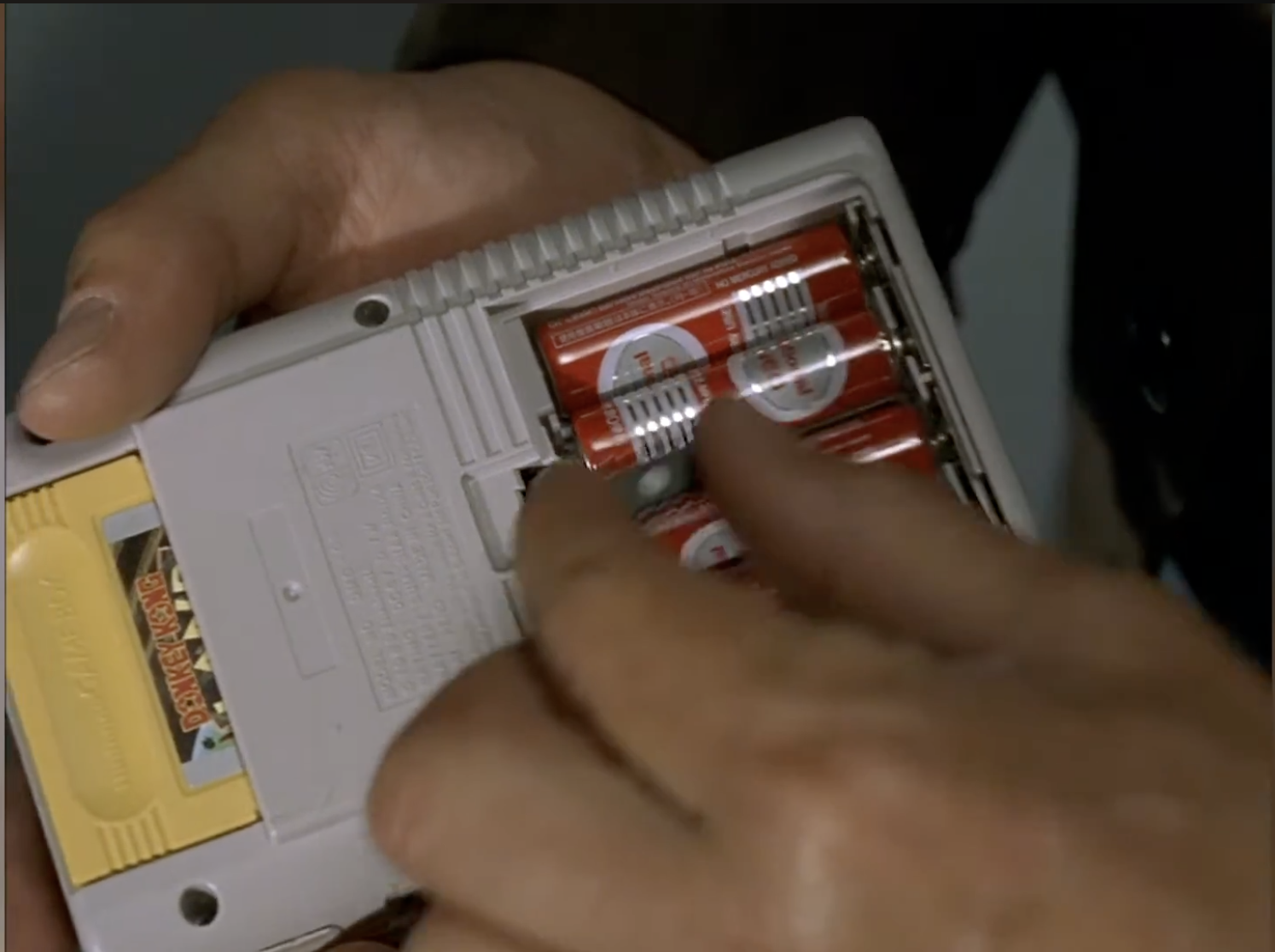
Donkey Kong Land 2, Rare, 1996. A handheld reimagining of the SNES game Donkey Kong Country 2. Nowadays, a game like this might be categorised as a D-make, when it’s actually more of its own thing.
The Land series was quite a graphical flex for the Game Boy, replicating pre-rendered visuals to great success. The pre-rendered graphics translate surprisingly well to the Game Boy.
A truer portable version of Donkey Kong Country came later on the Game Boy Colour in 1998. Then all three Country games received ports to the Game Boy Advance. DKC 2003, DKC2 2004, DK3 2005.
All Donkey Kong Land and Country trilogies are included as part of Nintendo Switch Online.
MINI REVIEW
The premise, like any weekly murder mystery, is a little bit trite if you think about it too much. This is not meant as a complaint; I am a big fan of this style of murder mysteries. The series is decent, well worth at least checking out for a few episodes. Failing that, check out Pushing Up Roses on YouTube; her episode reviews are equal parts hilarious and informative.
If you’ve seen any of the series, you’ll know what you’re in for; South by Southwest is more of the same, but that’s not necessarily a bad thing, although some of the old charms are starting to show their age. After all, this was made only a year after the series had ended. Perhaps waiting a little longer before coming back would have given the film more impact. (Absence…)
The logic and general mystery follow the typical TV detective rules. Still, the mystery is decent fun and runs at a good pace. Long-term fans maybe disapointed the no series regulars or recurring characters make the leap from TV series to TV movie.
However, this and the other three TV movies were directed by series veteran Anthony Pullen Shaw, and this film was co-written by Derek Marlowe and series regular Mark A. Burley. So you know it was in good hands, worth checking out on a rainy weekend afternoon. (if you can find it….)
Unfaithful (2002)
Behind the Games on Film
This Game on Film is not messing around, and is one of the first things you see when the film starts. This could be a contender for the quickest Game on Film.
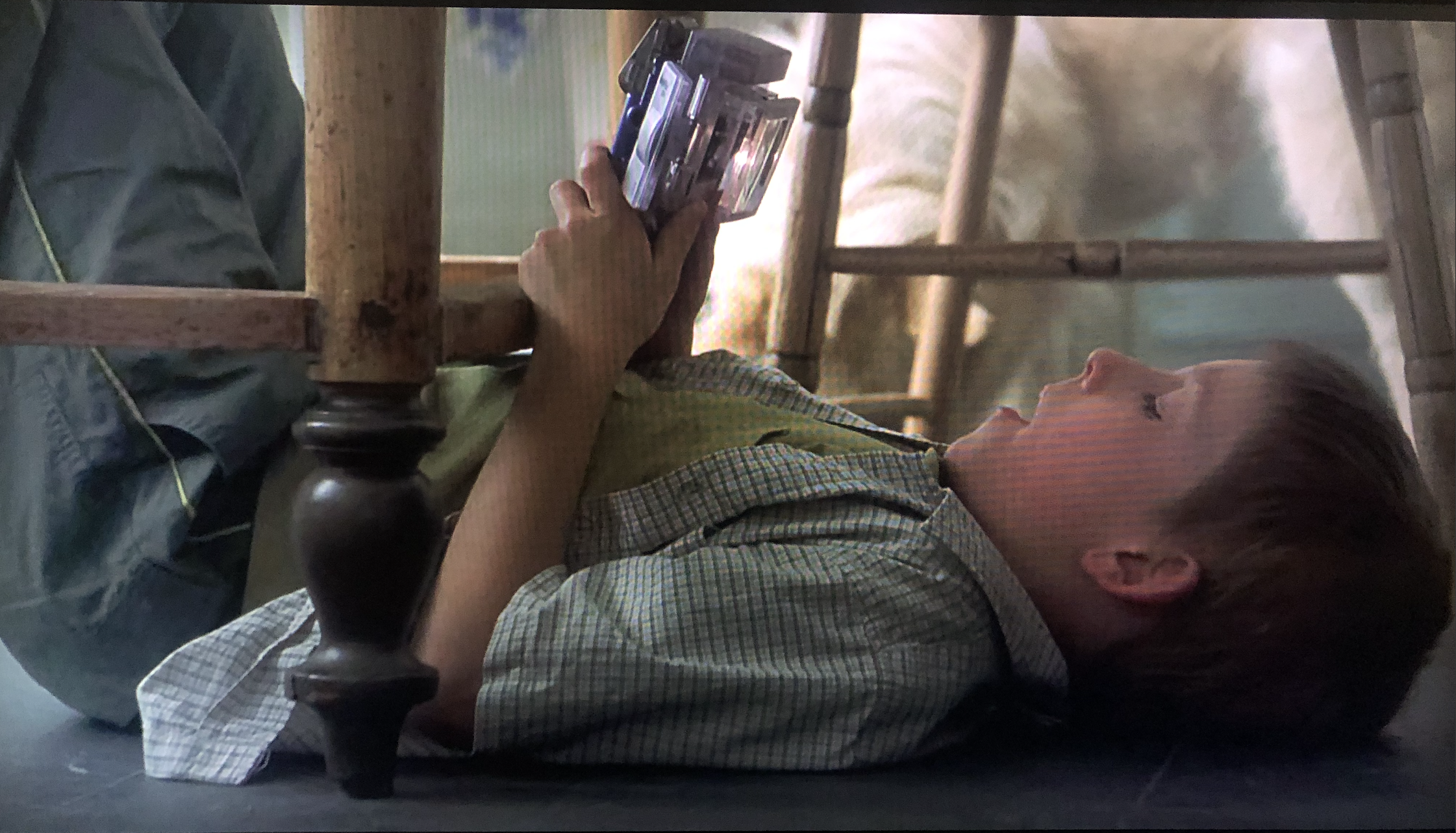
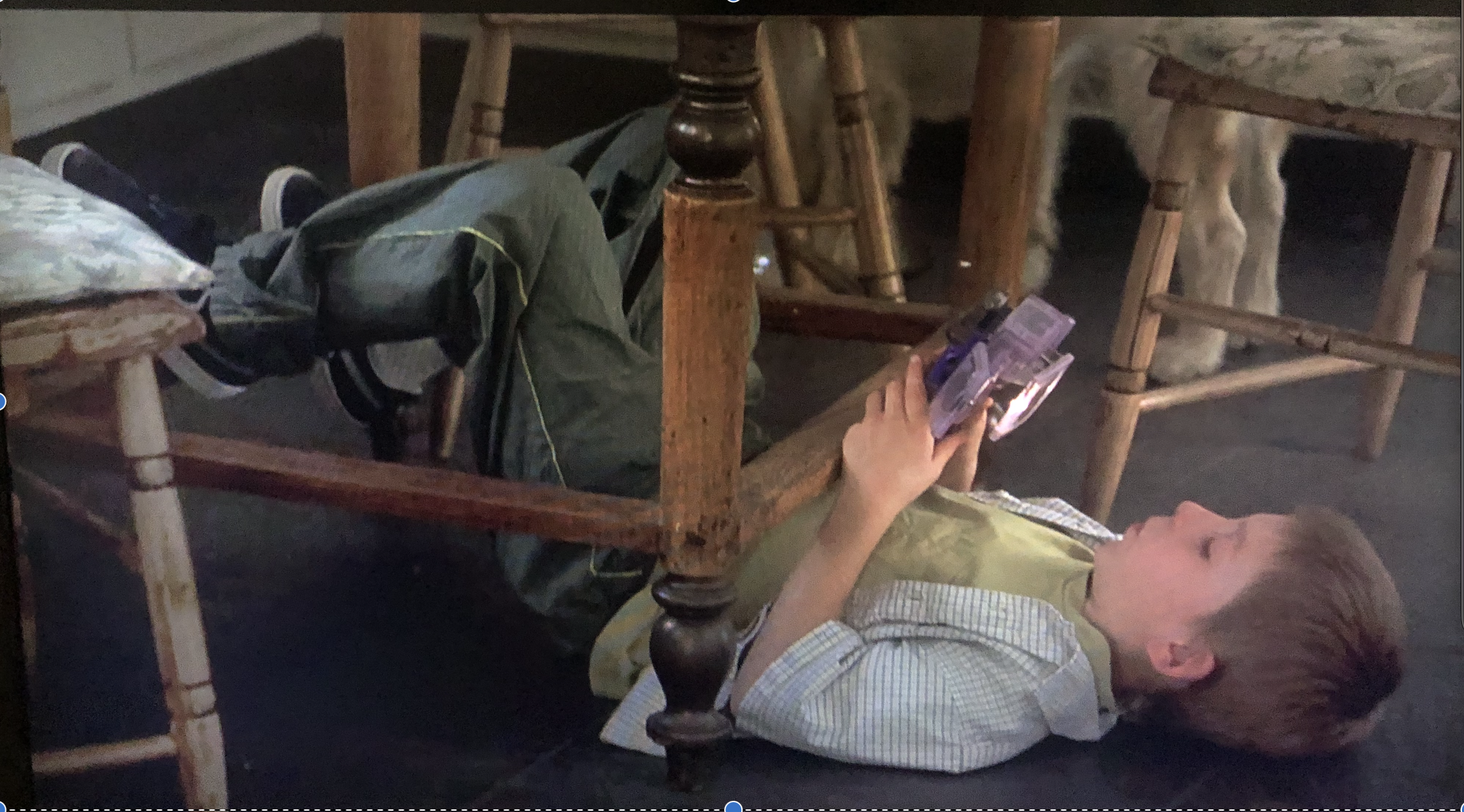
A kid is playing Game Boy Color (purple), (JP Oct 21 98, NA Nov 18 98, EU Nov 23 1998), while lying on the floor. The Game Boy is attached to the Handy Pak colour accessory.
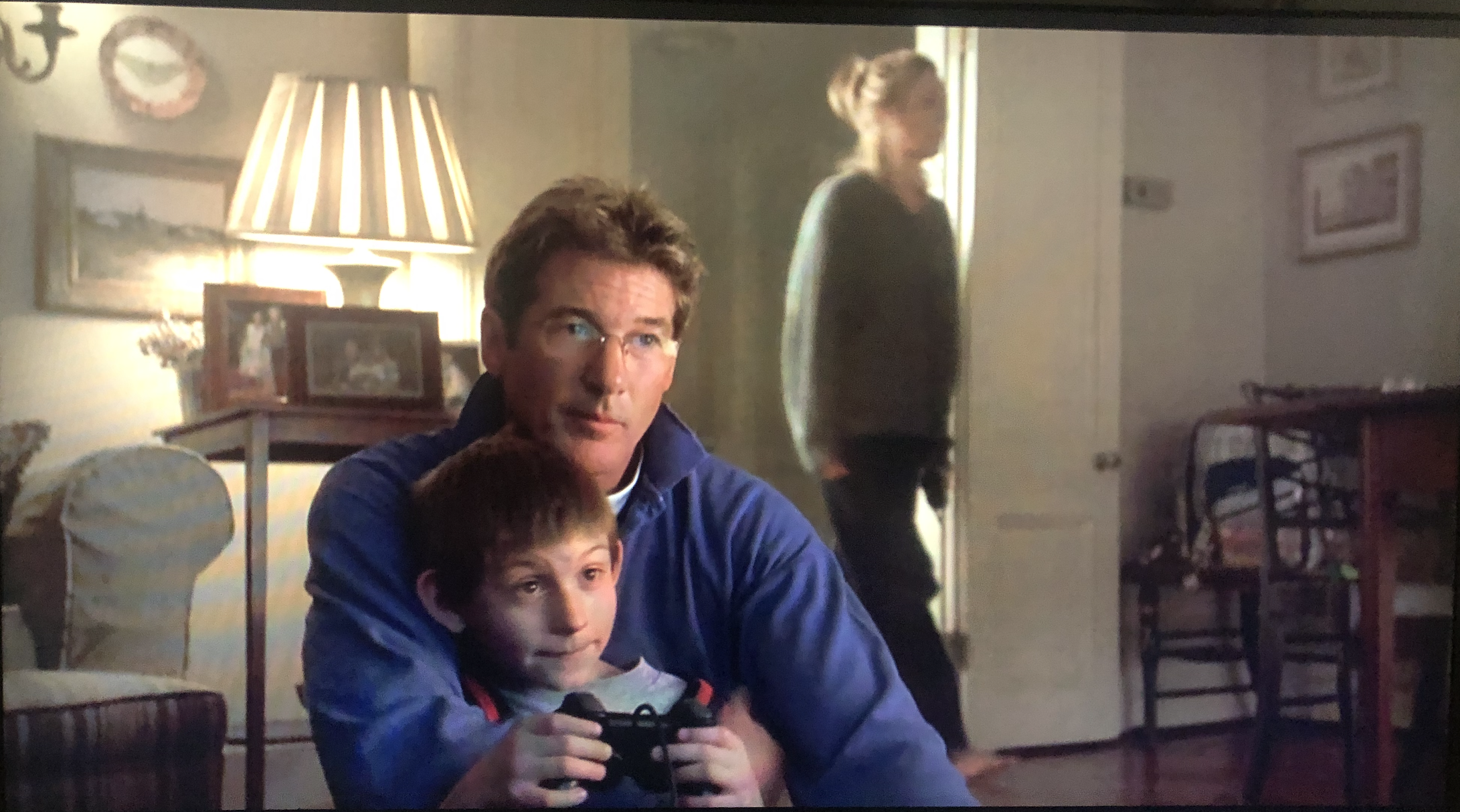
Later, the kid is seen very briefly playing a PlayStation 2 (JP Mar 4 00, Oct 26 00, EU Nov24, 00) with his dad. No gameplay is shown, nor is the console shown- just the controller. (Really, that’s it.)
The Game Boy is specifically cited by name in the script, but makes no mention of a specific game (and why would it? We never see the screen).
No gameplay is shown, but it seems to be Missile Command (1999, Meyerglass Interactive). This version of the game was one of 16* Game Boy Color games to come in a special rumble cartridge. Slightly larger than the standard GBC cartridge, it adds vibration feedback. The rumble cartridge is perhaps best remembered for Pokémon Pinball (2000). *(16 in NA with 7 JPN exclusives.)
Missile Command on GBC is a fairly basic, but faithful adaptation of the original game. The addition of rumble does add some intrigue.
Mini Review
A fairly decent, if not played-out, drama, with some light thriller moments. It also has some moments of inspired cinematography and direction.
A typical suburban wife (Diane Lane) cheats on her Richard Gere husband with some French guy (Olivier Martinez).
One obvious criticism of the film is that she has no real reason to have an affair. Her life is set up as pretty good, with not a lot of strife; if she’d visited France just once, she’d realise he was just some regular jerk. But who knows why people do the things they do. Or perhaps there was a deleted scene where her husband was a jack-ass?
It was also interesting to see Erik Per Sullivan in a more dramatic context, playing the son. Probably best remembered for his role as Dewey in Malcolm in the Middle. He does a good job, but the having-an-affair-when-you-have-a-kid angle is barely touched.
For my taste, too much of the film is spent on the affair part, and it only really gets interesting after the husband (somewhat) accidentally kills Mr Frenchy. There’s a brief moment where the film dips into some (very) light Hitchcock territory when the husband knows about the affair but she doesn’t know he knows, and vice versa.
The more interesting drama/suspense parts are left undercooked. Leads me to think director Adrian Lyne was more interested in the sex and scandal side of the story than dealing with the fallout. (Just check out this guy’s filmography; there’s definitely a theme.)
Splitstream (2005)
Behind the Games on Film
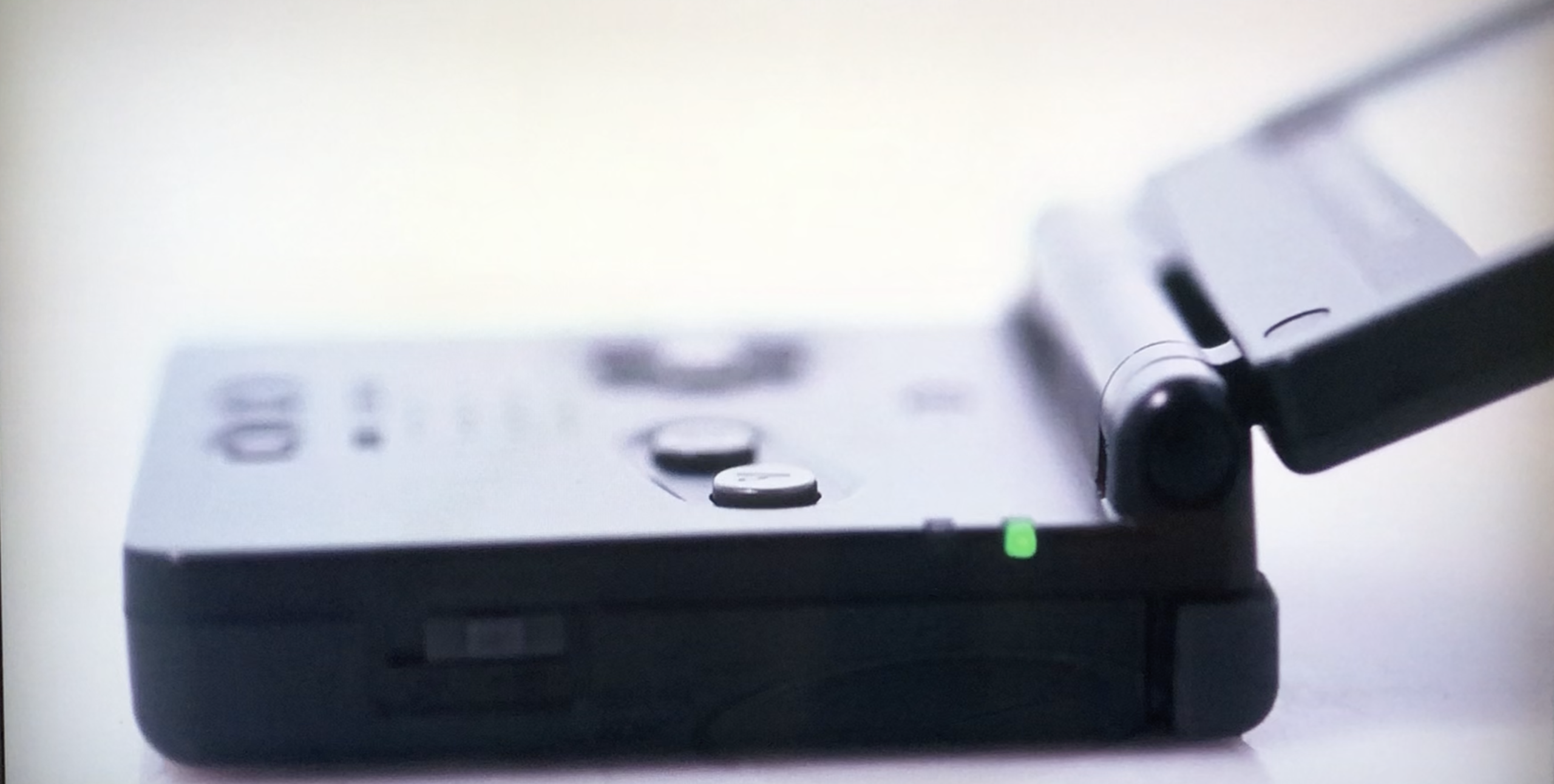
Another contender for quickest Game on Film: during the opening credits, when Stuart Conway (Sean Astin) is giving his spiel about technology, inserts of various early 2000s tech are shown, including a Nintendo Game Boy Advance SP (2003). (JPN Feb 14 03, NA Mar 23 03, EU Mar 28 03)
The SP was a clamshell redesigned version of the original Game Boy Advance (2001). It also sported a front light and rechargeable battery. It was further improved with an updated model, the AGS 101, with a backlit screen in 2005.
Game Boy Advance SP has popped up before in Games on Film. Umamusume Cinderella Grey, S1 EP (G.O.F #20).
An interesting example of a Game on Film, where it’s not used by any character, nor does it appear in the background of a scene. The inserts don’t even seem to exist in the universe of the film. These short inserts technically break the fourth wall by showing off the tech in such a direct, almost commercial fashion.
Mini Review
A time travel movie that has an okay concept, but doesn’t really do anything with it. The rules are loosely explained, but not really defined, and seem to change to suit what has to happen in the story.
Some strange editing and cinematography choices. One major hang-up is that they treat the time travel device very nonchalantly, which quickly moves from slight humour to frustrating. For its budget, it does try some interesting things with some decent effects for its era. The film’s fine, but that’s about it. It has a decent premise, but there are far better time travel movies out there, so maybe watch one of those instead.
Conclusion
Ending on a bit of a mediocre note. Across these three very different films, capture the progression of Nintendo handheld hardware. The 89s and the 90s to the late 90s and early 2000s. Also show design philosophies and advancements, starting with the original.
Interesting to see accessories like the “Handy Pak Color” that retrospectively come off as fairly excessive.
Next, the SP that natively had a front-lit screen, making accessories like Handy Pak completely void. The SP design and the context that it’s shown in, along with phones, give it a more mature feel, compared to previous examples that were primarily focused on kids playing.
The Rumble Pak-enhanced Game Boy Colour game cartridge was an interesting time of experimentation for Nintendo; other Game Boy Color games such as “Kirby Tilt and Tumble” (Nintendo, GBC, 2000) had an accelerometer in the cartridge that translated moving the Game Boy to controlling the game.
How’s that? Three eras of Game Boy in 3 very different films. Look out for more Games on Film coming soon.