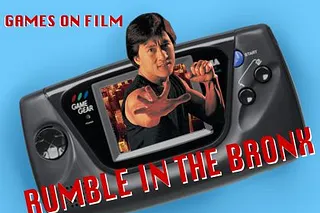
Today’s system on film is …
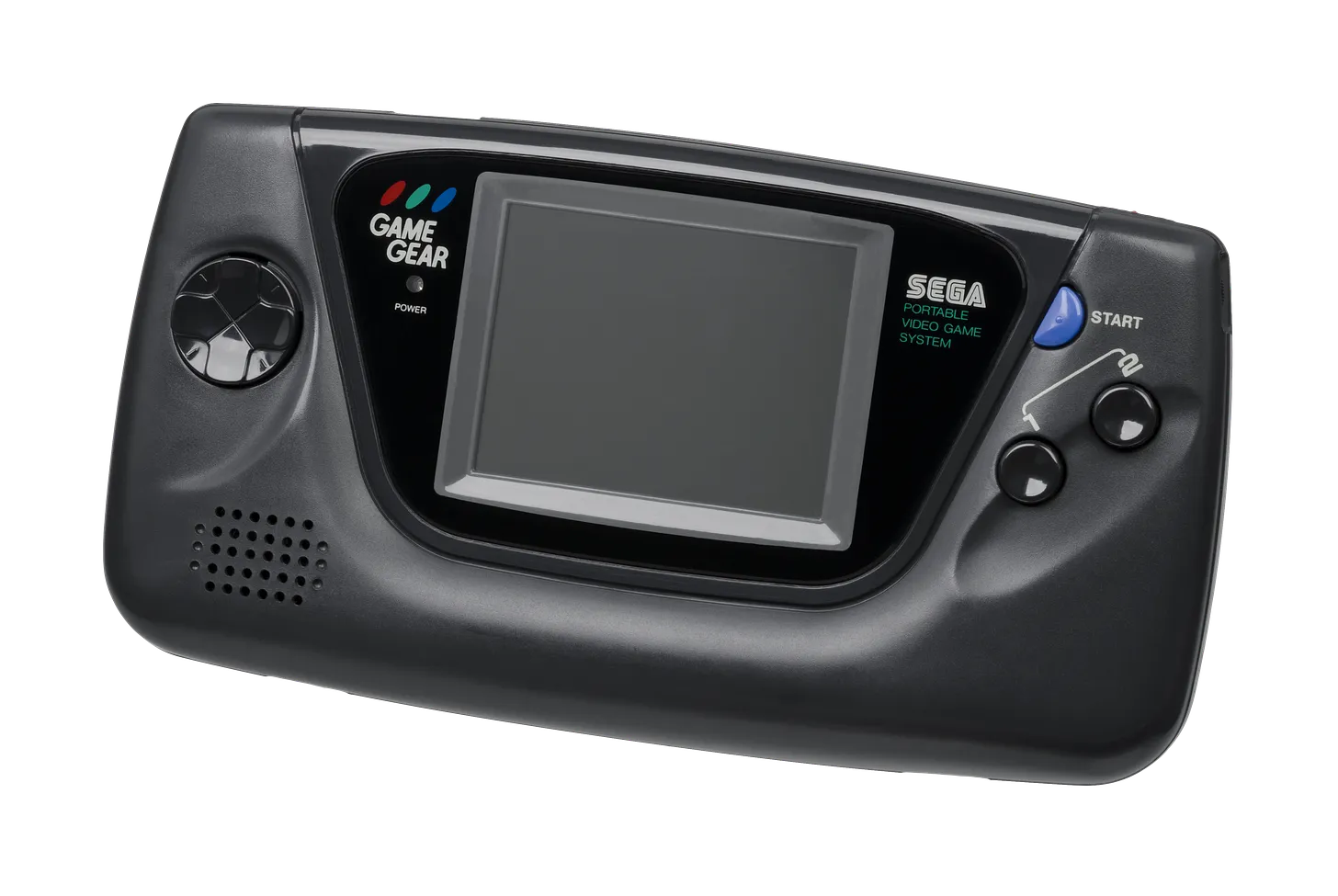
System: SEGA GAME GEAR
Releases: (JP) October 6/90, (NA/EU) April 91.
SEGA GAME GEAR (Credit: Evan-Amos)
Jackie’s back! Last time we looked at Jackie Chan in Police Story 3: Super Cop, which featured the villain of that film playing a bootleg copy of Tetris on the Sega Mega Drive. (Read all about it in Games on Film #11)
Rumble in the Bronx came out first in Hong Kong on January 21st 1995, then in America the following year, on February 23 1996, and then in the UK on July 4th 1997. The film is often cited as the one that cemented Jackie in the West and helped push martial arts and foreign-made films into the mainstream. So it’s likely that many western fans were introduced to Jackie through this film, despite him already having quite an impressive filmography by this point.
Directed by Stanley Tong
Written by Edward Tang & Fibe Ma
Starring
Jackie Chan/Ma Hon Keung
Anita Mui/Elaine
Françoise Yip/Nancy
Bill Tung/Uncle Bill Ma
Marc Akerstream/Tony (Gang Leader)
Garvin Cross/Angelo
Morgan Lam/Danny
Kris Lord/White Tiger, the syndicate boss
Carrie Cain Sparks/Whitney Ma
The story follows Keung, a cop from Hong Kong who has come to America to visit his soon-to-be-married uncle, who has recently sold his grocery store in the Bronx to a young woman called Elanine. The store is attacked by a local street gang. Keung tangles with them, and the rumble is on.
Impressive stunts and fighting choreography, as always, coupled with Chan’s signature blend of mixing action and comedy set pieces. The story is a fairly typical affair, but it does its job; after all, we’re here for the martial arts action. Despite being set in the Bronx, USA, production actually took place in Vancouver, Canada.
Pinball in the Bronx
Before getting to the Game Gear, let’s spare a thought for the other games seen in this film, yes, that’s right, there are others!
While the Game Gears’ appearance is often talked about and is well documented, not many people talk about the pinball machines that appear in the film.
The scene
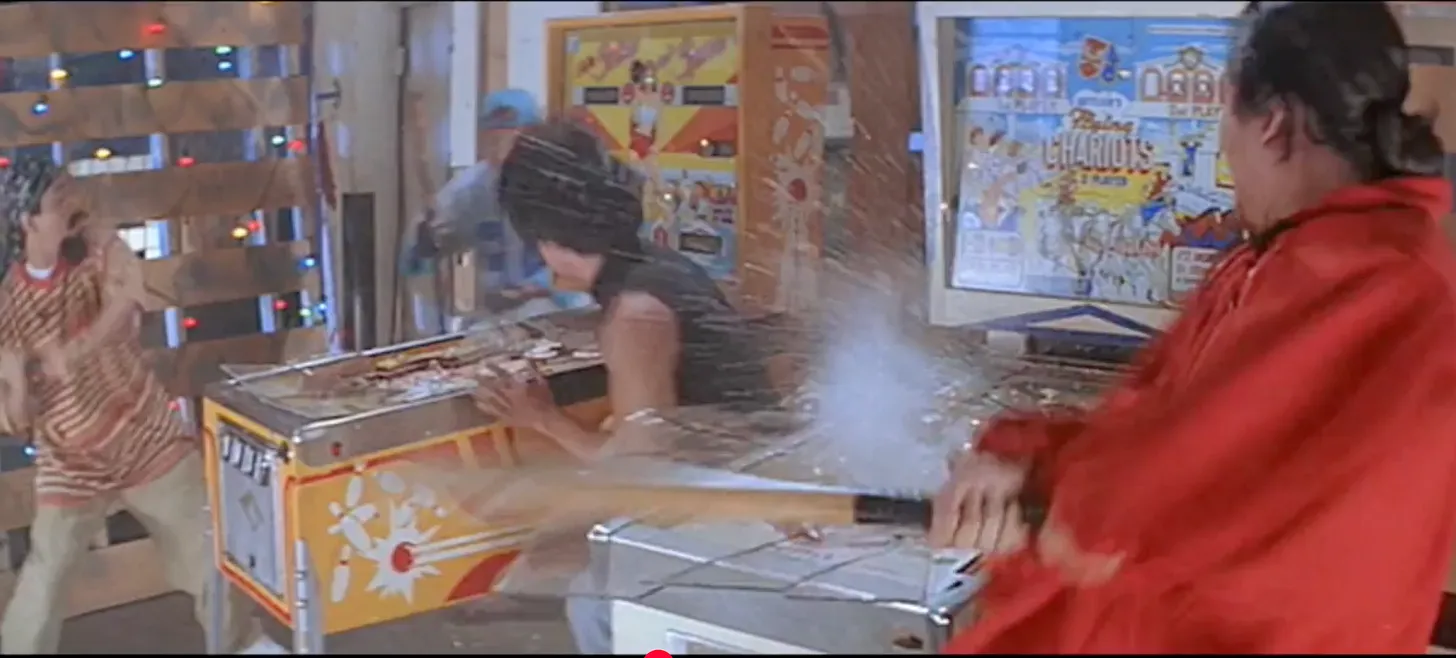
Keung goes to the bad guys’ hideout to confront them, and of course, it escalates into an all-out brawl. The hideout is full of a variety of presumably stolen electrical equipment, including TVs, refrigerators, and, of course, pinball machines. All of which are incorporated into the fight choreography.

Dragon (Interflipers, 1977)
Strikes (Bally, 1977)
Flying Chariots ( Gottlieb, 1963)
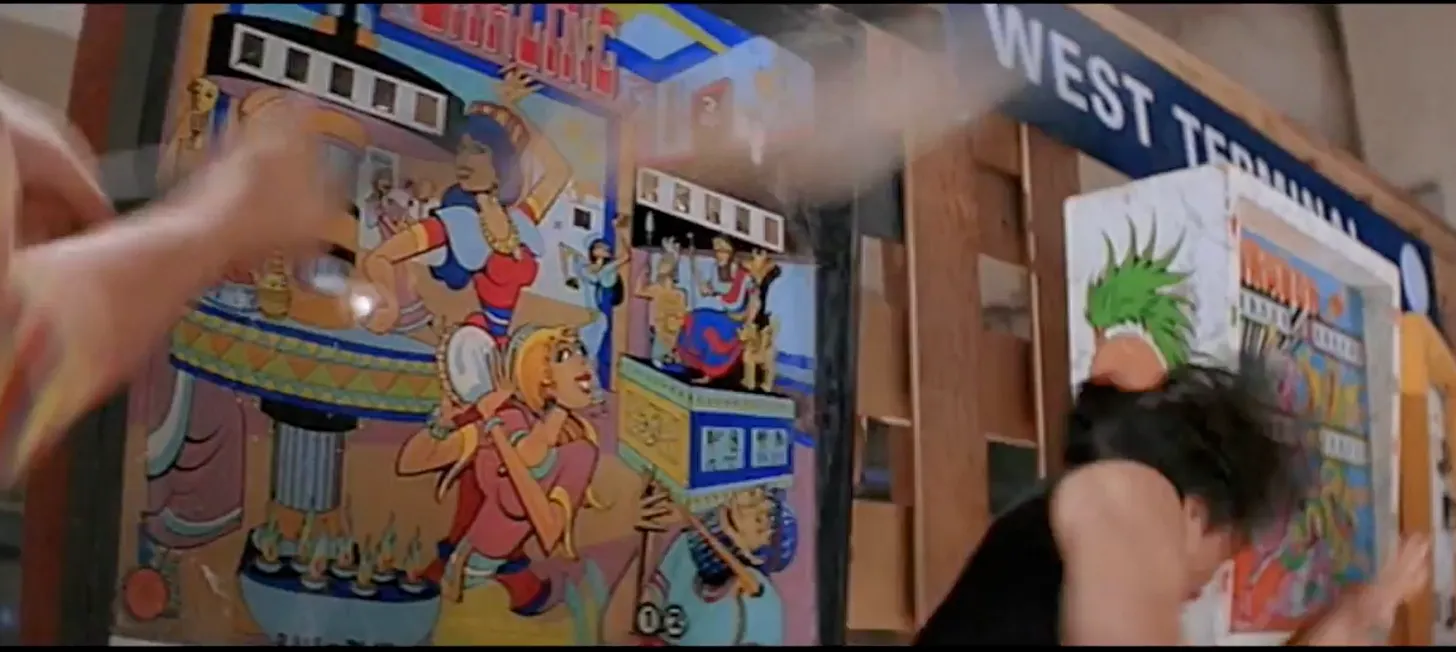
Darling (Williams, 1973)
Most of the pinball machines are from the 70s, and already look fairly beat up, so it might suggest they weren’t in working order.
There are also many pinball play fields hanging on the walls, but I was unable to identify them. (I’m no Pinball Wizard). Pinball and bad guys are becoming somewhat of a trend; the last bad guy lair I covered was from Smallville S1 EP13, where Jungle Lord (1981). is seen in the background. It seems stealing pinball machines is something villains from TV and movies just do.
TILT
I actually spotted an interesting error while researching this blog. During the fight scene, the pinball machines change places between shots. For instance, in the wide shots, Strikes, Bally, 1977 is on the left, but when it cuts to a close-up, and the back glass gets smashed, it changes to Darling, Williams, 1973, which was on the opposite side (one in from Dragon Interflipers, 1977). With all the high-flying action, it could be easy to miss.
Game Gear in the Bronx
The Scenes
The Game Gear can be seen at various points throughout the film.It’s first introduced when Keung (Jackie) gives his Game Gear to Danny through the window on the school bus.
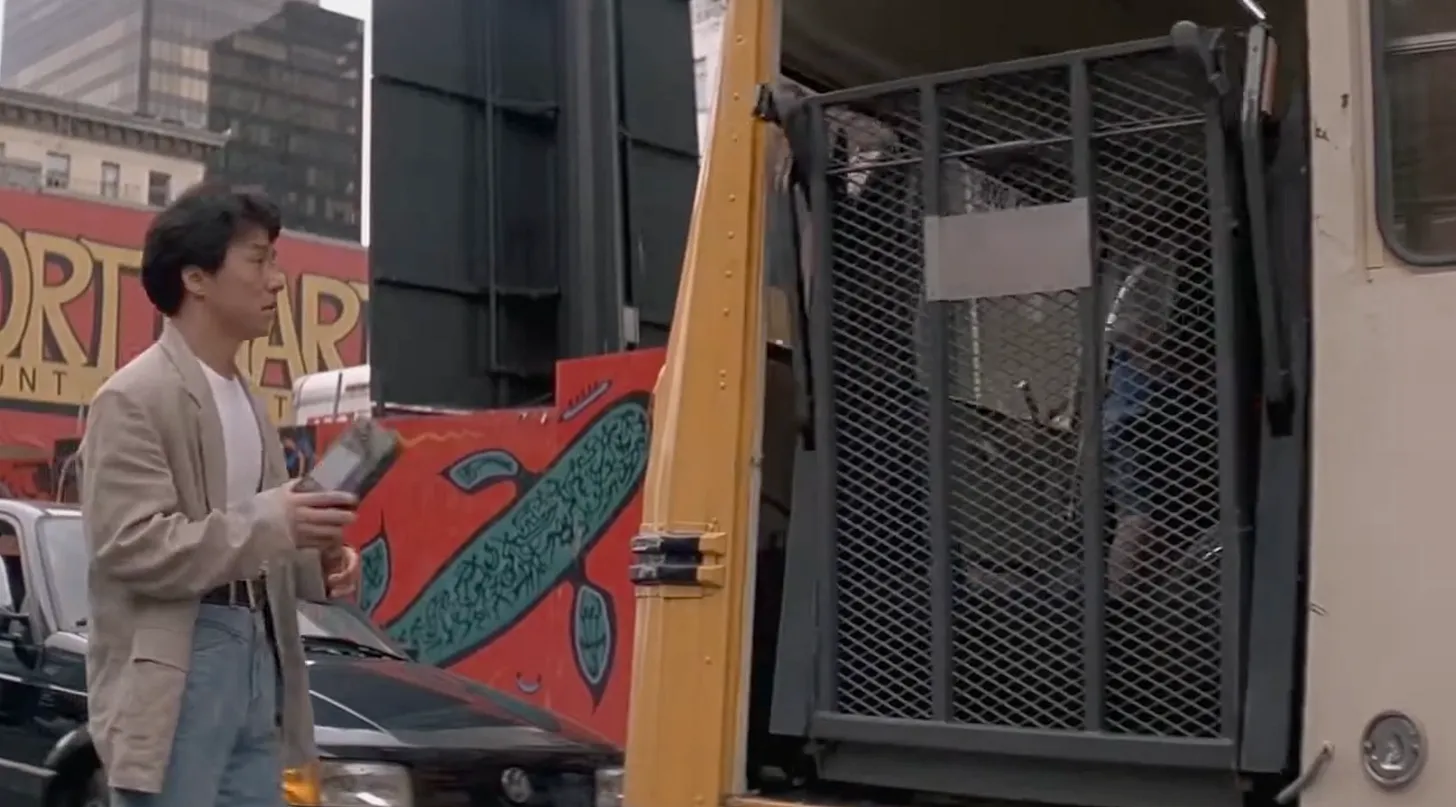
Are they playing?
No, we can say with certainty that the kid isn’t playing. How can we be so sure? Simple, despite his enthusiasm, the Game Gear clearly has no game in it. This can clearly be seen in several shots. All topped off with stock Arari-sounding beeps and bloops.
When Keung gives Danny his Game Gear, he describes it as his “old video game”, implying that it would be a hand-me-down of sorts.
The film first came out on January 21, 1995, in Hong Kong, followed in the U.S. in 1996. The GG was discontinued in 1997, even though it may have been seeing fewer releases by 1995; it might not be fair to be considered “old”. Though by the time the film reached UK cinemas, the system had been officially cancelled. Food for thought or just trying to reach a word count, I’ll let you decide.
Given that he’s not actually playing anything his pretend playing is actually fairly good, and not over-acted. This is somewhat of a rare occurrence when actors and video games are concerned, so credit where credits is due.
Danny was played by child actor Morgan Lam, who, according to IMDb, only has two credited roles: Rumble in the Bronx and Crying Freeman (1995). (more like crying for a better agent, am I right?)
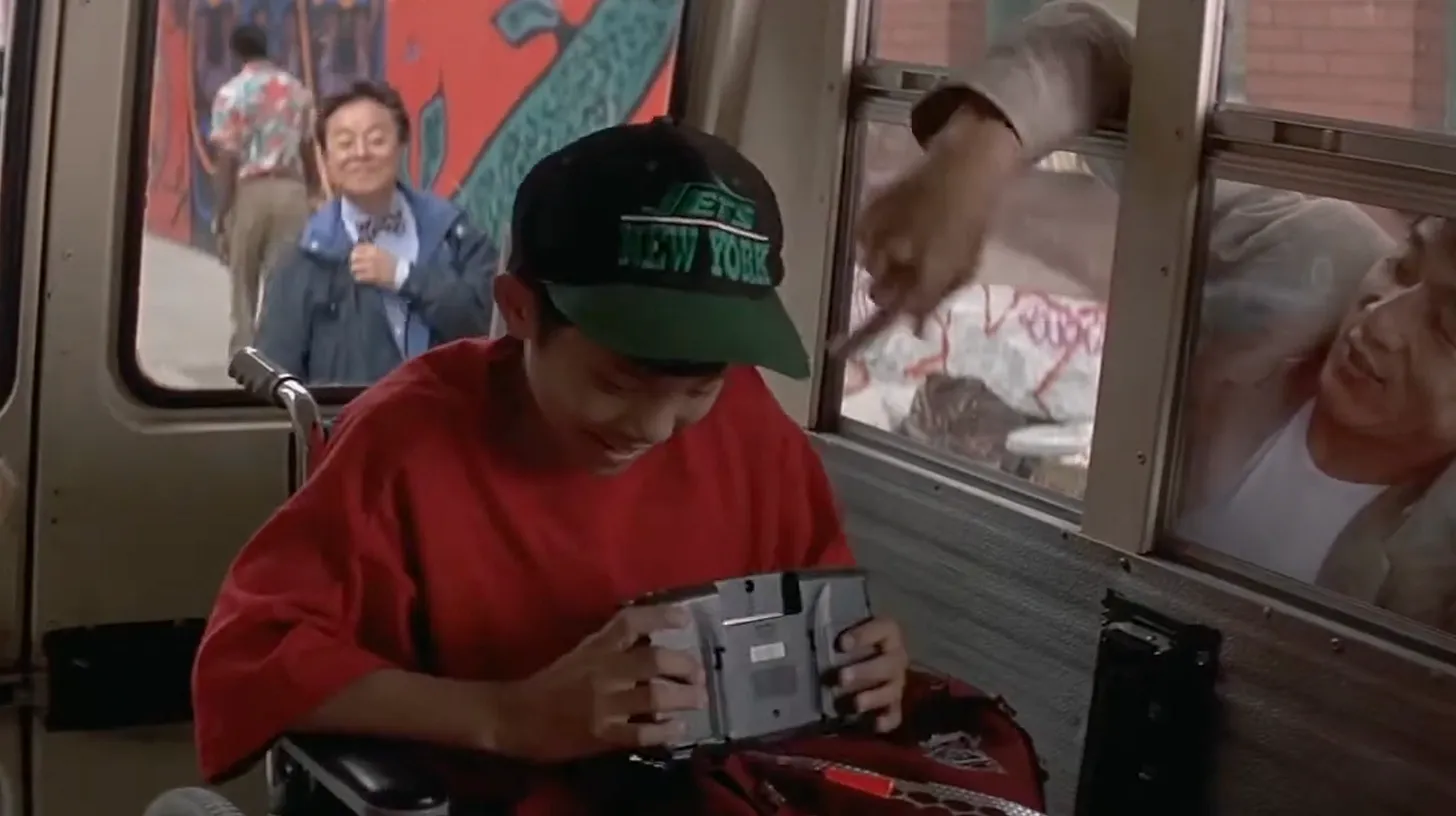
Why no Game, Boy?
This is perhaps one of the better-known examples of video games appearing in film. An often brought up fact is that there is clearly no game cartridge in the Game Gear. This is usually labelled as being a goof or continuity error.
This is just more speculation on my part; as far as I’m aware, there is no official explanation as to why there is no game. So might as well guess…
One explanation could be that when Game Gear games are inserted, part of the cartridge’s label can still be seen, so it might have been done to avoid showing branded and copyrighted names that would have otherwise been visible.
Alternatively, it may have been an oversight of the props department; they had a Game Gear, but no games for some reason. Perhaps they just thought no one would notice; well, people did, and now here we are.
Or it’s just what they had available; perhaps the game in question was misplaced? Although the latter is highly unlikely, given the meticulous nature of how props are handled and catalogued on a film set.
Lastly, the Game Gear is never called by name, nor is Sega mentioned. The system is not shown in any great detail.
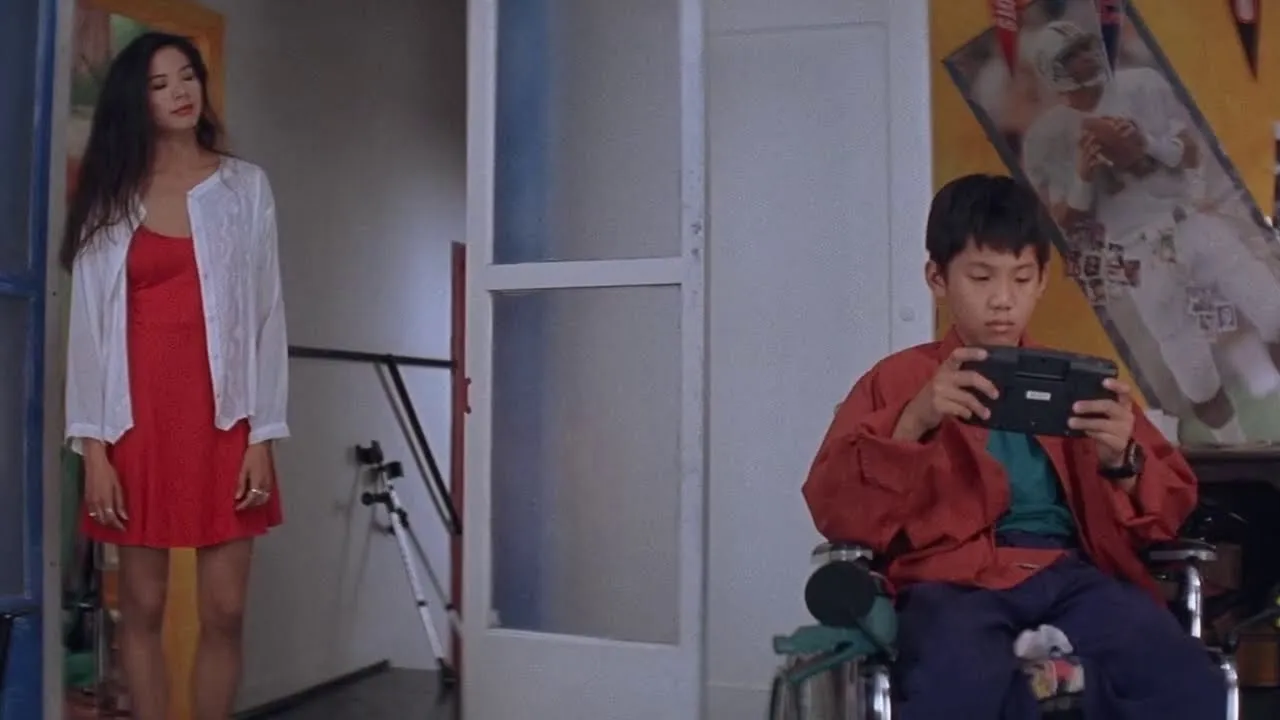
Game Gear
The Game Gear was released first in Japan on October 6, 1990, then 1991 in North America and Europe. It boasted a full colour 3.2 in (81 mm) backlit LCD, 160 × 144 px screen. This came at a cost; the Game Gear guzzled 6 AAA batteries after only a few hours of play.
The Game Gear was Sega’s response to Nintendo’s Game Boy; it also had to compete alongside the Atari Lynx (GOF#18). The Game Gear and Lynx share several similarities; both have full colour lit displays, both had poor battery life and were fairly large for handhelds, and both lost out to Nintendo.
Unlike the Atari Lynx, however, the Game Gear had good third-party support. It also received versions of their popular home console titles, like Sonic the Hedgehog, Streets of Rage and Golden Axe, to name a few.
The Sega Master System and Game Gear had very similar specs. This meant porting between the two systems was very easy, with some games being almost identical to each other. To hammer this point home, the Game Gear had a converter which allowed Master System games to be played on the Game Gear.
Despite its degree of popularity and technical advantages on paper, the Game Gear couldn’t match the Game Boy’s low cost, form factor, and diverse library of games.
Game Gear, where are they now?
The legacy of the Game Gear has continued over the years, with many of the GG Sonic games included in collections such as Sonic Mega Collection and Sonic Gems Collection. A selection of the Game Gear’s library was also included as part of the Nintendo 3DS’s virtual console.
In 2020, Sega released a series of ultra-mini Game Gears in Japan.
Four variants were released, with each unit containing 4 classic Game Gear titles. These handhelds were more collectable novelties with a 29 mm screen, making them less for play and more for display.
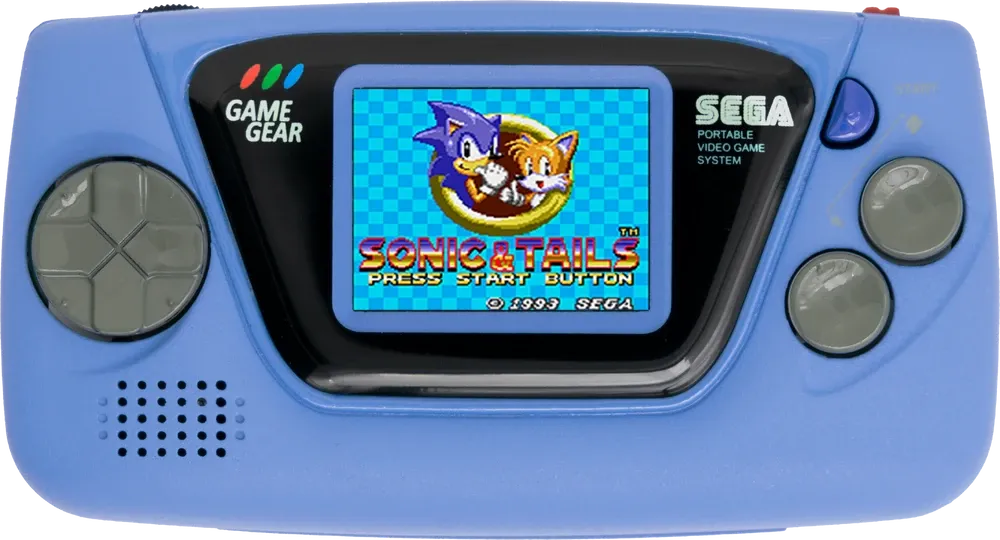
To conclude
At the end of the day, games in films are nothing more than props; the only difference from any other prop is that when we, as game fans, see them in films, it’s like seeing someone you know. “Hey, I recognise that it’s [insert game name here.]” Perhaps an art collector feel the same way when they see a particular painting on screen.
Between Rumble in the Bronx and Police Story 3, video games in Jackie Chan movies are becoming somewhat of a trend around here. There are still a few other Jackie Chan films out there that have ties to video games that I haven’t covered yet, so watch this space.
Rumble in the Bronx Paragon Films Ltd.
Sega.fandom
Game Gear Mini Credit: YoshiandToad via Sega.Fandom