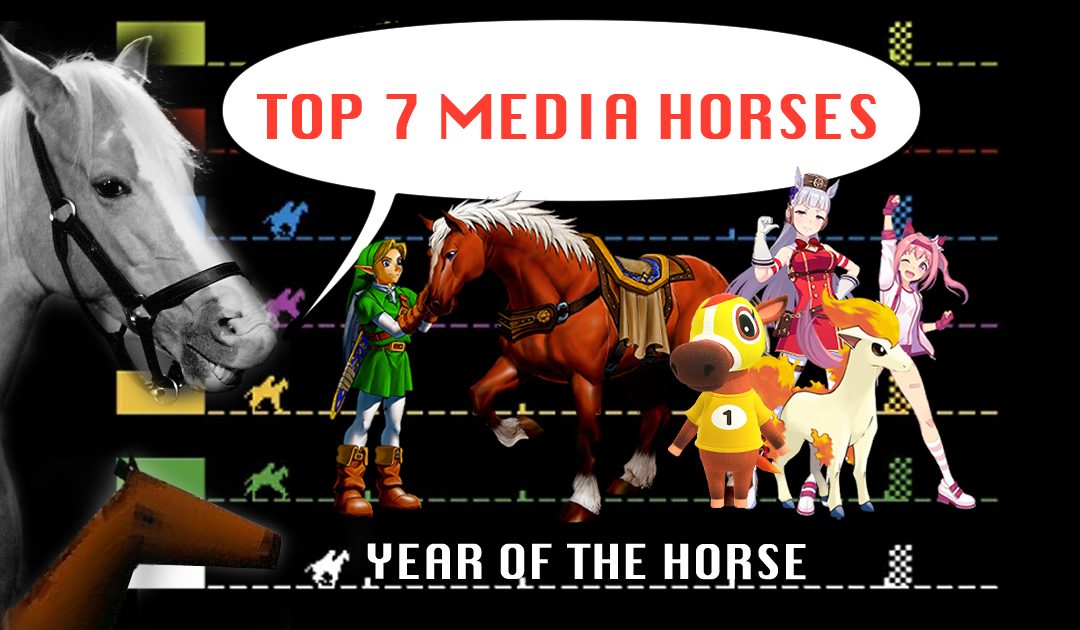
February 17th 2026, marks the year of the Horse, so what better time than any to look back at some of the most iconic horses from TV and video games?
Outside of the Chinese Zodiac, horses have appeared in many works throughout history. Beginning as early as cave paintings depicting horses. Not to forget, horses have played vital roles throughout real-world history too; it’s no wonder they have worked their way into our fiction and collective popular culture.
The Zodiac
This year (February 2026) is the year of the Horse. Before getting into my list of top horses across media, I thought it might be worth going over the Zodiac Story, after all, there would be no year of the horse without it. There are slight variations to this story, so no two are always exactly alike, but the order the animals finish in is always the same. So, here is an abridged version of the Zodiac Race Story.
One day, a bunch of animals were arguing over which one of them should represent the New Year.
The Jade Emperor heard the animals’ argument and suggested a race to determine who should represent the New Year. The animals agreed and lined up for the race. The finish line was set across a large river.
The cat and rat, who were great friends, teamed up with the ox and rode on its back across the river. The cat took the time to sleep, with the rat promising to wake the cat when they got to land. However, as they approached land, the rat betrayed the cat by pushing it off the ox’s back and into the river. The rat leapt from the ox and got 1st place, so the ox came in 2nd.
The tigers’ wet fur slowed them down, so they finished in 3rd. The rabbit, who couldn’t swim, was lucky and found a log to sail across on, taking 4th place. Dragon was 5th. The emperor was surprised to see the dragon take so long and asked why. The dragon explained that it stopped to aid the villagers by making it rain for their crops, and that he noticed the rabbit struggling to cross the river, so he blew a log to help it across.
The strong and confident horse was about to make its way across the finish line, but was startled by the snake that slithered under its hooves. The horse reared back, and the snake got 6th place. Now, not so confident, the horse finished in 7th place. The goat, rooster, and monkey worked together to make a small raft to cross the river. The emperor was pleased to see such teamwork. The goat placed 8th, the monkey 9th, and the rooster 10th.
The dog wasted time playing in the water, so it came in 11th place; followed sometime later by the lazy pig, which got distracted by eating and sleeping by the riverbank, instead of racing, so the pig was placed 12th. Finally, the cat was able to drag itself from the river, but it was too late to get a place. The cat forever blamed the rat for losing and thereafter became mortal enemies.
The Jade Emperor decreed that from now on, each New Year would be represented in the order the animals finished the race.
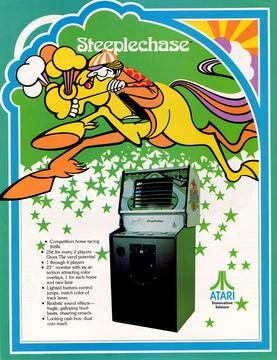
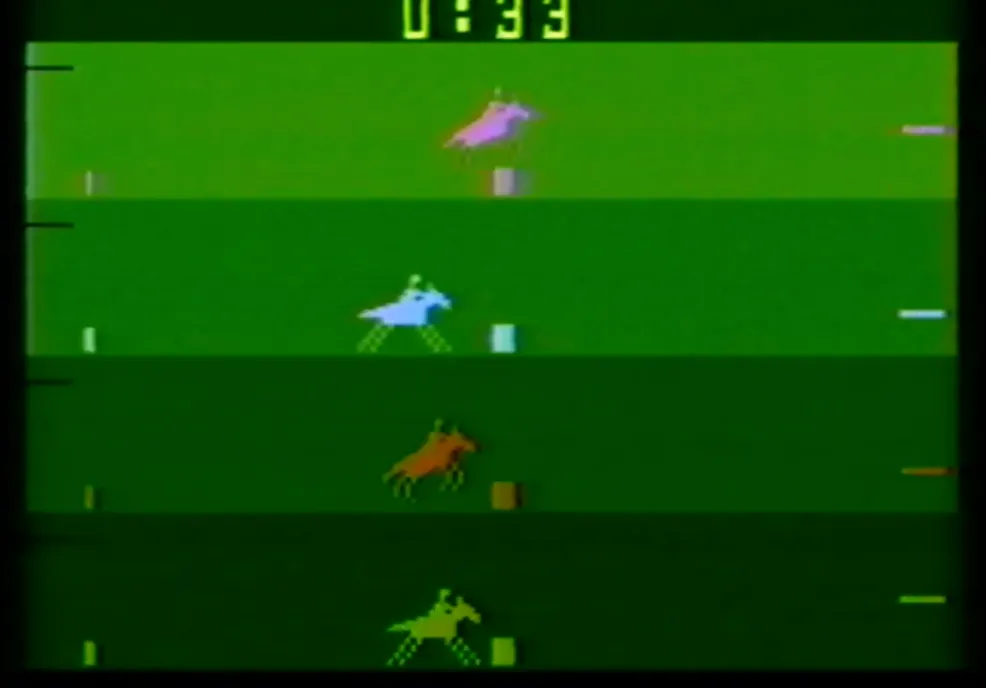
Honorable mention: Steeplechase, Arcade, 1975, 1981
Perhaps one of the first examples of a horse in video games. Developed by Kee Games and published by Atari.
Starting in arcades, the game may seem fairly basic, but still really enjoyable; your player character rides a horse and must jump over a series of hurdles, while remaining in first place to win. The arcade allowed up to six people to play.
In 1981, like many early arcade hits, Steeplechase was ported to the Atari 2600, allowing up to four players at once, or one human vs 3 computer players. It also allows for all players to be computer-controlled. Did people ever really bet on Steeplechase?
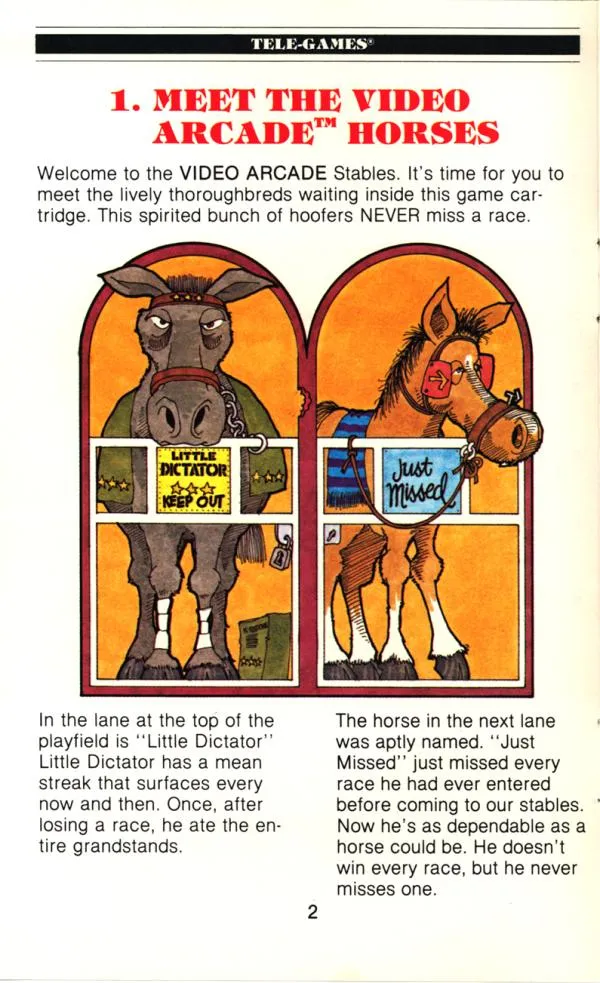
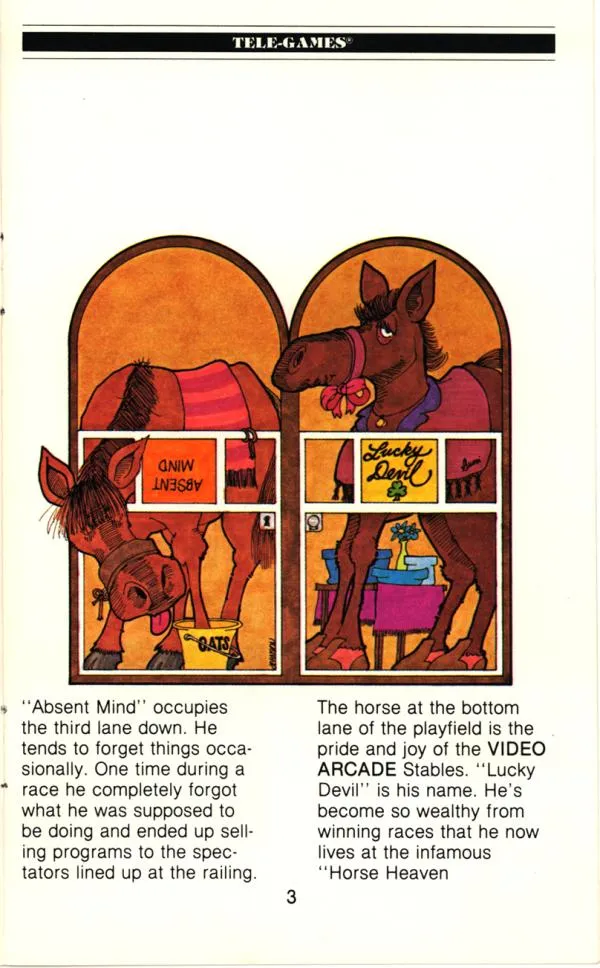
For its time, both the arcade and 2600 versions have nice animation and use of colour. Games back then weren’t exactly known for their storytelling; however, the manual actually includes a lot of personality, offering flavor text on each of the four horses.
Purple Horse: Little Dictator
Blue Horse: Just Missed
Red Horse: Absent Mind
Yellow Horse: Lucky Devil
Interestingly, the 2600 version of Steeplechase uses a fairly unique application of the paddle controller to play the game. The button jumps, and the paddle determines the height of the jump.
Many early video games were translations of popular sports, such as Tennis/PONG. Steeplechase is arguably more niche. The graphics were fairly advanced, having both horse and rider with clear and “stable” animation. The game is also notable for being an early example of a game that focuses on horizontal movement and jumping.
Not bad for one of the first examples of horses in a video game. This, however, also begins a trend of horses appearing in video games, always having some relation to riding or racing.
7: Pokémon
Gotta horse ‘ em all
A lot of Pokémon are based on and inspired by real-world animals, and horses are no exception.
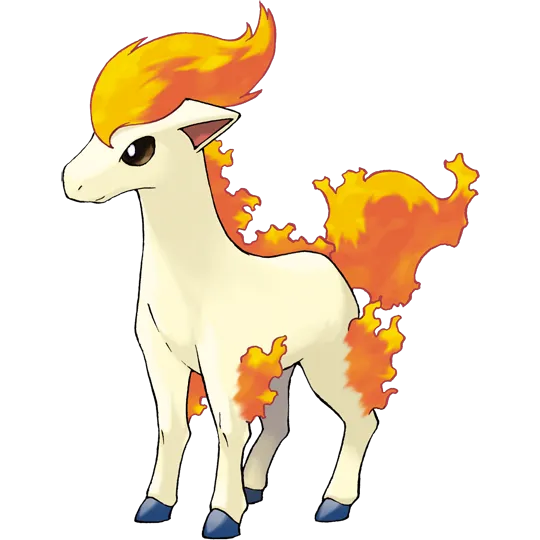
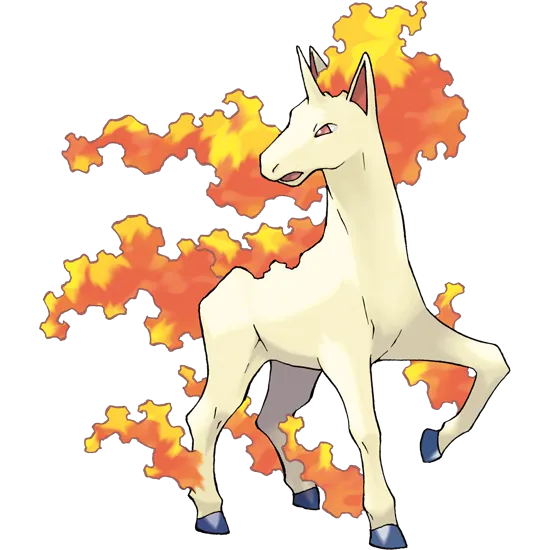
For this part, I’m going to focus on the original 151 Pokémon that saw Ponyta and Rapidash. This year of the horse is specifically the Fire/Red Horse. While I couldn’t find any definitive connection between the Fire Horse of the Chinese New Year and these fire-type Pokémon, I’d say a literal fire horse, like Ponyta and Rapidash, is really suited to this year of the horse.
Ponyta and Rapidash are iconic for their mane and tail of fire. In the episode “The Flame Pokémon-athon!” of the Pokémon anime, it’s explained that Ponytas are able to self-maintain the fire on their mane to allow those they trust to ride them.
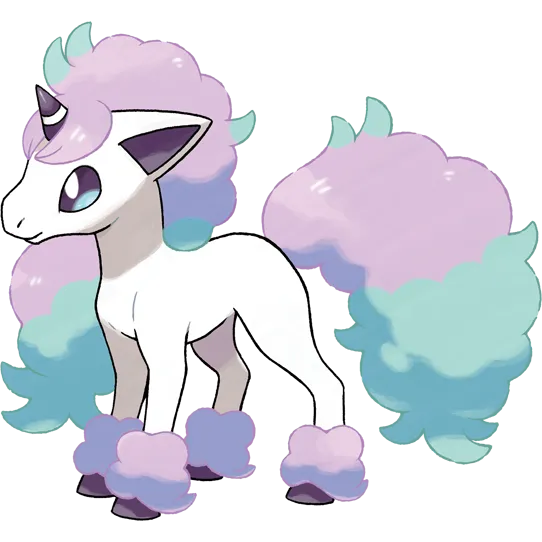
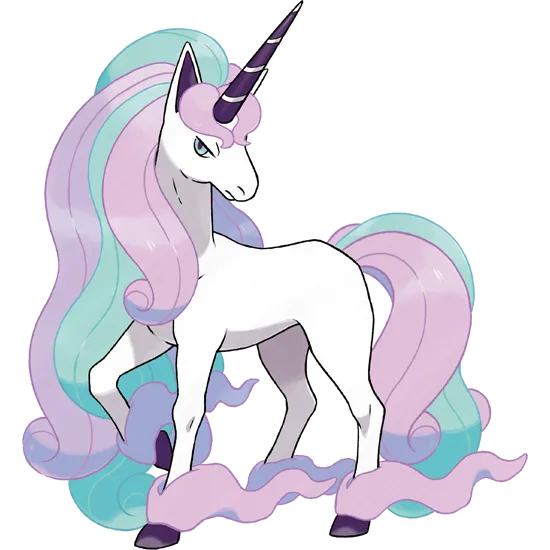
The Galar region introduced new Pokémon variants, including Galarian Ponyta, a Psychic type, and Galarian Rapidash, a Psychic/ Fairy type. These Galarian variants have a more plushie My Little Pony-esque look.
6: Story of Seasons, formerly Harvest Moon.
Horses on a farm, no way.
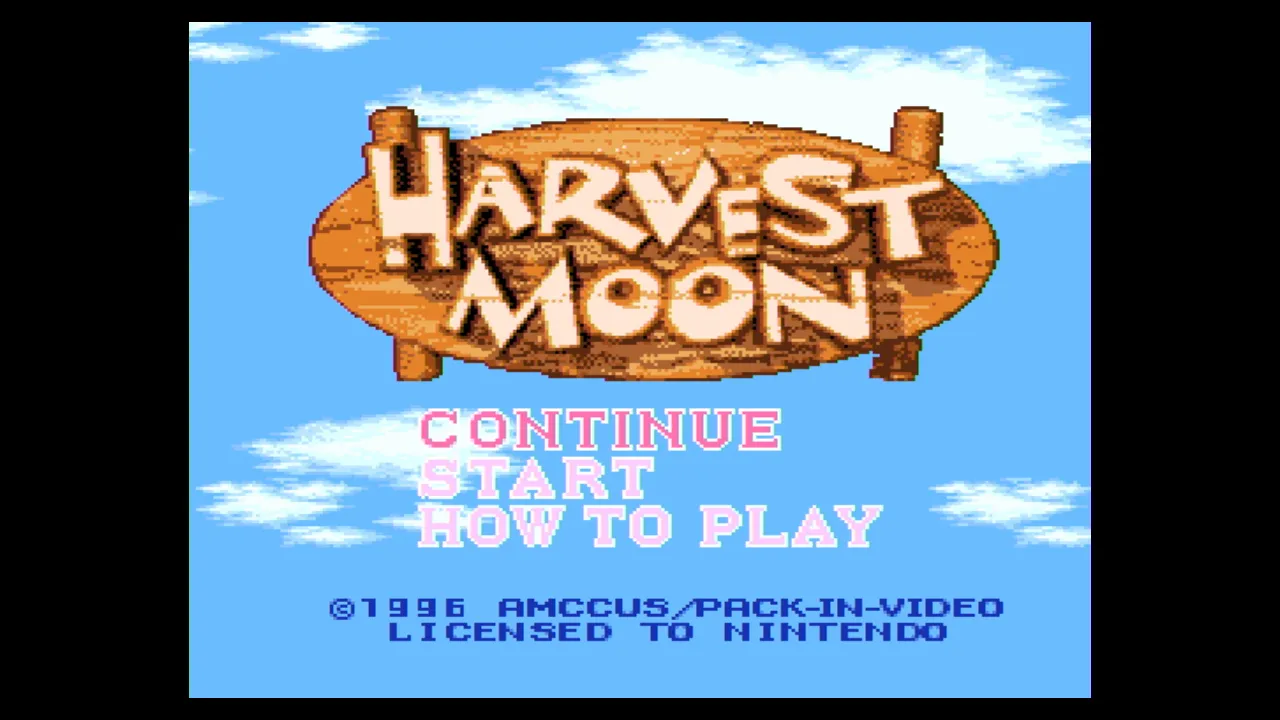
Long-running farming series and pioneer of the farming sim and the so-called cosy game genre. Bokujō Monogatari (牧場物語, “Farm Story”) launched on 9 August 1996 in Japan. Followed by the localization, Harvest Moon in North America on 17 June 1997 and on January 29th 1998, in Europe.
Series creator Yasuhiro Wada’s concept for the series came from his experiences growing up in the countryside and a desire to make a game that didn’t conform to the standard action or fighting genres.
The first game in the series came at a time when the industry was starting to go 3D, and introducing a new kind of game style & series might have been seen as risky. Wada believed that the 3D generation was still fairly new, and many gamers still had the previous generation of console (Super Famicom/SNES). It paid off; the game was a slow but steady success, earning a sequel, Bokujō Monogatari 2/Harvest Moon 64, coming in 1999, and starting a franchise.
Although 1998 was perhaps a little too late for Europe, maybe that’s why Harvest Moon 64 wasn’t released in Europe at the time.

Horses have appeared since the very first title. In the original, the horse makes travelling around your farm quicker and can also carry crops. Starting with Harvest Moon 64, horse racing was introduced and has appeared in almost every entry, with a few notable exceptions, including Harvest Moon: A Wonderful Life/Another Wonderful Life 2003/04. In these games, your horse is primarily used for getting around the village a lot quicker than on foot. In most of the series, you can get your horse for free; exceptions include Harvest Moon Magical Melody 2005, where you must purchase your pony. Never look a gift horse in the mouth, or something like that…
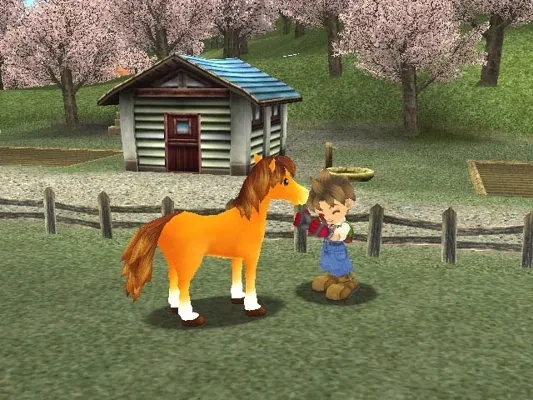
Understated, but always present, the horses of the story of Seasons (Harvest Moon) have been one of the most consistent in all of gaming.
5: Animal Crossing
“Sugar cube” – Victoria
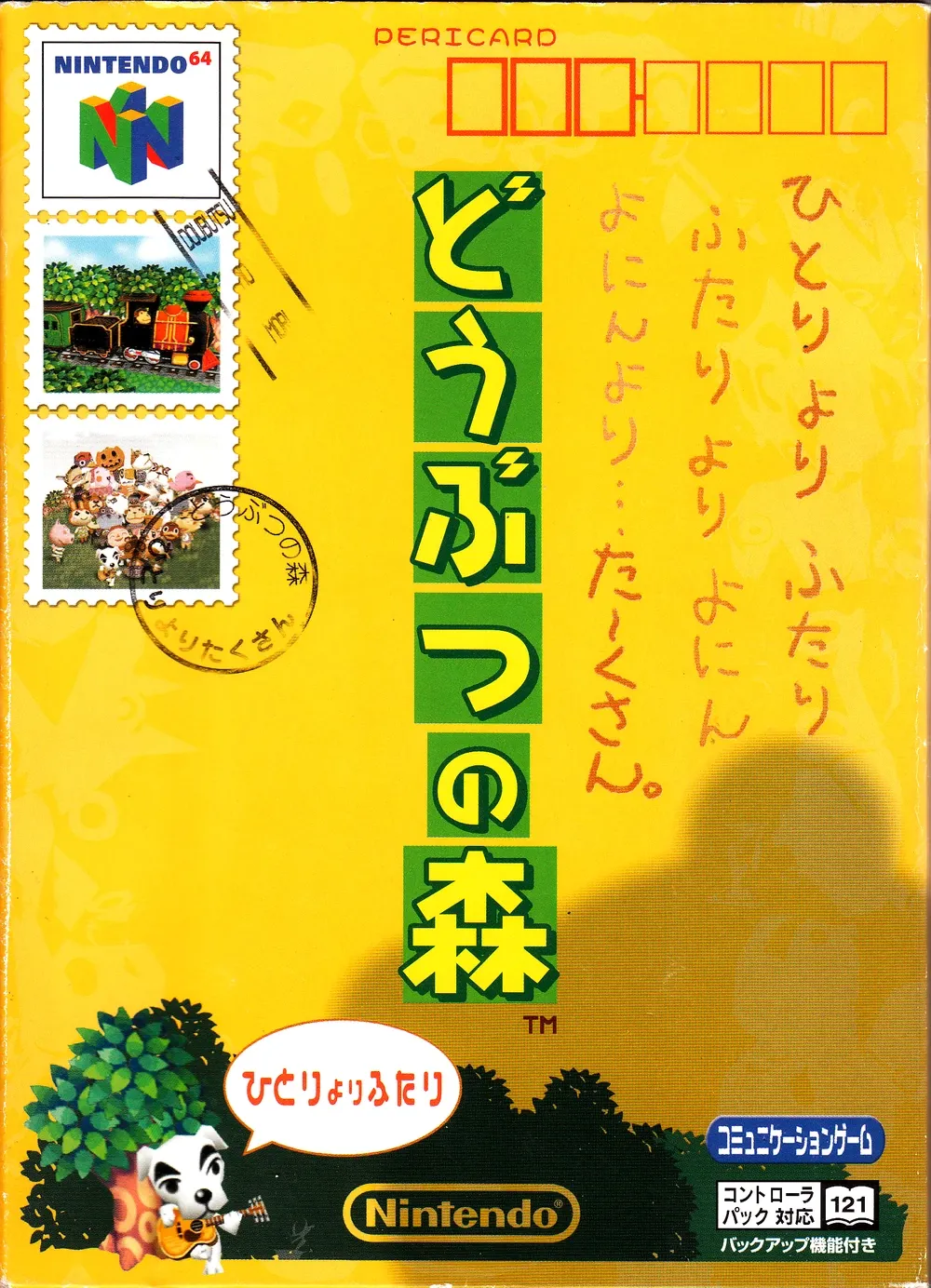
People are often surprised to learn that Animals Crossing or Dōbutsu no Mori (Animals Forest), as it’s known in Japan, started on the Nintendo 64. A late release, April 14th 2001, might explain why this version remained in Japan.
It wasn’ until the GameCube that Animal Crossing launched globally in 2002. This GameCube version was essentially an enhanced port of the N64 original. The Animal Crossing series has gone on to be one of Nintendo’s most beloved and successful franchises.
Horses were included as villagers from the very beginning, and have been included in every game since. Just like all the other animals in the game, the horses are anthropomorphic.
One horse villager, Victoria (Sentoarō, セントアロー ), wears horse racing gear, which raises several questions.
The series also features several horse-related items for decoration, such as the rocking horse, the Dala horse, and, perhaps most timely, the Zodiac Horse figurine.
In a world where horses walk on two legs, it creates an intriguing sort of parallel to have in game items that make reference to four-legged horses.
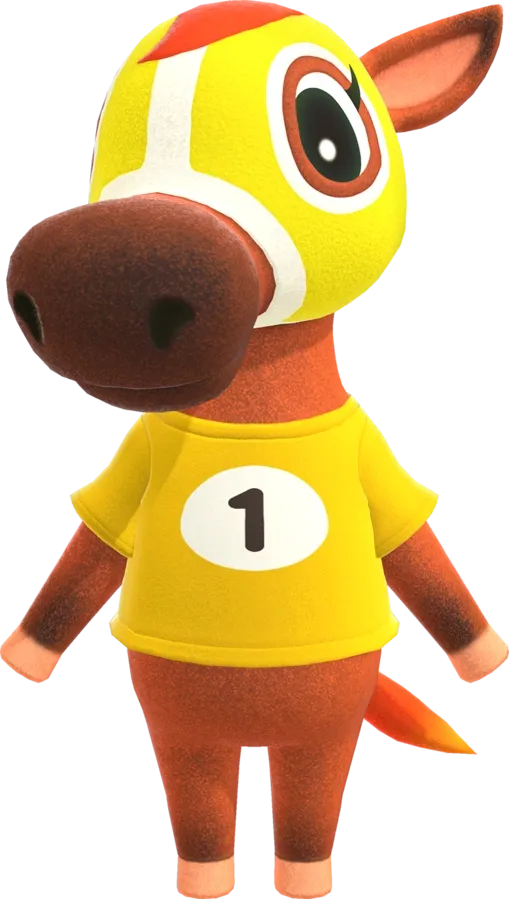
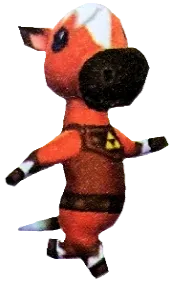
Epona, from the Legend of Zelda series, can be added as a villager via scanning an amiibo from the Legend of Zelda series in Animal Crossing: New Leaf. While it’s not conclusively the Epona from the Zelda series, mostly in appearance only. It’s interesting to see familiar characters reimagined in other games, and it is something I would like to see happen more often. Something similar to how Captain Rainbow (2008) reimagined other popular Nintendo characters.
Conclusion? Horses are quite well represented across the Animal Crossing series.
4: Epona: The Legend of Zelda series
A Horse of Legends
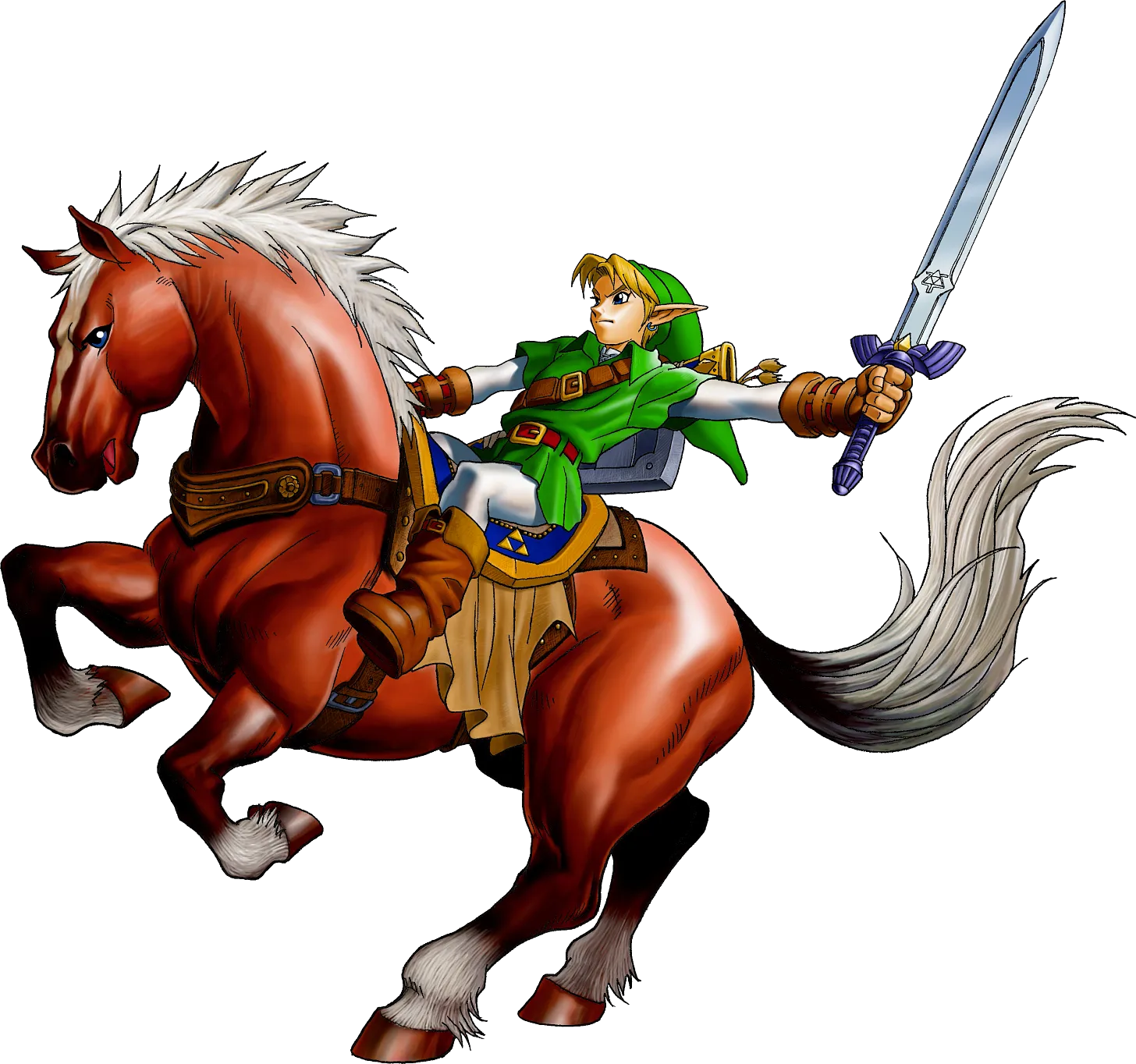
Where would Link be without his trusty horse, forever rolling across Hyrule Field?
Horses and Epona were first introduced in The Legend of Zelda: Ocarina of Time, 1998. In fact, horses appear in some of the earliest screenshots of the game, seen in gaming magazines of the time before its release.
Epona not only gave new ways to play and made travel across the new 3D open world of Hyrule Field much faster, but it also served as a technical flex of the Nintendo 64’s power.
Reading the interview at the time, it seems that a lot was planned for Epona, but couldn’t be fully realised on the N64, mostly due to technical limitations. One notable admission was that horseback combat was limited to shooting arrows at a limited number of enemies, mostly Poes. As well as the Gerudo target practice range.
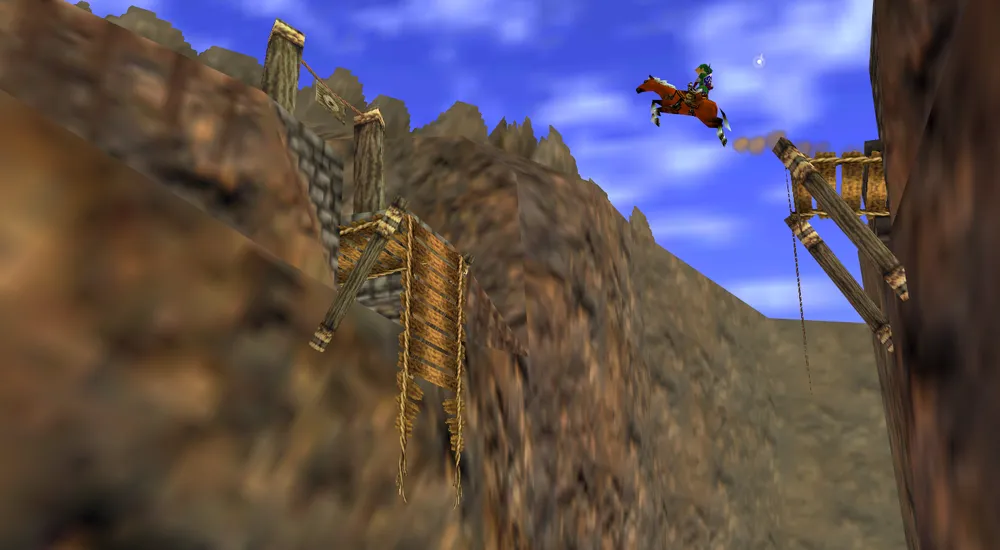
What may come as a surprise to some is that Epona is technically optional; the player could complete the game without once setting foot in Lon Lon Ranch. Though they’d miss out on many of the game’s most iconic moments that come from Epona , such as jumping the gorge in Garudo Valley.
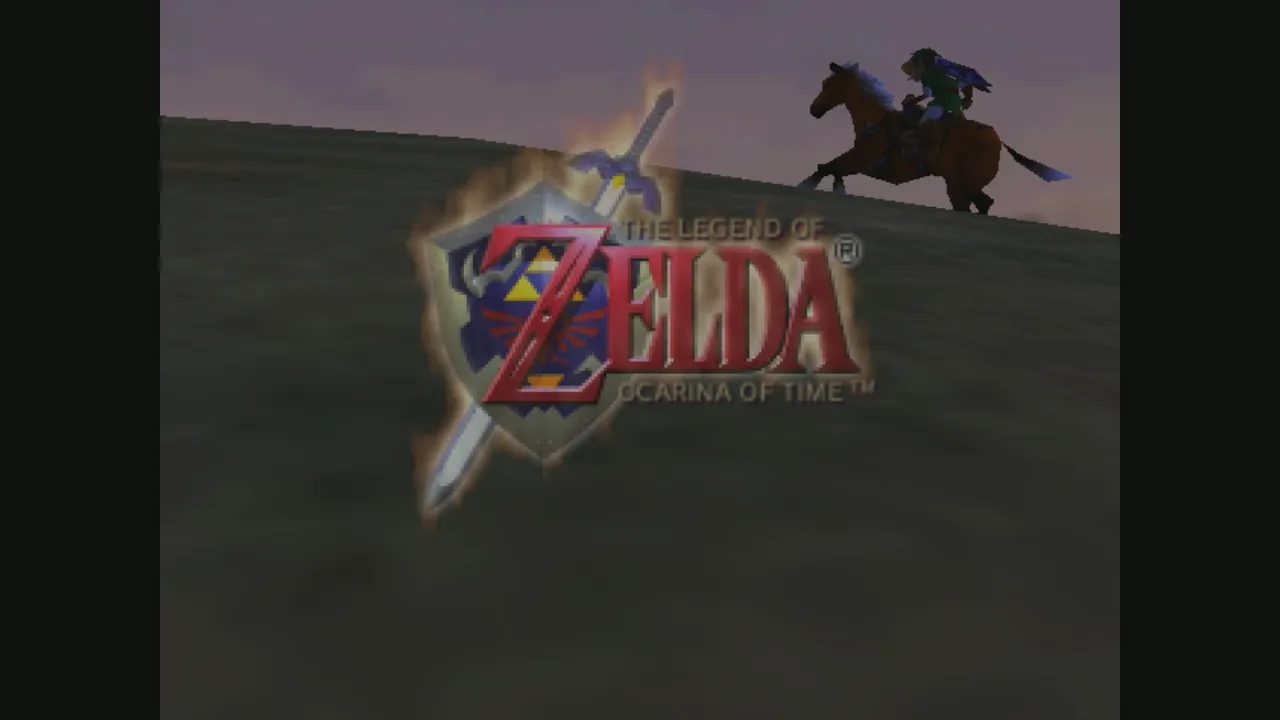
Perhaps the most memorable part of the game occurs before even pressing the start button; of course, I’m referring to the very cinematic and dream-like opening titles. It was an intro sequence so nice they had to do it twice. The opening of Twilight Princess apes Ocarina’s iconic intro. Either way, the opening would have played out very differently without Epona.
Epona returned in The Legend of Zelda: Majora’s Mask (2000), now rideable by young Link. Epona returns, only to be taken away from you in the opening cinematic. The game’s “villain”, Skull Kid, hijacks Link and steals Epona and his Ocarina.
Depending on how you play the game, it could be quite a while before you can reunited with Epona. This time around, she takes on more of an active role, being necessary to collect certain masks, and to jump the wall to get to the Great Bay Area.
Given the great sea and all that water, Epona skipped out on The Legend of Zelda: The Wind Waker,2002. Epona makes a non-playable cameo in The Legend of Zelda: The Minish Cap,2004.

In The Legend of Zelda: Twilight Princess (2006), Epona made her grand return, playing arguably her largest role to date, with many segments of the game being entirely Epona-focused, protecting Ilia and Telm’s carriage from an onslaught of fiery arrows. Face off against King Bulblin atop Lord Bullbo, on Eldin Bridge. Twilight Princess was also the first game where you could name your horse something other than Epona. (But why would you?)
Similar to Majora’s Mask, Epona is taken away from you near the start of the game, stolen by a gang of Bulblins. Later in the game, Link is reunited with Epona, who must first be tamed before she becomes rideable. (The idea of taming horses before you could ride them would return in Breath of the Wild and Tears of the Kingdom).
For everything Ocarina of Time did right, something it wasn’t fully able to do due to the technical limitations of the N64 was horseback combat. This is something Twilight Princess does fairly well and results in some real cinematic battles, including (spoilers) a horseback fight with Ganondorf.
Just like the sea, the sky is no place for a horse. Epona sat out The Legend of Zelda: Skyward Sword, 2011.
Many horses appear in The Legend of Zelda: Breath of the Wild (2017). The game has many wild horses Link can tame. Epona herself is only available after scanning the Super Smash Bros Link amiibo. Unlike the other horses, Epona doesn’t require being tamed.
Epona has undoubtedly become an equally iconic character as Link and Zelda. Will Epona appear in the next mainline Zelda game? Only time will tell.
3: The “Horse” from DAYTONA USA (Sega Saturn)
Now that’s real horsepower.
Daytona USA, Sega’s rally racing arcade hit, came home to the Sega Saturn when it launched in 1994.
This first home port of Daytona USA was a somewhat janky, but enjoyable version of the game. The selection of cars is also fairly limited, with only a few variations of the Hornet available. There is, of course, a hidden “vehicle” that brings true meaning to horsepower. You know by now I’m talking about the horse.
The horse is unlocked once the player has won first place on each course. Alternatively, the horse can be unlocked by pressing diagonal top left A+B+X+Z then START, at the same time during the opening titles.
The sight of seeing the blocky 32-bit horse running alongside the cars is something pictures alone don’t do justice to. Unlike the standard cars, the horse can’t take any damage, it can run on grass, and go straight through pit areas. Although it can crash into walls, which slows it down, it remains unscathed.
Rather humorously, the crew chief still talks to the horse using car terminology, like “Try to go easy on the car.” Not that I was expecting there to be unique dialogue for an Easter egg racer.
Lastly, the automatic transmission horse is brown, and the manual horse is white. (How a horse can have a transmission is another thing entirely.)
This comes from an era of SEGA, and on a larger scale, video games as awhole, that I feel has been somewhat lost in recent years. Back in the day, Sega was seemingly more willing to experiment and push creativity into strange new places, and take creative risks, especially in the Saturn and Dreamcast era, with games such as SegaGaga (2001) and Seaman (1999)
Another example of this could be Fighters Megamix (1996), a sort of “Smash Bros.” of its day, featuring characters across Sega franchises, such as Virtua Fighter and Fighting Vipers, with several bizarre bonus fighters like the Hornet from Daytona USA and even the AM2 logo.
The horse from Daytona USA remains an iconic footnote when cheat codes and unlockables were the norm in gaming. Not to be too much of a cynic, but something like this might have been paid DLC in today’s gaming landscape. Recently, Monkey Ball: Banana Rumble (2024) saw DLC for Miku and Godzilla characters. Sure, there might have been licensing issues, but these characters (that are currently unavailable) were perhaps overpriced for what is little more than a mostly cosmetic difference.
I suppose the “joke” was a play on the term “horsepower.” I’m glad that there was no rider added, although it was probably due to technical limitations. Although I like to think the horse itself is racing under its own volition.
Will Daytona USA, horse, ever ride again?
2: UmaMasume: Pretty Derdy
uma uma umya umya san ni ichi fight!
Winner of Mobile Game of the Year 2025, Umamasume: Pretty Derby. The multimedia franchise that has taken the world by storm. The series has an interesting core premise, taking real-world horses and horse racing statistics and history, then reimagining these events through anime horse girls. The series plays out these races and explores the real-world horses’ nature and personalities, which are translated into their Uma counterparts, making for engaging, emotional, and often humorous scenarios.
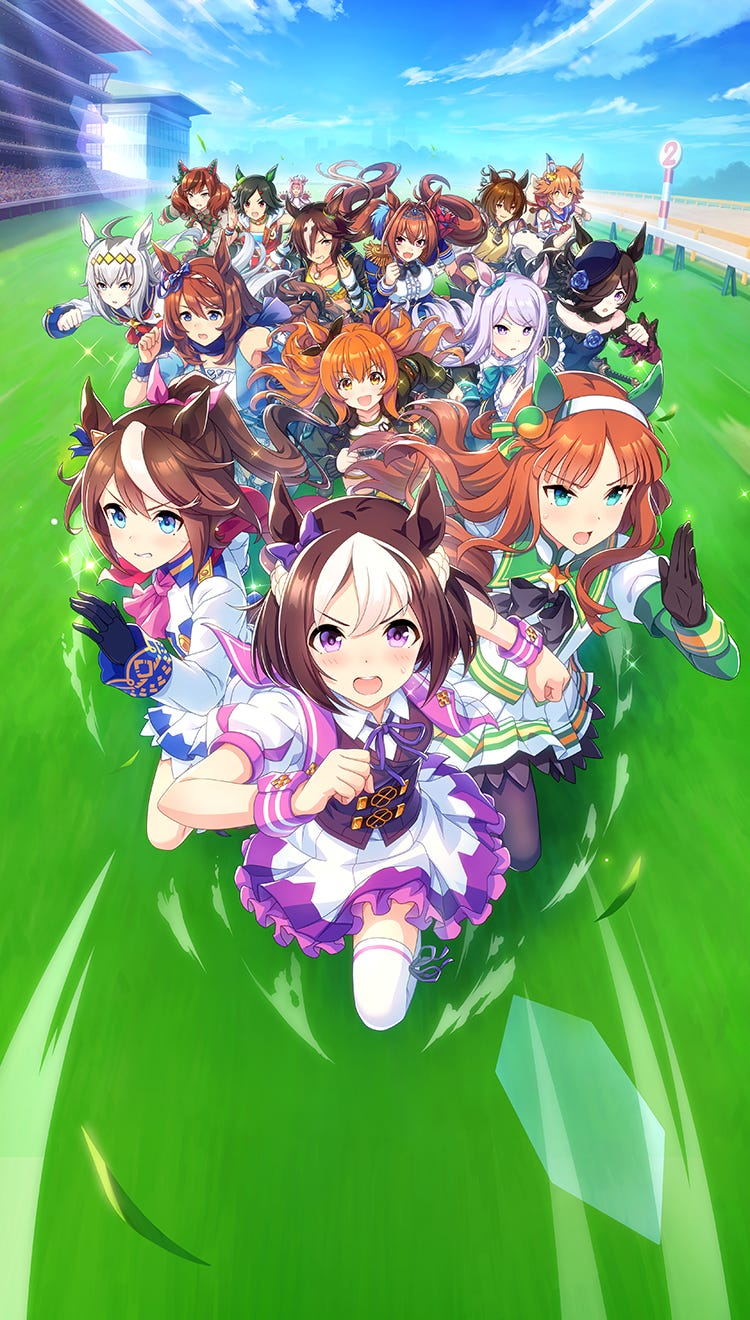
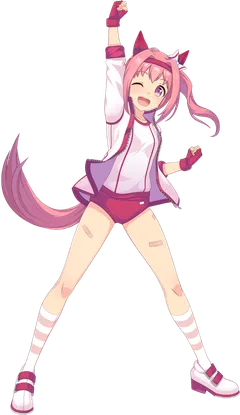
The series boasts a large cast of iconic and diverse characters, so there is sure to be an Uma that speaks to any individual. For instance, many players have found inspiration from Hara Urara, whose never give up spirit, serves as a reminder to us all to never give up trying to reach our goals. The real-life Haru Urara was unable to place throughout her racing career. Despite never winning, Haru grew quite a fan base, which only grew larger after the popularity of Umamasume.
Haru officially retired in 2006. Later on May 18th 2019, she took part in a time trial race, for older horses, setting a time of 16.54, resulting in Haru’s first win.
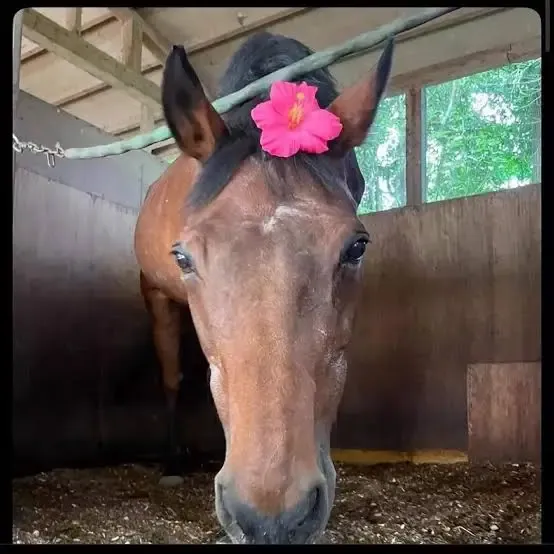
Haru Urara 1996-2025
It’s still relatively early days for the franchise, outside of the mobile game, there is at least one standalone game, Umamusume: Pretty Derby – Party Dash, a sort of mini-game collection/party game released on August 30, 2024, for the Nintendo Switch, PS4, and on Steam.
There is perhaps a fair argument that these characters appear more human than horse, so they shouldn’t be included on the list. However, I think because the series is based on real horse racing history and characters still display certain horse traits, it’s a viable inclusion; besides, it’s likely the biggest horse-related media thing in a while.
If anything, the series has brought more attention to the sport of horse racing, but more importantly, it has done a lot to spread awareness and champion the well-being of horses.
1: Mr.Ed
A talking horse!?
The original talking horse, Mr.Ed. For those not in the know, Mr. Ed was an American sitcom that ran from October 1, 1961, to February 6, 1966, totalling six seasons and 143 episodes. Created by Walter R. Brooks.
Back before everything was a workplace sitcom or Friends clone, a show about a talking horse was just par for the course.
Wilber Post (Alan Young) and his wife, Carol (Connie Hines), move into their new home, and to their surprise, there is a stable in the back of their garden. (How they didn’t know about this, or why it wasn’t mentioned by the real estate agent, I’m not sure.)
The horse introduces himself as Mr Ed, but only to Wilber. Wilber agrees to keep Mr Ed’s ability a secret. As one might guess, this leads to many humorous shenanigans. The cast is rounded off by Wilber’s nosy neighbours, Roger Addison (Larry Keating), Kay (Edna Skinner) (S1-4). Bamboo Harvester as Mr.Ed. voiced by Allan Lane and trained by Les Hilton.
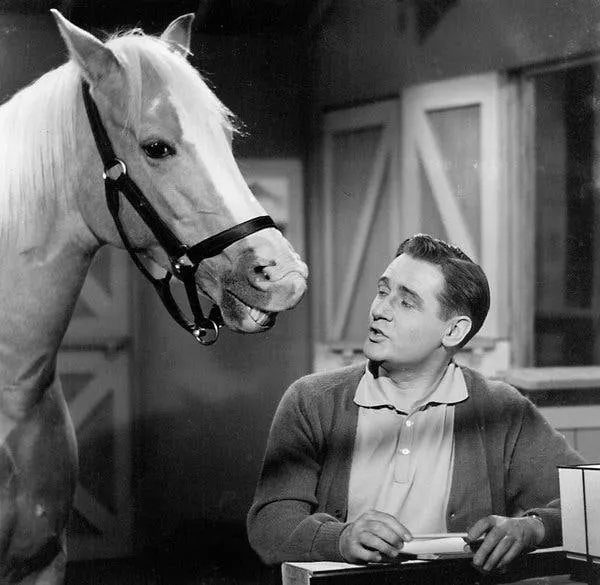
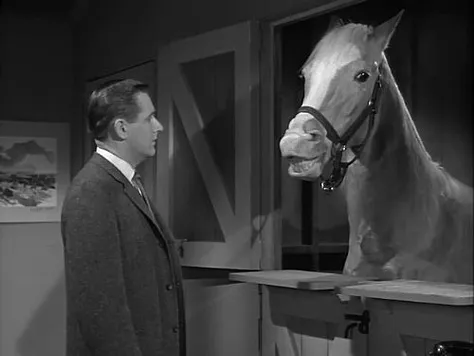
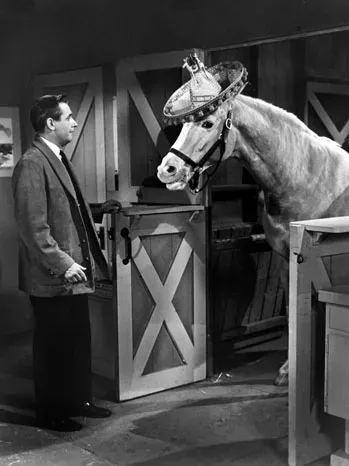
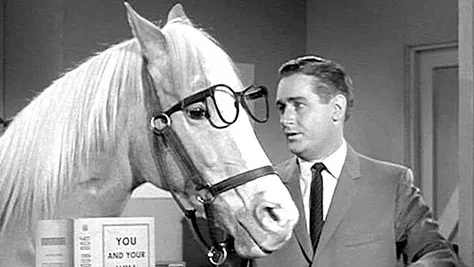
The popularity of the series led to a list of notable guest stars, including Clint Eastwood, in S2 EP25, “Clint Eastwood Meets Mister Ed”.
There have been several attempts to revive the series, but none have succeeded. I believe these reimaginings failed to understand or capture the magic of the original. As strange as it sounds, the team of Allan Young and Bamboo Harvester made a great comedy duo. I think this is something the attempted reboots failed to see. It’s not enough to put some named actor or random flavour of the month comedian with a horse and call it a day.
Young had real compassion for his horsey co-star, something that became evident in interviews and anecdotes Young told over the years.
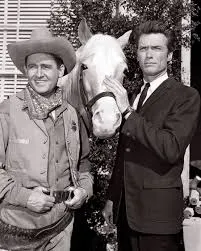
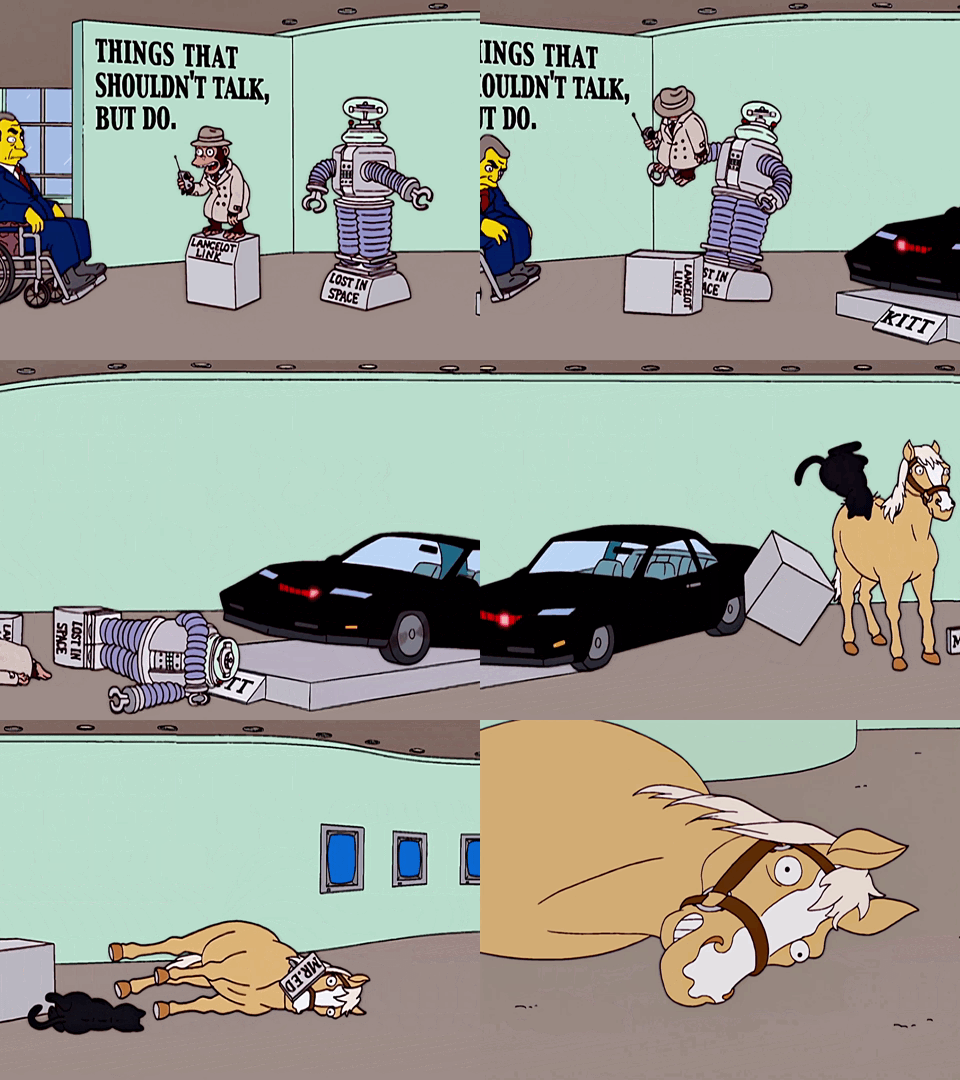
Mr Ed has remained a cultural icon, even being referenced in The Simpsons, S15 EP12 “Milhouse Doesn’t Live Here Anymore”. At the start of the episode, Bart’s class is on a field trip to the Museum of Television, part of the “Things that shouldn’t talk, but do” exhibit, which shows Mr Ed among other beloved TV icons.
No doubt Mr.Ed still stands as the top horse of TV.
Horses in media: closing thoughts
Film & TV
Unless it’s animated, the roles horses can take are somewhat limited. In most examples, film and TV horses are primarily represented in the context of riding for transport or racing. Mr Ed is somewhat of an exception to this rule. It probably mostly comes down to the practicality of training and working with horses, and from a studio’s perspective, what will be profitable. I feel that something like Mr Ed would be seen as too unusual and “silly” for some modern audiences, and for studios, to even attempt. (Given the past failures.) A show like Mr Ed could work as an animated series, but that goes back to my first point.
Video games
While there have been many examples of horses in video games, these have almost always had racing or riding in common. While this is not necessarily a bad thing, but considering things like the influx of animal mascot characters in the 90s and the amount of games out there you’d think therd be more than a few. However from my research at least there hasn’t been any real attempt at making a mainstream game where the player character is a horse (I’m sure there is an indie game or some forgotten hidden gem I’m overlooking but generally this seems to be the case.)
Going back to Umamasume once more, while still being related to racing, the anime horse girl aspect does open it up slightly to new ideas. Such as with Umamasume Party Dash, which includes things outside of racing, such as basketball.
The horse-like Pokémon also steps outside the typical riding/racing context. mainly due to the game’s focus on training and battling. The Zelda series has expanded the ideas of horses in the series from being a faster way to travel to having designated gameplay segments that require the player to strategise differently from regular on-foot combat. The way the Zelda series uses the horse will surely only deepen with each entry.
End?
This is by no means a definitive list, and with so many iconic horses, it was impossible to list them all. These are the horses from the media that stand out the most for me (besides, if I listed them all, it would take forever)
What are some of your favourite horses from films, TV and video games?
Some fine examples of horses through TV and video games. Next year (2027) will be the year of the goat, so get ready for the goats of games, TV and film next time around.
Steeplechase flyer: flyers.arcade-museum.com
Steeplechase: Mannuel Scan
Steeplechase Screen shot: Classic Game Room
HM:WL,Nixerix Via Harvest Moon.fandom
AC N64:ACGuy Animalcrossing.fandom.com
AC Villagers:
Zelda Screen Shot: PhantomCaleb Zelda.Fandom
Link Epona:Gematarix Zelda.fandom