
It’s the 10th Games on Film! So here’s something a little different.
Today, we’ll be looking at instances where video games appear or are referenced in anime!
They might not depict actual games, more like parodies or sometimes only references. These examples still fit my original criteria, video games appearing in non-game-related films and TV. (So it’s all good.)
Just like in live-action films and TV, aninmated content also has licensing rules, so often when games do appear, they appear slightly differently, just enough so you can tell what they’re supposed to be, but still avoid any copyright. This is sometimes also done with parody names, such as “Mantendo” (Nintendo).
Cardcaptor Sakura (1998-2000)
Brief over view
Cardcaptor Sakura, the anime based on the manga of the same name by the female-led artist group CLAMP (Satsuki Igarashi, Mokon, Tsubaki Nekoi, Nanase Ohkawa.)
Sakura (VA,Sakura Tange) discovers a mysterious book in her basement. Accidentally releasing magic cards known as the Clow Cards into the world.
She must now collect and return each card, but she is not alone, guided by the guardian of the cards, Kero (Cerberus) (VA,Aya Hisakawa) and joined by her best friend Tomoyo Daidouji, (VA,Junko Iwao) who films all her adventures. Later, another cardcaptor, Syaoran Li, (VA,Motoko Kumaijoins) them. The series has several more twists and turns, but I’ll leave that for you to discover if you haven’t seen it. The Manga and anime are both classics.
The games on film this time are…
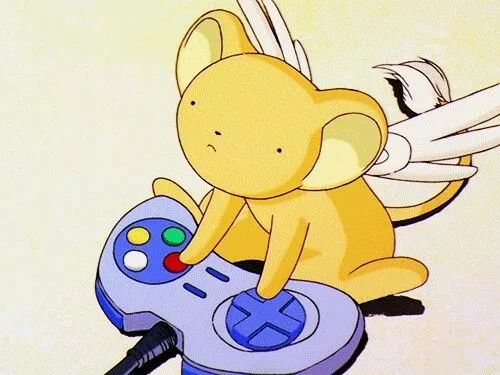
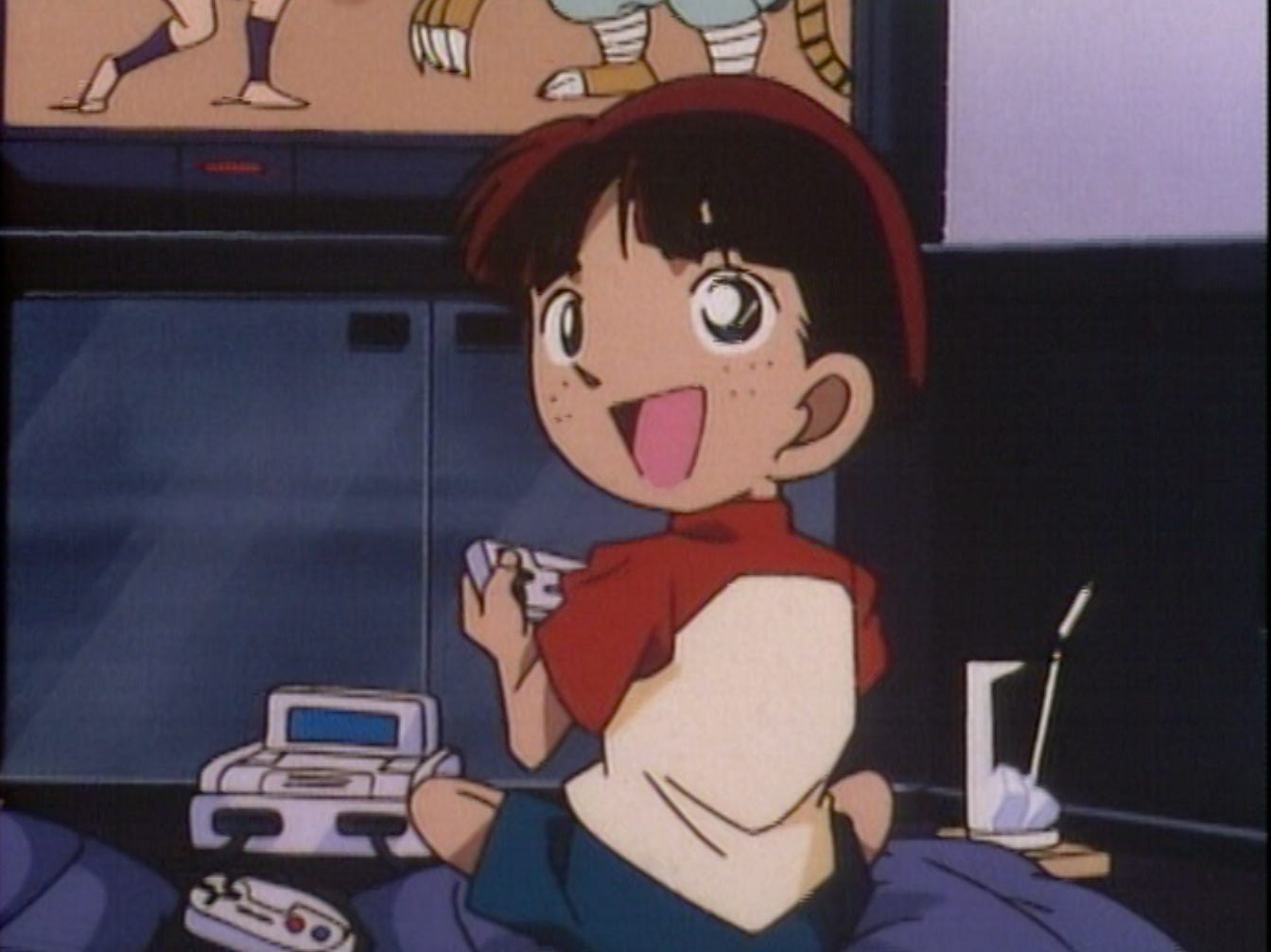
Sakura has a games console in her room, which is seen in several episodes. The console looks like a cross between a Neo Geo CD and a Sega Saturn. The controller also looks like a hybrid Saturn Neo-Geo CD controller. The Saturn has 6 face buttons, but this controller only has 4. The button has a similar layout and colour to the Neo-Geo CD Controller.
Sakura and the Sports Day of Flowers (Sakura to Hana no Undōkai)
S1 EP10
Kero plays some of sort 1 on 1 2D fighter. The 90s were the defining era for fighting games, since Street Fighter 2 , King of Fighters, Fighters History, Samurai Shodown, Vampire Hunters, Waku Waku 7 and the list goes on. With so many fighters out at the time, it’s difficult to say if this is supposed to be a direct reference of any specific game.


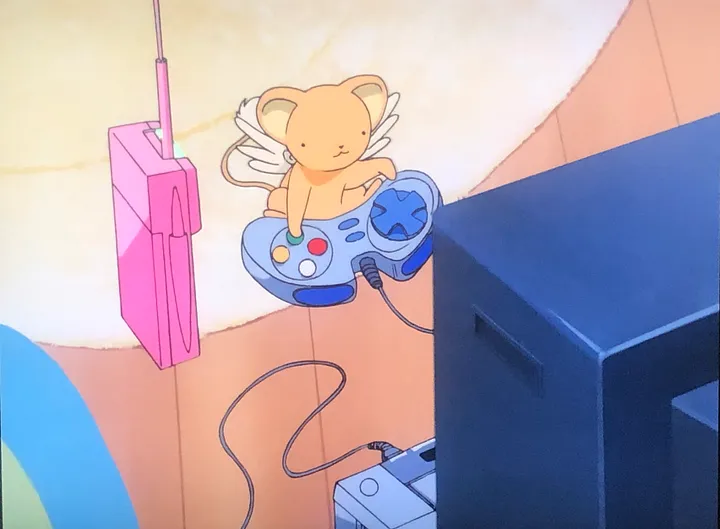

The controller in this scene is undoubtedly modelled after a Sega Saturn controller, noted by its morphed kidney bean shape and distinctive blue shoulder buttons. One key difference is that this controller only has 4 face buttons, whereas the actual Saturn pad has 6. Although we don’t really get a good look at the console, its boxy design and grey colour do resemble a Sega Saturn. The console also shares some similarities with the Neo Geo CD.
Sakura, Kero, and the Sweet Meeting (Sakura to Kero no Okashi na Deai) S3 EP10
Kero plays a game that resembles a cross between Puyo Puyo and Baku Baku Animal. This time, we get a slightly better look at the console, still resembling a cross between a Saturn and the Neo Geo CD.


A brief State of Play
The Sega Saturn wasn’t that popular in the West; however, it was a hit in Japan, taking second place after the PlayStation, selling more than the Nintendo 64. This was partly due to Saturn’s list of strong software, like arcade ports and the hugely popular Sakura Wars Series. The Saturn being so popular in Japan it seems only natural to be included.

Manga Sources
In the original Manga Cardcaptor Sakura, volume 2 chapter 7 Kero can briefly be seen playing a fighting game, where he laments being interrupted and messes up his combo. Later, he was playing an RPG that somewhat resembled Shining Force. The console depicted in the Manga is a little more generic-looking and has fewer tell-tale features like the one depicted in the anime. Although the controller still resembles that of a Sega Saturn.
In Games
The Cardcaptor Sakura Series had several games on the Game Boy Colour and original PlayStation, and later had games on Dreamcast, PlayStation 2, and Game Boy Advance. None of these games saw a Western release.
Detective Conan/Case Closed. (1996-Ongoing)
Long-running detective series created by Gosho Ayomom.
Shinichi Kudo (VA,Kappei Yamaguchi) is a high school detective transformed back into his younger self after being drugged by a mysterious organisation. He now searches for the people who changed him under the guise of Conan Edigwaia (VA,Minami Takayama). Staying with his close friend Ran (VA,Wakana Yamazaki) and her father, Kogoro Mouri, who happens to be a private detective (albeit a rather mediocre one). Conan solves cases aided by some neat gadgets invented by Hiroshi Agasa. Such as a voice-changing bow tie, so he can use Mouri as a mouthpiece to solve cases.


The Games on Film, the second time are…
Pro Soccer Player Blackmail Case. (Puro Sakkā Senshu Kyōhaku Jiken) S1 EP10
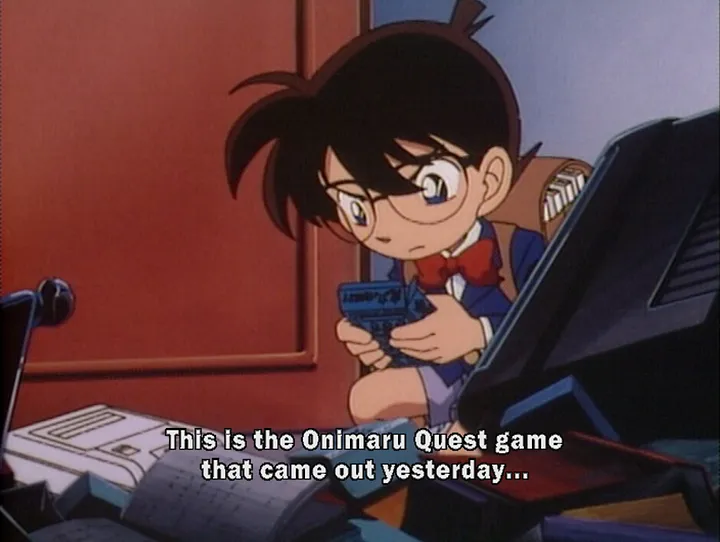
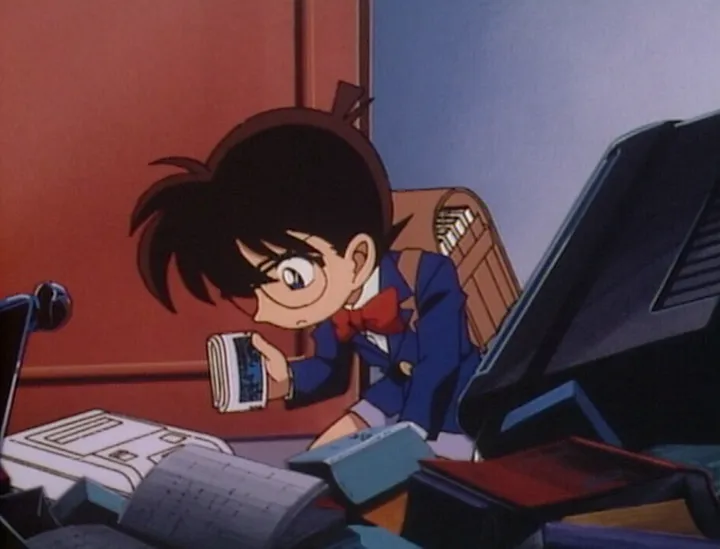
In this episode, a video game is used as a clue to solve the case. Without going into too much detail, (this is already getting kinda long). The case is solved when Conan notices that Mamoru Akagi, had named characters in an RPG game after his brother and his friends, one of whom is the would-be kidnapper.
The game resembles a Super Famicom cartridge. The console and controllers also share characteristics of the Super Famicom. The actual gameplay of the RPG is kinda generic looking, but one of the characters looks like the Mage from the Final Fantasy series.
Another game is briefly seen on the TV when Mamoru Akagi is found. It’s not clear, but it appears to be some sort of vs fighter. Akagi says he beat the game [Onimaru Quest], so perhaps he’s playing a different one now, because it doesn’t resemble gameplay from an actual Famicom game.
I Call Shenanigans
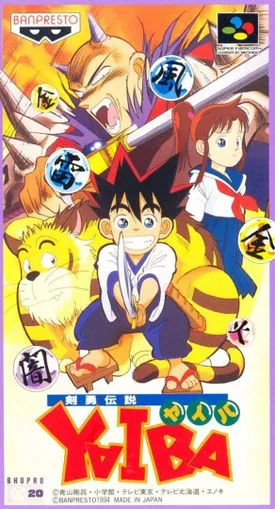
The game in the episode is called Onimaru Quest, a reference to Takeshi Onimaru, a character from Yaiba, another series created by Gosho Aoyama. A very similar-looking character to Takeshi Onimaru appears on the game’s box in the episode. The game is an action RPG and was released on March 25th 1994, for the Super Famicom, along with a Game Boy version on the same day. A Game Gear version was released later on September 9, 1994. (All exclusive to Japan). The characters in the episode state that the game only came out yesterday, yet they are able to finish it already. According to howlongtobeat.com, it can take 6 hours and 30 minutes; this is somewhat corroborated by long plays on YouTube. In any case, beating the game within a less than 48-hour window does seem possible.


Game Company Murder Case (Gēmu-gaisha Satsujin Jiken)
S2 EP54 1997 (56,Eng)
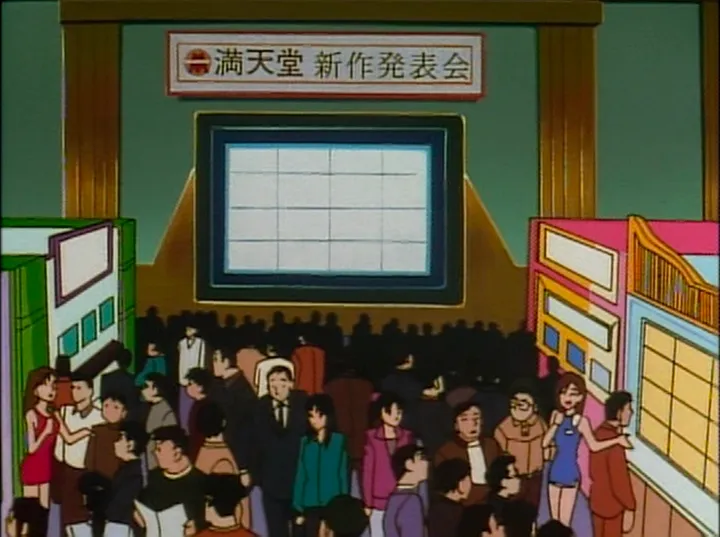
A minor plot point to this episode is about a game based on Kogoro Mouri’s detective work being developed by a company called Mantendo, a thinly veiled parody of Nintendo. Despite the episode taking place in a video game expo, there are very few references or appearances of video games.
Ran and Conan play an arcade-style fighting game that looks similar to Street Fighter and Virtua Fighter. Conan plays as Ryu (Street Fighter) and Akira (Virtua Fighter) type character. Ran wins with a character that resembles Chun-Li (Street Fighter) and Pie (Virtua Fighter). Ran’s character also has a victory pose similar to Chung-Li’s. Arcade fighters like Virtua Fighter were very popular in Japan at the time. Virtua Fighter 3 was the latest in the series and came home to the Dreamcast in 1998.
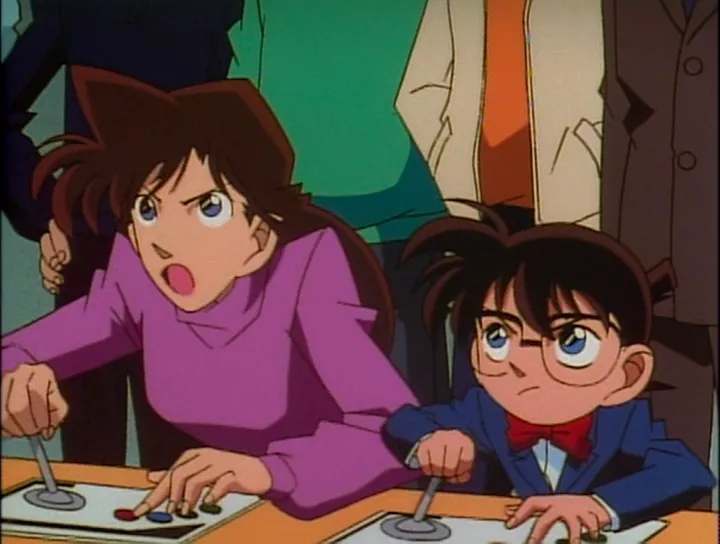

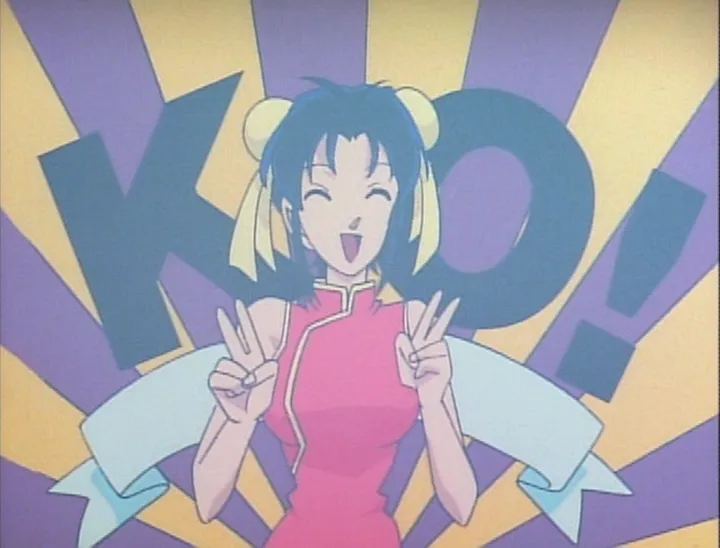
Later, Ran plays a test-your-strength style boxing game and scores 400 points! Although it’s true, Nintendo started out making more novelty-style gadgets and toys like the love tester (1969) Once they pivoted to video games, they didn’t make anything like the boxing game shown in the episode. On the other hand, Sega did have a electro-mechanical Punching Bag in 1962.
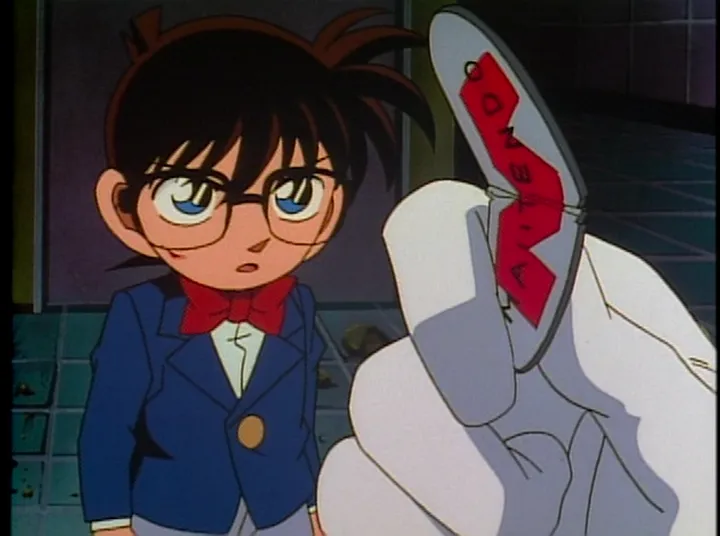
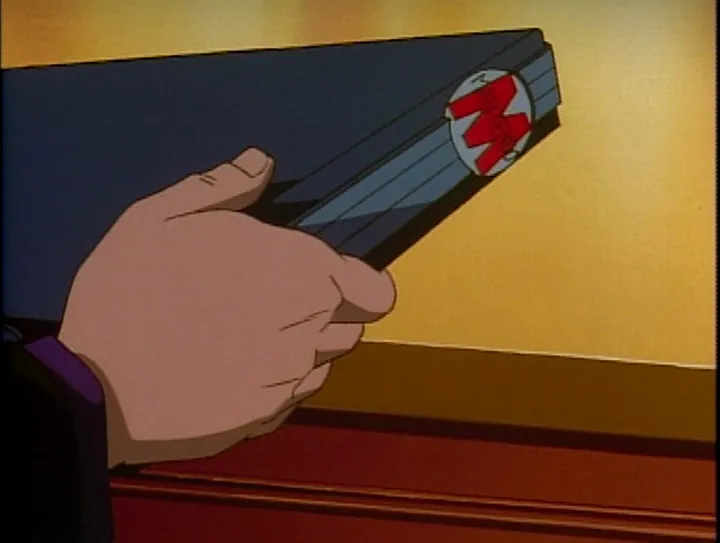
The Mantendo logo and the kind of games the company make have little to no bearing on the actual Nintendo or the kind of games they were making in the mid to late 90s.
State of Play
The episode aired in Japan in 1997, and video game trade shows had existed by this point. E3, which had started only a few years before in 1995. Nintendo also staged its own event, known as Space World running from 1989-2001.
The Nintendo 64 was still fresh out when this episode aired, with many soon-to-be classic games coming out in 1997, including Star Fox 64, which came out on April 27th 1997 (Japan), not so long after the episode originally aired in Japan.
Arcades/Game Centres remained popular in Japan a lot longer than they did in the West, and, in fact, still remain popular today. This could be reflected in the way games are depicted as mostly arcade-style games.
Manga Source
The Manga source material is mostly the same. The video game Conan and Ran play has a more pixelated look, and Ran’s player character is more generic but slightly resembles Mai from the King of Fighters series.
The chapter/File 4 page of vol.12 shows Conan running on a game disc inside what looks like a PlayStation. It bears the Mantendo logo, despite Nintendo not having a disc-based console at this point in the mid-90s. Nintendo’s first mainline console to use disks was the GameCube in 2001.
Lastly, for completeness, when Akagi is found in the Manga, he’s watching a football match and not playing a game, although a Super Famicom can be seen near to the TV, but with no game in it.
In Games
As you might suspect, there have been a number of video games based on the franchise, most of which have remained exclusive to Japan.
The first game came out on December 27th 1996, for the Game Boy
Meitantei Conan: Chika Yuuenchi Satsujin Jiken Detective Conan: (The Underground Amusement Park). One game was localised in Europe for the Nintendo Wii, Cases Closed: The Mirapolis Investigation (2009) game is reportedly mediocre and seems to be aimed at a younger audience, so it seems to be at odds with its source material.
My Deer Friend Nokotan (2024-Ongoing)
This anime adaptation is based on the Manga of the same name, written and drawn by Oshioshio. The series follows the misadventures of Noko Shikanoko (Nokotan) (VA, Megumi Han), a deer girl who forms a deer club along with student council president and former delinquent Torako Koshi (Koshitan) (VA,Saki Fujita). They are later joined by Anko Koshi (AV, Rui Tanabe), Koshitan’s younger sister and Meme Bashame (AV,Fuka Izumi), a girl who loves rice.
Neko Nekoyamada (Vice-President) (Neko Nekoyamada)(VA,Yurika Kubo) plots to disband the deer club and take Koshitans’ position as president. Even though most of her attempts are unsuccessful and half-hearted. She is often joined by Kinu Tanukikōji (secretary of the Student Council) (VA, Rio Tsuchiya) and Chiharu Tsubameya (treasurer of the Student Council) (VA,Chinatsu Akasaki).
The Games on Film, the third time are…
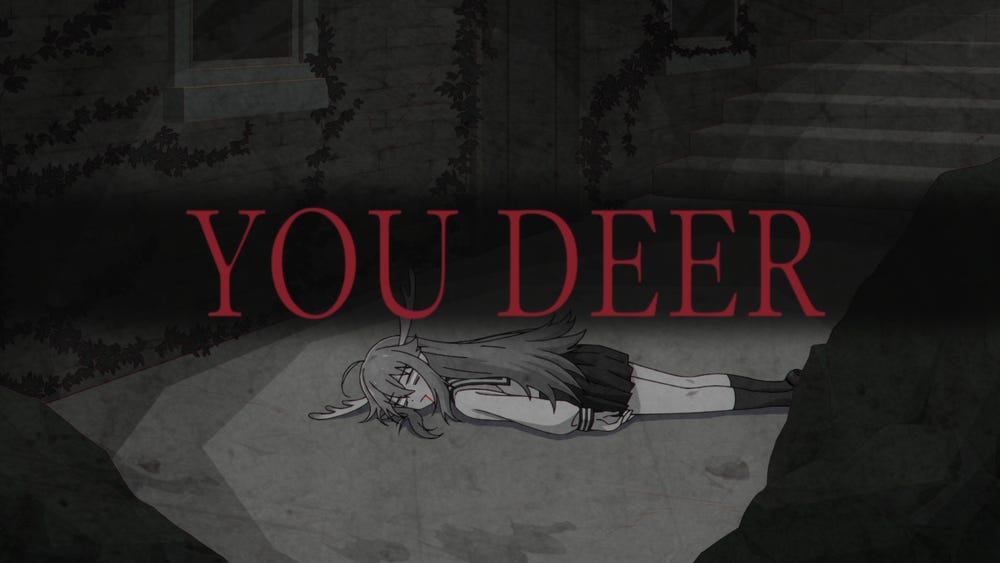
Opening titles Dark Souls YOU DIED screen
In the Season 1 opening titles, there is a parody of the You Died screen from the Dark Souls games, a series that has a reputation for its difficulty. This time it says, “You Deer” and shows a defeated Koshitan wearing deer antlers.

Deer Club Under Siege (Nerawareta Shika-bu) S1 EP4
Super Mario Jump sound effect, Super Mushrooms
While going to harvest mushrooms she’d been growing inside a vaulting box, Nokotan discovers Koshitan and Kinu had been trapped in the sports equipment storage room. Out of fear of being trapped forever, Kinu hides inside the vaulting box (wouldn’t that make her more trapped?) only to be discovered by Nokotan and accused of trying to steal her mushrooms. The mushrooms bear a resemblance to the ones seen in the Super Mario series. Not only this, when the mushrooms are first revealed, they are accompanied by a “jumping” sound effect that’s very similar to the one from the Mario games.
Deer After Deer (Yuku Shika, Kuru Shika) S1 EP8
Super Smash Bros. Ultimate, Pokémon
Part of this episode sees the deer club play “The Game of Deer Life”, a parody of the popular board game The Game of Life; each player joins the game in the style of a character (Fighter) reveal from the Super Smash Bros series. Particularly referring to Super Smash Bros. Ultimate (Nintendo Switch, 2018). In the same episode (during her turn in “The Game of Deer Life”), Nokotan evolves into a moose. This is a reference to the Pokémon series, where Pokémon level up and evolve. The scene shares similar visuals to those in the games.

Farewell Nokotan!? Long Live the Deer Club! (Saraba Nokotan!? Shika-bu yo Eien ni) S1 EP12
In the last episode of Season 1, Nokotan competes in a wrestling match; if she loses, she must leave the deer club and never return. (It’s too much to explain here, just watch the episode.)
The training montage has a possible reference to Punch-Out (NES) training cut-scene that itself is a reference to Rocky, so it’s not entirely clear if it’s supposed to be an homage to Punch-Out or Rocky or both.
That said, the rest of the sequence has elements similar to other Rocky training montages, such as the song Wild Deer (Yasei no Shika), Lyrics by Masahiko Ōta and composed by Yasuhiro Misawa. The song is an obvious parody of Survivor’s Eye of the Tiger. ( Rocky III, 82) This wouldn’t be too strange either, as previous episodes have made direct references to other Western movies like Full Metal Jacket (87) and Total Recall (90).


A Brief State of Play
My Dear Friend Nokotan is a little different in that the show makes a number of pop culture references, both current and retrospective. In this regard, it doesn’t reflect any one-time or aspect of video games culture; it’s parody casts a wide net.
Manga Source
The Manga shares some similarities with the anime, but there are a few differences. For instance, the Super Smash Bros Ultimate reference isn’t as apparent and is more alluded to rather than being an outright parody.
The Manga uses the word “appeared” to describe each player’s entrance, eg “the part deer part human hybrid…but currently all-deer Nokotan has appeared” (My Deer Friend Nokotan, Vol. 2, pg.121). To me, this makes it sound a little more like the character “Challenger Approaches” screen, from previous Smash Bros. games.
Before playing “The Game Of (Deer) Life”, Nokotan asks, “Okay, everyone, are your bodies ready?” (My Deer Friend Nokotan, Vol. 2, pg.117). This is a reference to the former president, Reggie Fils-Aimé of Nintendo of America. During Nintendo’s 2007 E3 press conference, the Wii Fit and the Wii Balance Board were shown. Before demoing the games on stage, Fils-Aimé said,”My body is ready”. This phrase has since become popular among Nintendo fans and has been memed many times.
The Wii Fit, a popular series of lifestyle and exercise games, Wii Balance Board, a “controller” used with Wii Fit and a few select titles, Punch-out, 2009.
In the Manga when Nokotan evolves into a moose, the wording is verbatim that is found in the Pokémon games.
“What!? Nokotan is evolving”. (My Deer Friend Nokotan, Vol. 3, pg 5).
In Games
As of yet, there are no Nokotan-themed video games. (At least as far as I know.) What would a My Deer friend Nokotan video game even be about? Collecting deer crackers like coins?
So how was that? Three varied examples of video games being referenced and appearing in anime. This is just scratching the surface (Well, this is Part 1 after all), there are many more examples of video game references in anime, so watch this space.
Thanks to the following sites and source materials that were helpful when researching this GOF (“Games On Film”, it’s a shorthand I’m trying to make stick.)
Cardcaptors Sakura (Anime) Studio: Madhouse
Decetive Conan (Anime) Studio: TMS Entertainment
My Deer Friend Nokotan (Anime) Studio: Wit Studio
shikanoko-nokonoko-koshitantan.fandom
detectiveconanworld.com
ccsakura. fandom
Cardcaptor Sakura Vol.2, Clamp, (Satsuki Igarashi, Mokon, Tsubaki Nekoi, Nanase Ohkawa.)
Case closed, Vol.7, Gosho Aoyama, Gollancz
Case Closed Vol.8, Gosho Aoyama, Gollancz
My Deer Friend Nokotan Vol. 2 Oshionshio, Seven Seas Entertainment
My Deer Friend Nokotan Vol. 3 Oshionshio, Seven Seas Entertainment
howlongtobeat.com/game/31295