Murphy’s Law (86), starring Charles Bronson and Kathleen Wilhoite. Written by Gail Morgan Hickman and directed by J. Lee Thompson, who had already collaborated on several films with Bronson, like the Buffalo ‘ tastic, The White Buffalo (77) and the neo-noir 10 to Midnight (83)
What’s the lore on Murphy’s law? A very brief overview (Spoilers)
Jack Murphy (Bronson) is the typical grizzled alcoholic cop. He is framed for the murder of his ex-wife by Joan Freeman (Carrie Snodgress) Someone previously arrested and convicted, thanks to Murphy. Now she’s out for revenge.
Murphy breaks out of a police holding cell with help from Arabella McGee (Wilhoite), who had coincidentally been arrested earlier for stealing Murphy’s car. Meanwhile, Freeman goes after the other people who put her away, again trying to frame Murphy, which now also implicates McGee. The two team up to clear their names.
It all ends in a shootout between Murphy and Freeman in the place where she was first arrested by Murphy. (Kinda poetic huh?) Freeman is taken out, and despite sustaining injuries, both McGee and Murphy survive.
Side note, the last location of the film, the Bradbury building, has been used in a ton of other movies. Such as Blade Runner (82), Chinatown (74) to name but a few. (Can you name them all?)
Mini Review
Underneath its cop thriller surface, the film is another example of the mismatched partner trope, similar to other buddy cop films that were popular throughout the 80s and 90s.
The film’s plot and characters are engaging, but don’t hold up under much scrutiny or real-world procedural logic. The film takes more than a few liberties in this area, but it is still tightly paced and has enough investment to make you want to see it through.
Bronson and Wilhoite make a decent pairing, if not a little cliché. Bronson plays a Dirty Harry-type cop, and Wilhoite plays a free-willed feminist type. The back-and-forth banter is fun, and Wilhoite’s string of aliterative insults can be quite funny. The film also delivers fairly well in the action department. Some of the more violent aspects of the film do clash with the comedic elements, but the main threat is always kept serious, and the film never wanders too far into comedy territory.
Snodgress’s character is written as a little one-note, but she plays the part well, presenting someone who’s completely lost it and is out for revenge. Each new victim verges on becoming a slasher, and unfortunately, this is where the film loses some of its credibility with the idea of framing Murphy, which doesn’t follow through or add up.
The film is not the best of its kind, but it is a decent little thriller with some comedic elements. It might be worth checking out if you want something to scratch that Bronson canon itch.
Now to the games….


The Games on Film this time are…
Arcades in the Background
In the scene, Murphy (Bronson) discovers his friend Ben Wilcove, played by Bill Henderson, has been killed. There is a laundromat in the background with some arcade games.
Centipede (1981, Atari)
Donkey Kong Jr. (1983, Nintendo) (Unconfirmed sighting)
As Wilhoite’s character gets into the truck, you can briefly see some of the buildings in the background, such as a laundromat, which also happens to have some arcade games. This is something I’ve mentioned before, where it was fairly common for businesses such as laundromats and pizza places to have arcade games for extra income and to give their customers something to do while they waited.
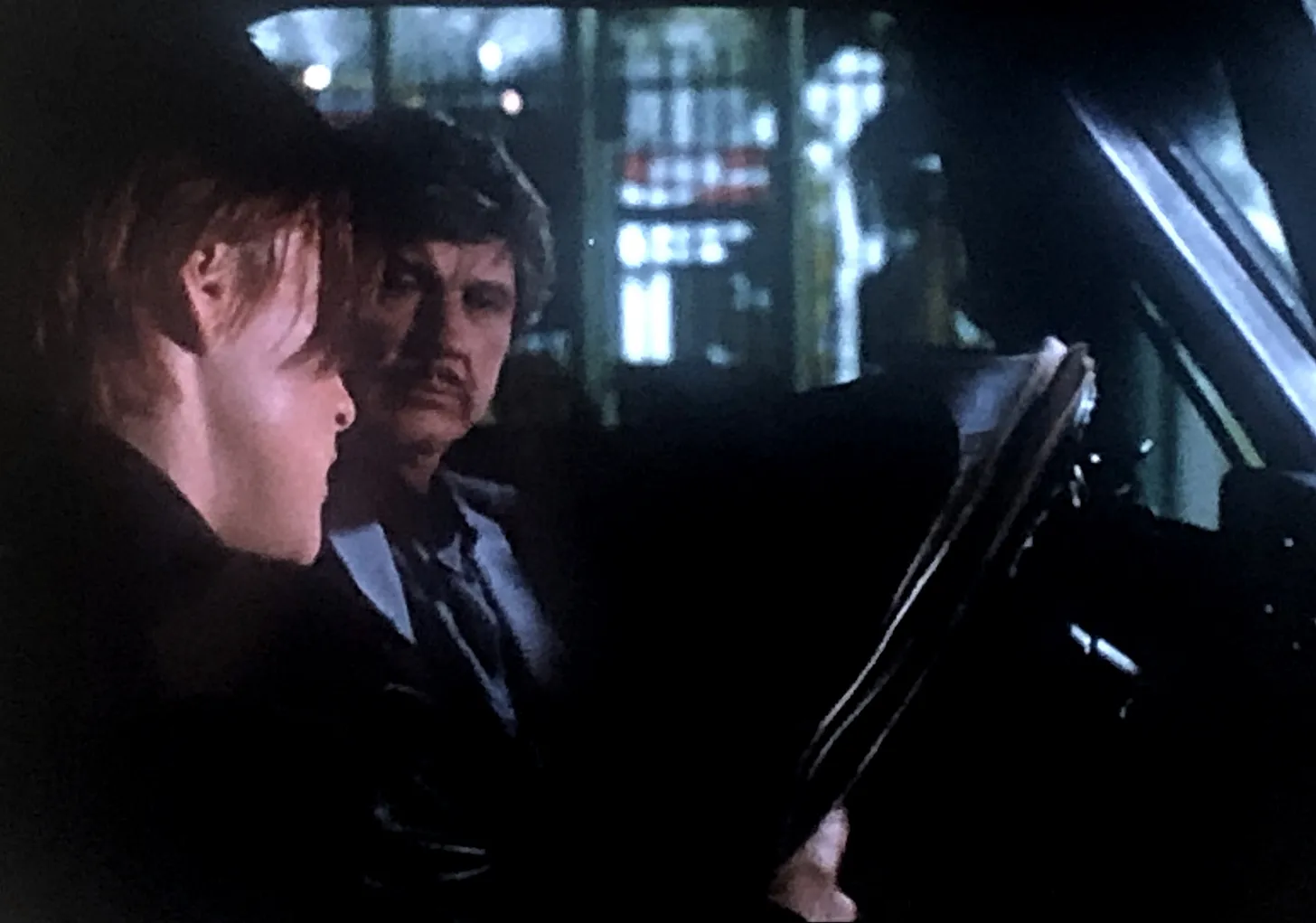
What looks like a Centipede arcade can be seen near a Coke machine. Although it is out of focus, the cabinet undoubtedly matches the appearance of Centipede.
Very shortly after this, in the same scene, looking closely over Bronson’s shoulder reveals the vague shape of another arcade machine.
It’s quite difficult to work out what game it is, because there is some sort of poster blocking the side art. The poster seems to be some kind of advertisement related to laundry* (I actually spent quite a bit of time trying to figure out what it was…. time well spent?)
Very shortly after this, in the same scene, looking closely over Bronson’s shoulder reveals the vague shape of another arcade machine.
It’s quite difficult to work out what game it is, because there is some sort of poster blocking the side art. The poster seems to be some kind of advertisement related to laundry* (I actually spent quite a bit of time trying to figure out what it was…. time well spent?)

I speculate that this is a Donkey Kong Jr. (82) The colours and shape of the machine are similar.The side art doesn’t run the length of the machine or extend that far out towards the controls. Donkey Kong Jr’s side art is relatively small and central, just about where the poster is.
Hotel/Apartment
Later in the film, Murphy and Mcgee, go to the killer’s Joan Freeman (Carrie Snodgress) hotel apartment to investigate. In the hotel’s lobby is a cluster of arcade games, a Coke machine and a coffee machine.
Pac-Man (1980, Namco, Midway)
Centipede (1981, Atari)
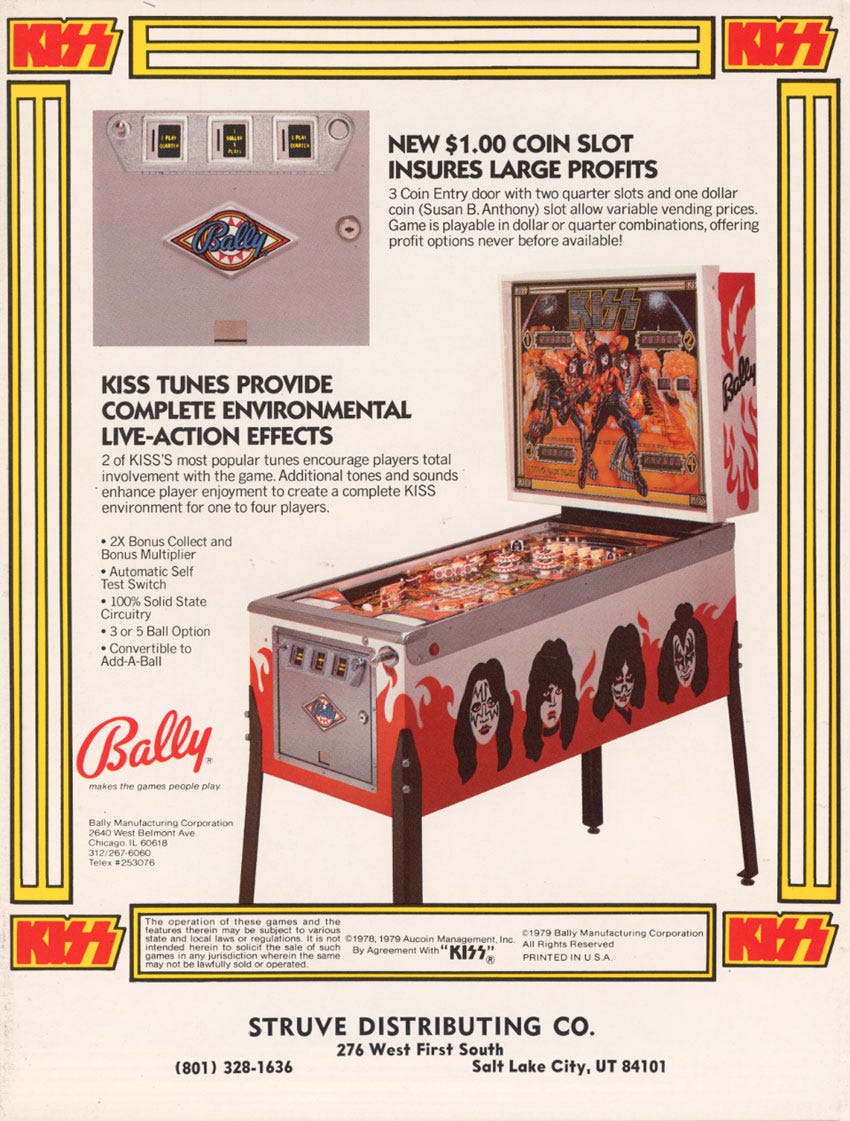
KISS pinball (1979, Bally)
None of the main cast interacts with any of the machines; however, a background extra plays Centipede. None of the machines actually appear to be on, for instance, they make no sound, the marquees are not lit up, nor is the attract mode on the KISS pinball.
This was likely done for filming purposes, so there were no distracting lights or sounds in the scene. Recording and replacing sounds in post is a standard practice in film production; however, no game sounds were added in post to this scene.
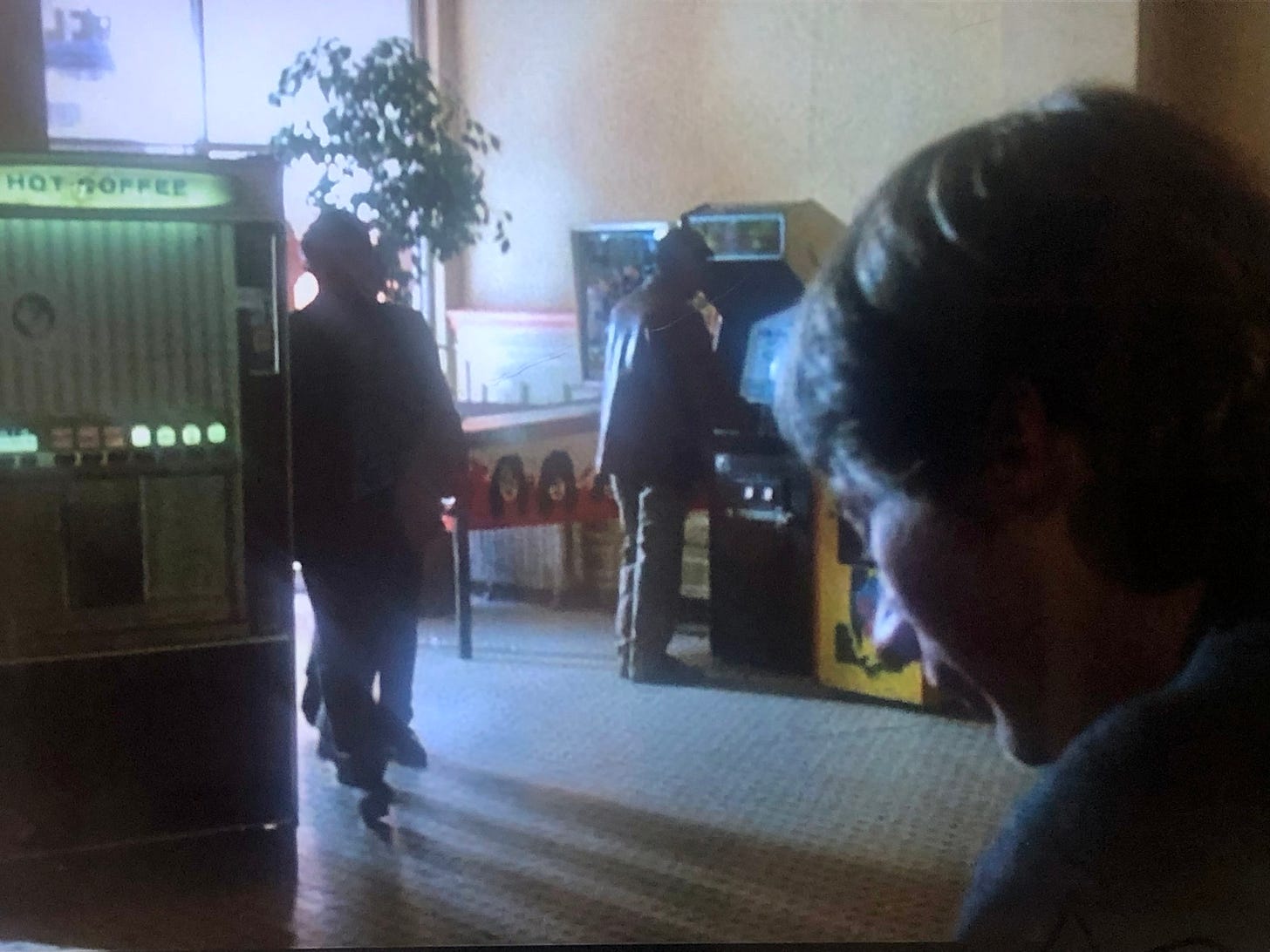
The film’s trailer includes a very short part of a deleted scene of two cops chasing after Murphy running through the hotel lobby. We can see the games in the background again, only this time it’s easier to see the marquee for Centipede (81); the machines still appear to be switched off.
The hotel is a real location, “The Barclay Hotel”, which has been used in several films and TV shows over the years. Each film production changes the hotel lobby to fit its filming needs, such as in the film As Good as It Gets (1997), which transformed the lobby into a cafe. Making it almost unrecognisable. In 2021, the motel was changed into low-income housing by the Healthy Housing Foundation.
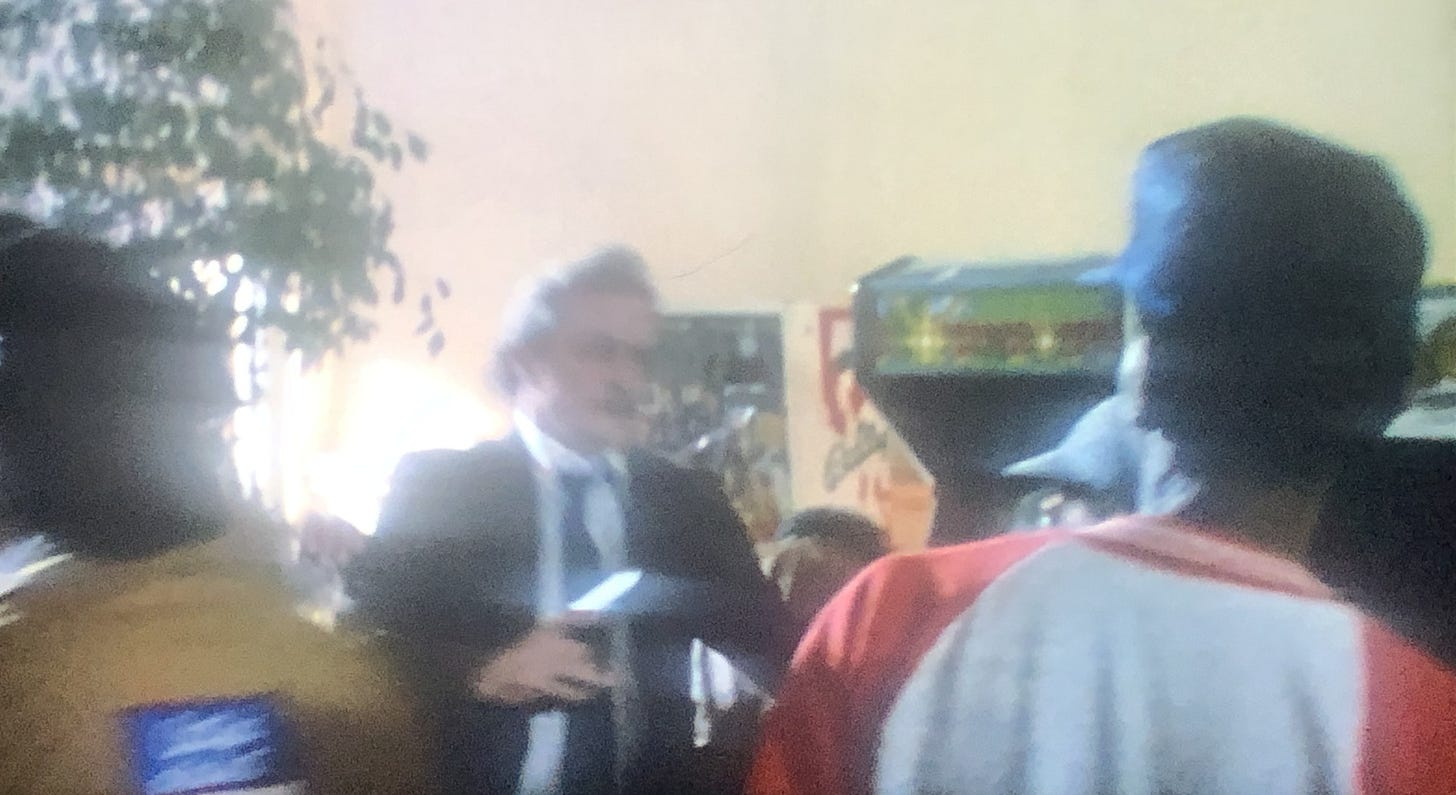
Something that comes up a lot in doing these Games on Film retrospectives is deciding whether or not the games are part of the production or just happened to be in the background. Most of the time, they are added by the production, but every so often, some real examples slip in, usually when filming takes place in a real-world location, like the Sassony arcade in ROCKY III (82) (See Games on Film #1)
So there is a possibility that the arcades and drink machines were already there, in the lobby. Again, it wasn’t too uncommon for arcade games to crop up in other places, but in hotel lobbies? (Was this more common in the 80s?) I recall seeing a Game Cube kiosk in a hotel lobby in real life once, but that’s about it.
Ultimately there are certain rules and licensing involved in displaying products and branded logos and items in film. More often than not, items are placed there by production, and nothing appears on camera by accident.
That said, there are an equal number of examples of films that use real world locations, with little to no modifications; that cultures of the time can get caught in the background.